Thursday, October 1, 2026

Hacks of 2 federal agencies in a month have spilled a bonanza of sensitive data


<p>The Pentagon is informing more than 2 million current and former military members that their personnel records storing sensitive personal information were stolen over a monthslong compromise of one of its networks. The breach is the second one in recent months to expose sensitive government information.</p> <p>The records, according to one <a href="https://www.reddit.com/r/AirForce/comments/1wmotdr/question_about_data_breach_letter/">notification letter</a> posted to Reddit, included Social Security numbers, names, addresses, sex, race, and occupational specialty. This last category could be particularly valuable to foreign adversaries because it could help their intelligence agencies in identifying high-value military personnel. Starting last October, hackers gained access to a system operated by the <a href="https://dwp.dmdc.osd.mil/dwp/app/about/overview">Defense Manpower Data Center</a>, which collates Department of Defense personnel records. The Pentagon says that the breach compromised the records of 2.8 million living individuals.</p> <h2>A potential boon</h2> <p>The incident is the second time a major network breach in recent months has exposed sensitive US government personnel records that criminal groups or foreign adversaries could use. Last month, the ransomware group ShinyHunters claimed it hacked into FBI systems and stole records of thousands of the agency’s current or former employees. Reuters <a href="https://www.reuters.com/world/hacked-fbi-data-has-sensitive-information-about-employees-intelligence-roles-2026-09-23/?ref=404media.co">reported</a> the job titles in the records included ones related to investigating China or Russia.</p><p><a href="https://arstechnica.com/security/2026/10/hacks-of-2-federal-agencies-in-a-month-have-spilled-a-bonanza-of-sensitive-data/">Read full article</a></p> <p><a href="https://arstechnica.com/security/2026/10/hacks-of-2-federal-agencies-in-a-month-have-spilled-a-bonanza-of-sensitive-data/#comments">Comments</a></p> Reference : https://ift.tt/fImL4qU

Memory executives expect RAM shortage to continue through 2028


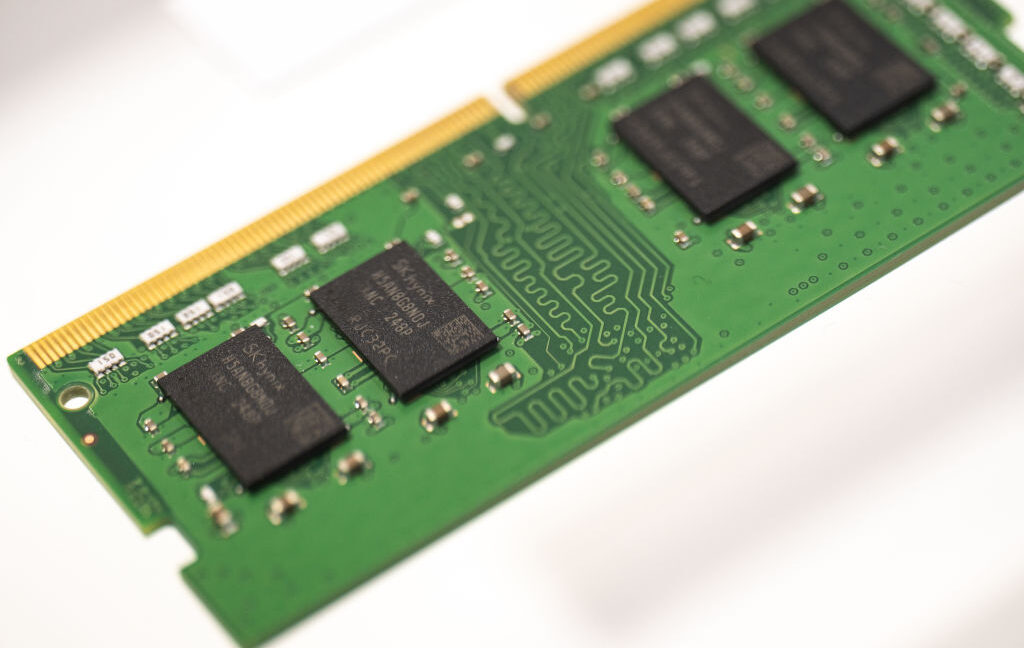
<p>Micron and Samsung executives this week said the memory shortage will continue for at least the next couple of years.</p> <p>Micron CEO Sanjay Mehrotra expects demand for the firm’s memory to exceed its available supply over that period, he told investors last night.</p> <p><a href="https://arstechnica.com/gadgets/2025/12/after-nearly-30-years-crucial-will-stop-selling-ram-to-consumers/">Micron no longer sells consumer RAM,</a> and Mehrotra’s statements refer to Micron’s business-to-business sales of high-bandwidth memory (HBM) for AI and DRAM for servers. However, his comments also have implications for consumer devices. Manufacturing capacity is prioritizing memory for AI and servers, limiting the supply of memory manufactured for consumer devices.</p><p><a href="https://arstechnica.com/information-technology/2026/10/memory-supplies-are-only-getting-tighter-micron-ceo-says/">Read full article</a></p> <p><a href="https://arstechnica.com/information-technology/2026/10/memory-supplies-are-only-getting-tighter-micron-ceo-says/#comments">Comments</a></p> Reference : https://ift.tt/oPN6KZH

Electricity Theft Is Rampant, but Delhi Found a Fix


<img src="https://spectrum.ieee.org/media-library/three-lightbulbs-glowing-with-the-middle-one-appearing-to-wear-a-black-mask-with-a-menacing-face.jpg?id=67857147&width=1245&height=700&coordinates=0%2C208%2C0%2C208"/><br/><br/><p><span><span>It’s</span> disheartening how much power gets generated and then promptly lost as it travels through grid networks. </span><span>Th</span><span>is</span> <span>leaking </span><span>of electricity </span><span>happens </span><span>when</span> it <span>vanishes as heat</span> as w<span>ell as </span><span>whe</span><span>n</span> <span>it</span> <span>is</span> pilfered by <span>thieves and nonpaying customers. </span> </p><p><span><span>More than</span> half of </span><span>the</span> countries <span>that</span> <span>track these metrics </span><a href="https://data.worldbank.org/indicator/EG.ELC.LOSS.ZS?end=2024&start=1960&view=map&year=20230" target="_blank"><span><span>lost at least 10 percent of the</span><span>ir</span> electricity</span></a><span> in 2023, according to the World Bank. Losses topped 20 percent for 24 of those nations. Two countries lost more than half of what they </span><span>generated</span><span>. </span> </p><p><span><span>With numbers this high, c</span><span>utting down on</span> losses</span> makes sense<span>. </span><span>Electricity demand is rising beyond what many grid </span><span>operators </span><span>can supply</span><span>;</span> <span>reducing waste would help meet some of that demand</span> without <span>having to </span><span>build new power plants</span><span>. Plus, </span><span>when </span><span>the power comes from fossil fuels</span><span>,</span> <span>any</span> loss <span>means emitting </span><span>even more </span><span>greenhouse gases into the atmosphere. And </span><span>electric losses </span><span>hit </span><span>the bottom lines of </span><span>power providers, </span><span>which</span> <span>ultimately pass</span> th<span>ose</span> costs on to everyone else. </p><p><span><span>The trouble is, reducing </span><span>electricity </span><span>losses is </span><span>a </span><span>hard and </span><span>expensive</span> process that takes a long time</span><span>. </span><span>Typically, the less </span><span>maintained</span> the grid infrastructure, the more electricity <span>that’s</span> lost. And the more <span>fragile </span><span>the region’s law enforcement and government, the more </span><span>prevalent </span><span>the power theft. Natural disasters and war make things worse.</span> </p><h2>Delhi’s Power Grid Comeback</h2><p><span><span>Fixing a </span><span>power </span><span>grid </span><span>requires a systemic approach across many sectors</span><span>. </span><span>There’s</span> no one technology that will solve the problem. </span><span>A</span><span>t the outset, </span><span>the obstacles to success may </span><span>feel </span><span>insurmountable</span><span>. Equipment across entire </span><span>grid </span><span>networks must be updated. Multiple arms of government </span><span>must</span> <span>agree to reforms and </span><span>coordinate to ensure power providers are set up to succeed. Regulations must be written</span> or revised<span>,</span> <span>i</span><span>nvestments made</span><span>,</span> <span>c</span><span>ultures changed.</span></p><p><span><span>T</span><span>he city of Delhi </span><span>did all those things. Over </span><span>the </span><span>p</span><span>ast </span><span>2</span><span>5 </span><span>year</span><span>s</span><span>, it </span><span>cut</span> its electricity losses from </span><span>about </span><span>50 to 5 percent</span><span>.</span> How the city pulled off that impressive feat is the focus of <span>“<a href="https://spectrum.ieee.org/delhi-electricity-loss" target="_blank">The Epic Comeback of Delhi’s Power Grid</a>”</span><span> by</span> <a href="https://www.linkedin.com/in/minishajithomas/" target="_blank"><span><span>Mini</span> Shaji</span> Thomas</a><span><span>, an electrical engineer at</span> the university</span> Jamia Millia Islamia who has lived in Delhi since the 1990s<span>. She gives us a </span><span>view</span> from the inside<span>—</span><span>as a resident and a </span><a href="https://spectrum.ieee.org/empowering-women-power-industry" target="_self"><span><span>power systems expert</span></span></a><span>. </span> </p><p><span><span>Delhi</span> i</span><span>s a shining example, but </span><span>some </span><span>other regions have significantly lowered electricity losses over the last quarter century </span><span>too</span><span>. The country of </span><a href="https://data.worldbank.org/indicator/EG.ELC.LOSS.ZS?end=2023&locations=GE&start=1990&view=chart&year=20230" target="_blank"><span><span>Georgia</span></span></a> <span>went from losses</span> of over 16 percent in 2002 to <span>about </span><span>8</span> percent in 2023. In <a href="https://data.worldbank.org/indicator/EG.ELC.LOSS.ZS?end=2023&locations=SG&start=1990&view=chart&year=20230" target="_blank"><span><span>Singapore</span></span></a><span><span>, losses dropped from 6.6 percent to </span><span>a nearly</span> nonexistent 0.2 percent over the same </span><span>time period</span><span>.</span> </p><h2>Global Electricity Theft Crisis</h2><p><span><span>But there are many </span><span>parts of the world </span><span>where </span><span>electricity </span><span>losses </span><span>remain</span> a problem or have gotten worse. In </span><a href="https://data.worldbank.org/indicator/EG.ELC.LOSS.ZS?end=2023&locations=JM&start=1990&view=chart&year=20230" target="_blank"><span><span>Jamaica</span></span></a><span><span>, where power theft is rampant, losses have hovered between 21 and 28 percent </span><span>for</span> years. </span><a href="https://data.worldbank.org/indicator/EG.ELC.LOSS.ZS?end=2023&locations=AR&start=1990&view=chart&year=20230" target="_blank"><span><span>Argentina’s losses</span></span></a> <span>nearly doubled between 2015 and 2023, going from an all-time low of about 12 percent to an all-time high of nearly 24 percent.</span> The main problem: <span>T</span><span>ransmission and distribution companies lacked the capital to </span><span>maintain</span> and upgrade their networks, which left equipment <span>operating</span> under stress. <span>A</span> delay in the installation of smart meters <span>has </span><span>allow</span><span>ed thieves to </span><span>more easily </span><span>siphon </span><span>power </span><span>and </span><span>tamper</span> with <span>meter</span><span>s</span><span>. </span> </p><p><span><span>Thomas says she hopes her account of Delhi</span><span>’s grid comeback </span><span>will </span><span>serve as a blueprint for </span><span>other</span><span>s. </span><span>It’s</span> possible to replicate the sweeping changes Delhi made, she says. But it “requires a concerted effort from all stakeholders, customers, the utility, the government</span><span>,</span> and their employees.” </p> Reference: https://ift.tt/SrBfP5q

Wednesday, September 30, 2026

Attackers have been exploiting critical Zimbra flaw to steal emails


<p>Hackers have been exploiting a critical vulnerability in the Zimbra Collaboration Suite in an attempt to obtain email backups and authentication credentials of vulnerable organzations, Microsoft has <a href="https://www.microsoft.com/en-us/security/blog/2026/09/30/unauthenticated-command-injection-on-internet-facing-mail-servers-tracking-cve-2026-73570/">warned</a>.</p> <p>The vulnerability, tracked as CVE-2026-73570, lets attackers remotely issue operating system commands without authentication. Zimbra maintainer Synacor issued a patch on July 20, but didn’t disclose the vulnerability for more than three weeks after that. The security-focused Shadowserver Foundation <a href="https://bsky.app/profile/did:plc:3xyh2kw5hfxsax4zff3pp5ub/post/3mtt4ls2sgs2z">said last week</a> that its scans found that 274 separate instances of the Zimbra Collaboration Suite had been compromised. The number of servers running the software has fluctuated from 19,000 in the week following the patch to about 12,000 in the weeks following that. Currently, Shadowserver is <a href="https://dashboard.shadowserver.org/statistics/iot-devices/time-series/?date_range=other_range&amp;d1=2026-07-01&amp;d2=2026-09-29&amp;vendor=synacor&amp;model=zimbra+collaboration+suite&amp;limit=100&amp;group_by=geo&amp;stacking=stacked">tracking</a> about 10,000 instances.</p> <h2>Look, ma, no authorization</h2> <p>From July 28 to August 7, Microsoft said Wednesday, the company detected two distinct scanning tools probing the Internet for vulnerable endpoints. The attackers first validated their exploit worked by sending HTTP, requests and DNS, ICMP, and out-of-band identity checks to domains hosted on public services. The probes allowed the attackers to confirm the exploit successfully executed commands on vulnerable servers without actually compromising them. Eventually, the attackers began using their command injection capability to install malicious payloads. Microsoft wrote:</p><p><a href="https://arstechnica.com/security/2026/09/attackers-have-been-exploiting-critical-zimbra-flaw-to-steal-emails/">Read full article</a></p> <p><a href="https://arstechnica.com/security/2026/09/attackers-have-been-exploiting-critical-zimbra-flaw-to-steal-emails/#comments">Comments</a></p> Reference : https://ift.tt/07qPvwB

A Brief History of the Bloomberg Terminal


<img src="https://spectrum.ieee.org/media-library/vintage-bloomberg-financial-keyboard-terminal-with-built-in-speaker-and-market-function-keys.jpg?id=67857164&width=1245&height=700&coordinates=0%2C187%2C0%2C188"/><br/><br/><p>Financial markets have always relied on timely information, and the drive for timeliness has always adapted to the latest technology. From clipper ships transiting the oceans to telegraph wires connecting cities to fiber-optic cables <a href="https://spectrum.ieee.org/the-microsecond-market" target="_self">conducting trades in microseconds</a>, traders have embraced any advantage to get the most up-to-date information. Indeed, the history of finance is really a story about how fast you can move information and who controls the interface.</p><div class="rm-embed embed-media"><iframe height="110px" id="noa-web-audio-player" src="https://embed-player.newsoveraudio.com/v4?key=q5m19e&id=https://spectrum.ieee.org/bloomberg-terminal?draft=1&bgColor=F5F5F5&color=1b1b1c&playColor=1b1b1c&progressBgColor=F5F5F5&progressBorderColor=bdbbbb&titleColor=1b1b1c&timeColor=1b1b1c&speedColor=1b1b1c&noaLinkColor=556B7D&noaLinkHighlightColor=FF4B00&feedbackButton=true" style="border: none" width="100%"></iframe></div><p><span>It’s only natural that people also figured out a way to profit by supplying that market intel. In 1841, for example, the </span><a href="https://guides.loc.gov/this-month-in-business-history/july/dun-bradstreet-founded" target="_blank">Mercantile Exchange</a><span> (predecessor to Dun & Bradstreet) began selling proprietary business information to its U.S. clients. The following decade, Paul Julius Reuter began selling news services and stock price information. To supplement the company’s telegraph dispatches, he sent </span><a href="https://www.reuters.com/article/business/the-long-history-of-speed-at-reuters-idUSKBN2761WD/" target="_blank">pigeons</a><span> between Aachen, Germany, and Brussels; each bird carried a cylinder containing slips of paper with that day’s stock prices. In 1867, an inventor named Edward Calahan introduced the first telegraphic ticker-tape machine, which spooled out stock price information in near real time; Thomas Edison improved upon the design with his </span><a href="https://edison.rutgers.edu/life-of-edison/inventions?view=article&id=539:stock-ticker&catid=91" target="_blank">patented version</a><span> in 1871.</span></p><p>The <a href="https://www.investopedia.com/ask/answers/100214/who-were-original-dow-jones-industrial-average-djia-companies.asp" target="_blank">Dow Jones Industrial Average debuted</a> in 1896 as an index of 12 key businesses listed on U.S. stock exchanges. It included gas, oil, coal, and electric companies, as well as enterprises dealing in leather, rubber, and tobacco. Messengers delivered quotes from the trading floor to brokerage offices, while stock tickers kept investors informed of prices. By the time New York City held its <a href="https://downtownny.com/ticker-tape-parades/" rel="noopener noreferrer" target="_blank">first official ticker-tape parade</a>, in 1919, telegraphy in Western Europe and the United States had become the chief means for quick transmission of vital stock information.</p><p>In 1960, the first paperless financial service debuted, when Quotron introduced its electronic screens for displaying market quotes. Over the next two decades, other companies rolled out similar innovations for distributing financial news and data.</p><p>So when Michael Bloomberg decided to enter this well-established industry in 1981, the big question was: How would his new company stand out?</p><h2>The Birth of the Bloomberg Terminal</h2><p>Bloomberg had cofounded Innovative Market Systems (IMS) after being fired from the investment bank Salomon Brothers. Landing on his feet with his US $10 million equity payout and joined by former Salomon colleagues Thomas Secunda, Duncan MacMillan, and Charles Zegar, Bloomberg pursued his belief that Wall Street would pay a premium for specialized financial data. He’d earned an electrical engineering degree from Johns Hopkins University and an MBA from Harvard, and he’d built computerized financial systems for Salomon. IMS focused on developing a computer terminal that not only provided up-to-date information but could also do instant quantitative analysis based on historical data.</p><p class="shortcode-media shortcode-media-rebelmouse-image"> <img alt="Color photo of a white man in a business suit posing in front of a computer with office workers in the background. " class="rm-shortcode" data-rm-shortcode-id="fcbf762b1e926eb8a771ee74ed91b05b" data-rm-shortcode-name="rebelmouse-image" id="eed43" loading="lazy" src="https://spectrum.ieee.org/media-library/color-photo-of-a-white-man-in-a-business-suit-posing-in-front-of-a-computer-with-office-workers-in-the-background.jpg?id=67857167&width=980"/> <small class="image-media media-caption" placeholder="Add Photo Caption...">Michael Bloomberg believed Wall Street would pay a premium for access to specialized financial data. </small><small class="image-media media-photo-credit" placeholder="Add Photo Credit...">Karjean Levine/Getty Images</small></p><p>At the time, most financial data still circulated through telephone calls, printed price sheets, and specialist publications, and analysis involved a fair amount of gut instinct guided by human expertise. Companies such as Reuters and Dow Jones provided subscription-based services for access to business news. But traders still had to assemble information from multiple sources and perform their own calculations and analysis.</p><p>IMS proposed an integrated system with a single interface. Its Market Master terminal consisted of a monochrome CRT monitor, a custom keyboard, and a communications/controller unit that connected to the company’s private network. <a href="https://ted-merz.com/2026/01/28/bloombergs-yellow-keys/" target="_blank">At launch</a>, it provided only U.S. government bond prices and bond-calculation tools, but the dream was much bigger: a dedicated terminal that would sit on a trader’s desk and run different market scenarios, produce yield curves, and support investment calculations.</p><p>IMS initially had just one client, Merrill Lynch, which invested $30 million (about $110 million today) in exchange for a 30 percent stake in the company and exclusive rights to the terminals for five years; Merrill waived that right in 1984. The first 22 Market Master terminals were delivered to Merrill in 1982, in the middle of a <a href="https://www.federalreservehistory.org/essays/recession-of-1981-82" target="_blank">global recession</a>. The timing was fortuitous. Worldwide, stock markets were transitioning to electronic trading, and the U.S. Federal Reserve was allowing more freely floating interest rates. Bond prices were more volatile, and investors were eager to figure out how to value them accurately. Bloomberg’s specialized financial terminals provided the data and the analytical tools to process and comprehend those sweeping changes.</p><p>Five years after its launch, IMS rebranded as Bloomberg LP and expanded its clientele, and the Market Master became known as the Bloomberg Terminal.</p><h2>How Did the Bloomberg Terminal Work?</h2><p>The Bloomberg Terminal’s keyboard was designed with traders and analysts in mind. The function keys were color-coded and given labels specifying their usage, so that users didn’t have to remember. The original keyboard, affectionately referred to as “<a href="https://www.bloomberg.com/professional/insights/trading/look-back-bloomberg-keyboard/" target="_blank">the Chiclet</a>,” was hand assembled. A cable ran from the keyboard to the Bloomberg Controller, which had a dedicated phone line to connect to a local hub. The internet wasn’t commercially available yet, so the company basically built its own closed network, with centralized computers that maintained large databases and performed most of the calculations. Commands entered on the keyboard sent a request to the hub, which processed the information and sent back the result.</p><p class="shortcode-media shortcode-media-rebelmouse-image"> <img alt="Color photo of a computer keyboard with mostly black keys and some red, yellow, and green keys and with the logo Bloomberg. " class="rm-shortcode" data-rm-shortcode-id="8f4a814e3d3bd3979772325a0ebf8582" data-rm-shortcode-name="rebelmouse-image" id="a8b23" loading="lazy" src="https://spectrum.ieee.org/media-library/color-photo-of-a-computer-keyboard-with-mostly-black-keys-and-some-red-yellow-and-green-keys-and-with-the-logo-bloomberg.jpg?id=67857168&width=980"/> <small class="image-media media-caption" placeholder="Add Photo Caption...">The Chiclet keyboard for the Bloomberg Terminal was introduced around 1983. Although it looks like a generic keyboard, its function keys were finance-specific hot keys.</small><small class="image-media media-photo-credit" placeholder="Add Photo Credit...">National Museum of American History/Smithsonian Institution</small></p><p>Hot keys let traders easily call up data on government securities, corporate debt, and currency markets, among other things. A series of keystrokes would pull up other historical and real-time data, run an analysis, or place a trade. Learning how to use the terminal and digest the vast amount of information, which was presented mostly in tabular form, became a rite of passage for users.</p><p>In 1990, Bloomberg added a trackball to the keyboard, which helped the user navigate the multiple windows and menus typically displayed on screen. Two years later, the keyboard gained a built-in speaker, to support multimedia information; this design also included telephone, headphone, and microphone jacks. One of the most popular features was Instant Bloomberg, which allowed users to chat directly with fellow Bloomberg Terminal users over the proprietary network. By 1996, Bloomberg had keyboards that supported 23 different languages. In the early 2000s, the company began incorporating biometric authentication for terminal login, via a fingerprint reader on the keyboard.</p><p>As the company’s business model evolved, the Bloomberg Terminal added services well beyond its initial offerings. In 1990, for example, worried that Dow Jones would stop providing access to its news stories, Bloomberg set up its own news service. It recruited <em><em>Wall Street Journal </em></em>reporter Matthew Winkler to oversee a dozen reporters; their stories on market and securities movements used graphs and calculations that served as advertisements for the terminal’s capabilities. These days, the Bloomberg news empire includes <a href="https://www.bloomberg.com/businessweek" target="_blank">Bloomberg Businessweek</a>, <a href="https://www.bloombergradio.com/" target="_blank">Bloomberg Radio</a>, and <a href="https://www.bloomberg.com/live" target="_blank">Bloomberg Television</a>.</p><p>Bloomberg’s subscription-based financial model included the leasing of a Bloomberg Terminal with its specialized keyboard and other hardware, access to a dedicated private network, and a suite of services. In 1999, a subscription to a single Bloomberg Terminal cost $1,600 per month with a minimum two-year contract and a discount on each additional terminal. Today the annual price is upwards of $32,000 (trending a little below inflation). In 1995, the company launched a suite of “Open Bloomberg” software products that ran on the customer’s own PC; five years later, it stopped leasing dedicated terminals. Current customers also have access to mobile applications that allow terminal functions to run on phones and tablets. Today, “Bloomberg Terminal” has come to refer to the integrated data, analytics, news, communications, and trading environment.</p><h2>The Legacy of the Bloomberg Terminal</h2><p>Although the shift away from dedicated terminals was a logical response to the rise of the internet and publicly available market data, it altered the material culture of financial work. For nearly two decades, Bloomberg Terminals commanded an aura of power and financial prowess. They were emblems of market mastery, with a brand that was distinct from other office computers. With Open Bloomberg, users were no longer tied to a single desk or a fixed set of monitors.</p><p>And so, cast-off Bloomberg Terminals found their way into museum collections. They’re a physical embodiment of the ethereal nature of financial markets, and a manifestation of mathematical calculations, network infrastructure, and business culture.</p><p class="shortcode-media shortcode-media-rebelmouse-image"> <img alt="Color photo of a gray computer keyboard with different color keys and the logo Bloomberg." class="rm-shortcode" data-rm-shortcode-id="4bb2b9fa89a2836a749b629adc4abcb4" data-rm-shortcode-name="rebelmouse-image" id="54a8f" loading="lazy" src="https://spectrum.ieee.org/media-library/color-photo-of-a-gray-computer-keyboard-with-different-color-keys-and-the-logo-bloomberg.jpg?id=67857171&width=980"/> <small class="image-media media-caption" placeholder="Add Photo Caption...">The Bloomberg keyboard used by “Bond King” Bill Gross has his login and password taped on the front.</small><small class="image-media media-photo-credit" placeholder="Add Photo Credit...">National Museum of American History/Smithsonian Institution</small></p><p>The Smithsonian Institution’s National Museum of American History has a number of Bloomberg keyboards in its collection, but my favorite is object number <a href="https://americanhistory.si.edu/collections/object/nmah_1460219" target="_blank">2014.0012.02</a>, which was used by “Bond King” Bill Gross during the 1990s and 2000s at Pacific Investment Management. Gross had cofounded PIMCO in 1971 and built it into a $2 trillion bond investment firm. I especially love that Gross taped his login and password directly on his keyboard, which makes the object more relatable. I may never know what it’s like to manage billions in assets from a Bloomberg Terminal, but I absolutely understand the trial of remembering my passwords.</p><p><em><em>Part of a </em></em><a href="https://spectrum.ieee.org/collections/past-forward/" target="_self"><em><em>continuing series</em></em></a><em> </em><em><em>looking at historical artifacts that embrace the boundless potential of technology.</em></em></p><p><em><em>An abridged version of this article appears in the October 2026 print issue as “The Keyboard That Moved Markets.”</em></em></p><h3>References</h3><br/><p><a href="https://www.bloomberg.com/professional/insights/trading/look-back-bloomberg-keyboard" rel="noopener noreferrer" target="_blank">Bloomberg Professional Services</a> has a nice timeline showing the evolution of its keyboards.</p><p>For an economic analysis of how computers like the Bloomberg Terminal changed financial markets, see Gerben Bakker’s 2025 paper “<a href="https://researchonline.lse.ac.uk/id/eprint/129938/" target="_blank">The Terminal Revolution: Reuters and Bloomberg as global providers of financial and economic news, 1960–2020</a>,” published by the London School of Economics and Political Science.</p><p>Bloomberg Terminals are in the collections of many museums, including the <a href="https://computerhistory.org/blog/tools-of-the-trade-an-historical-look-at-technology-and-commerce/" rel="noopener noreferrer" target="_blank">Computer History Museum</a> and the <a href="https://americanhistory.si.edu/collections/object/nmah_1460219" rel="noopener noreferrer" target="_blank">National Museum of American History</a>.</p> Reference: https://ift.tt/jdCfpyG

Cloudflare plans to issue quantum-safe TLS certificates


<p>Cloudflare said Tuesday it plans to issue quantum-proof TLS certificates, making it one of the first authorities to issue such certificates that use a form of cryptography that is widely believed to withstand attacks from quantum computers.</p> <p>The Internet infrastructure provider <a href="https://blog.cloudflare.com/cloudflare-certificate-authority/">said</a> it will use an open source platform that issues both classic TLS certificates and a post-quantum equivalent known as <a href="https://www.encryptionconsulting.com/education-center/merkle-tree-certificates/">Merkle Tree Certificates</a>. The hybrid certificates will be free to both paying and non-paying users. To help build the massive system and establish ubiquity across the sprawling TLS ecosystem, Cloudflare will be acquiring an already trusted certificate root from CA GlobalSign. Cloudflare said the move will let millions of websites use post-quantum certificates at the flip of a switch and without incurring any increased performance overhead.</p> <h2>Fundamental architectural changes ahead</h2> <p>Cloudflare’s plans are part of a major overhaul in the web public key infrastructure (WebPKI) required to make website encryption and authentication safe for the coming post-quantum age. A major challenge is using quantum-proof signatures that can be easily transmitted during web requests and recorded in transparency logs to ensure counterfeit certificates aren't assigned to websites. The makeover will take years to complete, because it requires the work of an untold number of engineers who design operating systems, browsers, certificate authorities, and Internet infrastructure.</p><p><a href="https://arstechnica.com/security/2026/09/cloudflare-plans-to-issue-quantum-safe-tls-certificates/">Read full article</a></p> <p><a href="https://arstechnica.com/security/2026/09/cloudflare-plans-to-issue-quantum-safe-tls-certificates/#comments">Comments</a></p> Reference : https://ift.tt/rzfXlTF

Tuesday, September 29, 2026

Tech to Replace Animal Testing Is Almost Ready. Scientists Are Not


<img src="https://spectrum.ieee.org/media-library/a-photo-shows-a-hand-holding-a-small-clear-plastic-device-with-red-and-blue-lines-inside-it.jpg?id=67819184&width=1245&height=700&coordinates=0%2C771%2C0%2C772"/><br/><br/><p><strong>Seventeen years ago, cell</strong> biologist <a href="https://wyss.harvard.edu/team/core-faculty/donald-ingber/" target="_blank">Donald Ingber</a> and his colleagues at Harvard University’s Wyss Institute for Biologically Inspired Engineering submitted a paper to the journal <em><em>Science</em></em> describing their model human lung. It was smaller than a USB stick and made of a clear polymer slab containing narrow channels, which were lined with the type of cells that line a lung’s air sacs and blood vessels. When air was pumped through hollow chambers beside the channels, the device rhythmically expanded and contracted—it “breathed.”</p><p>This lifelike movement was a dramatic change from previous generations of lung models, which typically used static cultures of lung tissue that were unable to simulate the movements essential to lung function. When exposed to inflammatory proteins and bacteria, Ingber’s artificial lung reacted much as living lungs would. And exposure to silica nanoparticles used to model the effects of ultrafine particulates revealed that movement affected how tissues absorbed them.</p><p class="shortcode-media shortcode-media-rebelmouse-image rm-float-left rm-resized-container rm-resized-container-25" data-rm-resized-container="25%" style="float: left;"> <img alt="A photo shows a man with glasses seated in front of a white board with equations. " class="rm-shortcode" data-rm-shortcode-id="3972a190761a2751a8f9dea99ae9965f" data-rm-shortcode-name="rebelmouse-image" id="797ee" loading="lazy" src="https://spectrum.ieee.org/media-library/a-photo-shows-a-man-with-glasses-seated-in-front-of-a-white-board-with-equations.jpg?id=67820605&width=980"/><small class="image-media media-caption" placeholder="Add Photo Caption...">Donald Ingber led the team that developed the first human lung-on-a-chip at Harvard University’s Wyss Institute. </small><small class="image-media media-photo-credit" placeholder="Add Photo Credit...">Sam Ogden</small></p><p>It was a powerful proof-of-principle demonstration of a system that could be used to test drugs and other chemicals, providing a complement and even an alternative to testing in tissue cultures or in <a href="https://spectrum.ieee.org/tag/animals" target="_blank">animals</a>. Even so, the editors at <em><em>Science</em></em> were hesitant. They rejected the paper and suggested that Ingber’s team also run the tests in mice.</p><p>It wasn’t an unreasonable request: Harvard’s lung system was new and comparing the results it generated to results from mice would help validate it. Ingber’s team ran the suggested experiments and resubmitted their study a year later, in 2010, at which point <a href="https://www.science.org/doi/10.1126/science.1188302" target="_blank">it was published</a>. (It has since been cited by nearly 5,400 other papers.) Still, the incident spoke to how animal models have been the default of modern biomedical research.</p><p class="shortcode-media shortcode-media-rebelmouse-image rm-float-left rm-resized-container rm-resized-container-25" data-rm-resized-container="25%" style="float: left;"> <img alt="A small transparent device glows against a dark background, with its microfluidic channels outlined in green. " class="rm-shortcode" data-rm-shortcode-id="9bdd1e76231d2fbfaa6bb43879f40bf3" data-rm-shortcode-name="rebelmouse-image" id="85063" loading="lazy" src="https://spectrum.ieee.org/media-library/a-small-transparent-device-glows-against-a-dark-background-with-its-microfluidic-channels-outlined-in-green.jpg?id=67820683&width=980"/><small class="image-media media-caption" placeholder="Add Photo Caption...">An early lung-on-a-chip developed at Harvard’s Wyss Institute used microfluidic channels lined with human cells to reproduce key features of lung function. </small><small class="image-media media-photo-credit" placeholder="Add Photo Credit...">Wyss Institute at Harvard University</small></p><p>A recent story told by <a href="https://www.linkedin.com/in/ilka-maschmeyer-5a3b44a1/" target="_blank">Ilka Maschmeyer</a>, a translational toxicology researcher and executive at the German biotech company <a href="https://www.tissuse.com/en/" target="_blank">TissUse</a>, shows how much things have changed. TissUse specializes in building <a href="https://spectrum.ieee.org/tag/organ-on-a-chip" target="_blank">organ-on-a-chip systems</a>—the conversational name for systems like Ingber’s lung—that are used by pharmaceutical companies for research. A few months ago, says Maschmeyer, a pharmaceutical company approached TissUse after being denied permission by the U.S. Food and Drug Administration to run a clinical trial of a new drug. The problem: It had presented animal data, but the FDA wanted data from organs-on-a-chip or some comparable alternative. The standards had come full circle.</p><h3>A Breathing Lung-on-a-Chip</h3><br/><img alt="A diagram shows a close-up of a device where blood travels through one channel and air travels through another." class="rm-shortcode" data-rm-shortcode-id="de629d1d9e9dee515a6ae4597c87dde9" data-rm-shortcode-name="rebelmouse-image" id="e5035" loading="lazy" src="https://spectrum.ieee.org/media-library/a-diagram-shows-a-close-up-of-a-device-where-blood-travels-through-one-channel-and-air-travels-through-another.png?id=67819245&width=980"/><p>The moment spoke to a trend, perhaps even the early days of a fundamental shift, away from the use of animals in toxicology and drug development. “It’s rare still,” says Maschmeyer, “but I think it’s going to be more and more frequent.”</p><p>A host of these kinds of alternatives to experiments on animals have been developed over the years. Collectively they’re known as NAMs, an acronym that stands, depending on whom you’re talking to, for new approach methodologies, novel alternative methods, or nonanimal methods. Most NAMs have yet to be rigorously tested, but early studies suggest their potential.</p><p>As NAMs have become more sophisticated, the question of how they will be implemented has become less about their technical qualities and more about the practical next steps needed to realize their potential. Validating NAMs—standardizing the systems, conducting head-to-head comparisons with animal experiments—is an enormous challenge. Moreover, simply outperforming animal models is necessary but not sufficient. The adoption of NAMs will require changes in policy, training, and culture.</p><p>“This transition process is much more complicated than you would think,” says <a href="https://publichealth.jhu.edu/faculty/2308/thomas-hartung" target="_blank">Thomas Hartung</a>, a toxicologist and director of the <a href="https://caat.publichealth.jhu.edu/" target="_blank">Center for Alternatives to Animal Testing</a> at Johns Hopkins University. “It is more about change management than it is about the technology.”</p><h2>The Technologies Replacing Animal Testing</h2><p>For decades, animal advocates and many scientists have criticized both the morality and usefulness of experimenting on animals. An estimated <a href="https://www.bio.org/clinical-development-success-rates-and-contributing-factors-2011-2020" target="_blank">92 percent of all drugs</a> that enter U.S. clinical trials fail to reach the market, sometimes for business reasons but often because the drugs prove ineffective or unsafe in ways that were not predicted by animal experiments. Failure rates are even higher in drugs for heart disease, cancer, and diseases of the brain.</p><p>These statistics don’t automatically mean that a reliance on animals is to blame. Flawed study designs are a problem too, and also the sheer confounding complexity of disease. But there’s little question that animals have made poor surrogates for many conditions. And just as animal experiments may mistakenly suggest efficacy or fail to predict harm in humans, they might also erroneously suggest that drugs are ineffective or harmful when they could actually work in humans. Some researchers argue that if aspirin or acetaminophen had been discovered after the advent of modern testing requirements, they might have been abandoned.</p><p class="shortcode-media shortcode-media-rebelmouse-image rm-float-left rm-resized-container rm-resized-container-25" data-rm-resized-container="25%" rel="float: left;" style="float: left;"> <img alt="A woman in a white lab coat and blue gloves looks at an image on a monitor." class="rm-shortcode" data-rm-shortcode-id="f8e7282accea4625928b199f869c20c9" data-rm-shortcode-name="rebelmouse-image" id="cff42" loading="lazy" src="https://spectrum.ieee.org/media-library/a-woman-in-a-white-lab-coat-and-blue-gloves-looks-at-an-image-on-a-monitor.jpg?id=67820224&width=980"/></p><p class="shortcode-media shortcode-media-rebelmouse-image rm-float-left rm-resized-container rm-resized-container-25" data-rm-resized-container="25%" style="float: left;"> <img alt="Two chip devices with cables attached to them sit in a larger white unit. " class="rm-shortcode" data-rm-shortcode-id="b9e8ced613369e57de5ac908b3faa86d" data-rm-shortcode-name="rebelmouse-image" id="7e743" loading="lazy" src="https://spectrum.ieee.org/media-library/two-chip-devices-with-cables-attached-to-them-sit-in-a-larger-white-unit.jpg?id=67820274&width=980"/></p><p class="shortcode-media shortcode-media-rebelmouse-image rm-float-left rm-resized-container rm-resized-container-25" data-rm-resized-container="25%" style="float: left;"> <img alt="A closeup photo shows hands in blue gloves using a pipette to move liquids on a lab bench. " class="rm-shortcode" data-rm-shortcode-id="2f8e568d55e887ec987e71b8a1f5beb1" data-rm-shortcode-name="rebelmouse-image" id="62341" loading="lazy" src="https://spectrum.ieee.org/media-library/a-closeup-photo-shows-hands-in-blue-gloves-using-a-pipette-to-move-liquids-on-a-lab-bench.jpg?id=67820285&width=980"/><small class="image-media media-caption" placeholder="Add Photo Caption...">TissUse’s Humimic systems use microfluidic chips to culture human tissues and model interactions between organs. A researcher images tissues in a chip during an experiment [top], Humimic chips sit in a temperature-controlled unit [center], and a researcher prepares chips for use [bottom].</small><small class="image-media media-photo-credit" placeholder="Add Photo Credit...">TissUse (3)</small></p><p>Researchers developing NAMs have pushed these systems far beyond old-fashioned tissue cultures. The new technologies include organoids that more closely mimic the structure, composition, and function of human organs. More humanlike still are organ-on-a-chip systems; alongside Ingber’s lung-on-a-chip are brains, hearts, kidneys, and even placentas on a chip. As many as <a href="https://wyss.harvard.edu/news/human-body-on-chip-platform-enables-in-vitro-prediction-of-drug-behaviors-in-humans/" target="_blank">10 such organs have been linked together</a>, yielding multi-organ systems that promise to recapitulate many aspects of human physiology—not perfectly, but better than a mouse or a monkey would. Supporting these systems are computational simulations of organs and organisms, and also artificial intelligence tools that analyze data generated by other systems and inform future experiments in a high-powered iterative loop.</p><p>Yet even as studies piled up and some pharmaceutical companies started using NAMs in-house, the U.S. regulatory system governing drug developing and testing remained an obstacle to their wider use. NAM proponents were overjoyed, then, when in late 2022 the <a href="https://pubmed.ncbi.nlm.nih.gov/36762462/" target="_blank">FDA Modernization Act 2.0</a> passed into law. It explicitly authorized the use of NAMs in the preclinical studies required of new drugs before they could enter human trials. Previous regulations had mandated animal testing; now the door was open to alternatives. It was a landmark moment. “That was something I didn’t expect to see in my life,” says Maschmeyer.</p><p>Although immediate in-the-lab impact was limited, the FDA’s decision was a harbinger of things to come. In 2025, the FDA <a href="https://www.fda.gov/files/newsroom/published/roadmap_to_reducing_animal_testing_in_preclinical_safety_studies.pdf" target="_blank">pledged</a> “to make animal studies the exception rather than the norm” for drug safety testing. Then, in September 2026, the agency followed up by <a href="https://www.fda.gov/news-events/press-announcements/fda-updates-regulations-advance-innovative-alternatives-animal-testing" target="_blank">issuing a rule</a> that, if it takes effect, will replace references to “animal tests” in its drug-development regulations with the broader term “nonclinical tests.” The change makes explicit that validated alternatives such as human-cell systems, organs-on-chips, and computer models can be used when appropriate.</p><p>Also in 2025, the U.S. National Institutes of Health, the world’s largest public biomedical research funder, announced that researchers applying for grants to study animal models would also need to <a href="https://grants.nih.gov/news-events/nih-extramural-nexus-news/2025/07/nih-funding-announcements-to-align-with-nih-initiative-to-prioritize-human-based-research" target="_blank">incorporate nonanimal research</a>, such as real-world data or studies of NAMs. Meanwhile, the <a href="https://single-market-economy.ec.europa.eu/publications/roadmap-towards-phasing-out-animal-testing-chemical-safety-assessments_en" target="_blank">European Commission</a> and <a href="https://www.theguardian.com/science/2025/nov/11/uk-plan-to-cut-animal-testing-artificial-intelligence-ai-3d-bioprinting" target="_blank">United Kingdom</a> have announced their own plans to phase out animal testing, and the intergovernmental Organisation for Economic Co-operation and Development updated its influential <a href="https://www.oecd.org/en/topics/sub-issues/testing-of-chemicals/test-guidelines.html" target="_blank">guidelines</a> to allow for expanded use of NAMs.</p><p>NAM proponents say these shifts were essential: If regulators won’t accept NAM results, there’s less incentive to adopt them, especially for researchers already working with animals. Maschmeyer says TissUse’s clients increasingly include scientists whose research has been focused on animals. “I see, within the last year, a change,” says Maschmeyer. “It’s more people who are working with animal models who now have to also add in vitro models.” She traces it mainly to the regulatory shift—a trend Ingber calls “game-changing.”</p><h2>Proving That NAMs Work</h2><p>It’s not enough for regulators to say that NAMs can or should be used, though. Even more important is the regulatory apparatus dedicated to assessing <em><em>how</em></em> they should be used. This begins with their validation: the process by which experimental methodologies and devices are determined to be reliable and trustworthy. A prototype brain-on-a-chip designed to model a rare neurological disease might work fine in the lab that developed it—but to be validated, the system needs to work in the real world.</p><p>“You read about all the organ chips that come out of academic labs, which is great—but that’s not going to change their uptake by the FDA, because you have to get the same results anywhere in the world. It has to be a commercial product. It has to be mass-produced and meet very fine performance criteria,” says Ingber. For example, even minute variations in the hydrogels used as tissue scaffolds in organ chips can produce very different growth patterns.</p><p class="shortcode-media shortcode-media-rebelmouse-image"> <img alt="Several clear rectangular modules containing reddish liquid sit in a laboratory tray. " class="rm-shortcode" data-rm-shortcode-id="fab152a141da4e3609a5c3c61e006d32" data-rm-shortcode-name="rebelmouse-image" id="55e83" loading="lazy" src="https://spectrum.ieee.org/media-library/several-clear-rectangular-modules-containing-reddish-liquid-sit-in-a-laboratory-tray.jpg?id=67820372&width=980"/><small class="image-media media-caption" placeholder="Add Photo Caption...">Emulate’s Organ-Chips are connected to the company’s automated culture system, which supplies the chips with nutrients and controls the flow of fluid through them. </small><small class="image-media media-photo-credit" placeholder="Add Photo Credit...">Emulate</small></p><p>Workflows and procedures need to be uniform, too. One obstacle to wider use of vascularized tumor-on-a-chip platforms in developing cancer therapies, for example, is the different metrics used by different research groups to characterize blood-vessel function and geometry. Experimental guidelines, workflows, checkpoints, metrics, reporting criteria: All need to be standardized in order for researchers to compare their work and collaborate across platforms. Members of Ingber’s lab coach industry researchers on how to use chips developed by Emulate, a company founded by Ingber. But even with instructions, they still need help with the finer points of tending to stem-cell cultures.</p><p>When a NAM is ready for commercial use and researchers know how to use it, the most important test—whether it provides clinical benefit—still remains. A rare-disease organ chip might be reliable, but are the biomarkers it measures actually relevant? If so, are the algorithms that extrapolate chip results to the drug’s in-body effects truly predictive?</p><p class="shortcode-media shortcode-media-rebelmouse-image rm-float-left rm-resized-container rm-resized-container-25" data-rm-resized-container="25%" style="float: left;"> <img alt="A colorized microscopic image shows magenta rods on a textured surface of light and dark blue. " class="rm-shortcode" data-rm-shortcode-id="4ccf6af2810d53cddc5e99d1623eb1e7" data-rm-shortcode-name="rebelmouse-image" id="7bfe3" loading="lazy" src="https://spectrum.ieee.org/media-library/a-colorized-microscopic-image-shows-magenta-rods-on-a-textured-surface-of-light-and-dark-blue.jpg?id=67820807&width=980"/> </p><p class="shortcode-media shortcode-media-rebelmouse-image rm-float-left rm-resized-container rm-resized-container-25" data-rm-resized-container="25%" style="float: left;"> <img alt="A colorized microscopic image shows a bumpy surface in pink and purple. " class="rm-shortcode" data-rm-shortcode-id="dfe3fcbec832696fbe17b0914fd259f2" data-rm-shortcode-name="rebelmouse-image" id="6172c" loading="lazy" src="https://spectrum.ieee.org/media-library/a-colorized-microscopic-image-shows-a-bumpy-surface-in-pink-and-purple.jpg?id=67820809&width=980"/></p><p class="shortcode-media shortcode-media-rebelmouse-image rm-float-left rm-resized-container rm-resized-container-25" data-rm-resized-container="25%" style="float: left;"> <img alt="A colorized microscopic image shows dense hairlike structures protruding from a surface. " class="rm-shortcode" data-rm-shortcode-id="cbea9d4383c52b050cfb82b28761f3f6" data-rm-shortcode-name="rebelmouse-image" id="efabb" loading="lazy" src="https://spectrum.ieee.org/media-library/a-colorized-microscopic-image-shows-dense-hairlike-structures-protruding-from-a-surface.jpg?id=67820814&width=980"/><small class="image-media media-caption" placeholder="Add Photo Caption...">Microscopic images reveal the human tissues grown inside Emulate’s Organ-Chips. Bacteria, shown in magenta, interact with mucus and airway cells in a LungChip [top]; an IntestineChip develops structures resembling those that absorb nutrients in the small intestine [center]; and tiny hairlike cilia grow on cells in another LungChip, where they help move mucus and trapped particles out of the airway [bottom].</small><small class="image-media media-photo-credit" placeholder="Add Photo Credit...">Emulate (3)</small></p><p>Such questions have been answered for some NAMs. For example, a liver-on-a-chip system from Emulate <a href="https://www.nature.com/articles/s43856-022-00209-1" target="_blank">correctly flagged about seven out of every eight drugs</a> that had safely passed animal trials but proved toxic to human livers. A <a href="https://pubmed.ncbi.nlm.nih.gov/28955244/" target="_blank">similar study</a> was conducted by researchers from Oxford University and Janssen Pharmaceutica (later renamed Johnson & Johnson Innovative Medicine). That team showed that their computational simulations of human heart cells flagged compounds that caused a type of dangerous heart arrhythmia with 89 percent accuracy, compared to animal studies that were 75 percent accurate.</p><p>Such studies, however, are complicated and costly. Emulate’s study required 870 chips and the labor equivalent of 16 full-time employees working for 16 weeks—efforts far beyond the reach of the average lab. If the researchers wanted regulatory approval to use their chip to predict large-molecule drugs rather than the small-molecule drugs they tested, they would have needed to run another such study for that particular use. And comparable studies ostensibly need to be conducted for every commercially available NAM and every context in which they would be used—a vast undertaking. “That’s a challenge,” says <a href="https://safermedicines.org/advisors/#kathy" target="_blank">Kathy Archibald</a>, founder of <a href="https://safermedicines.org/" target="_blank">Safer Medicines Trust</a>, a United Kingdom–based group that considers animals to be poor models of human biology. “It takes too long and costs too much, and small companies can’t afford to do it.”</p><p>Ingber thinks that academic scientists need to collaborate more with industry researchers on NAMs, and that governments should fund those projects. He and other NAM proponents also stress the importance of having access to the necessary data: Without information from preclinical animal studies and human clinical trials, comparisons are difficult, but much of that data is now proprietary. Pharmaceutical companies and regulators need to share it, they say, and the FDA has called for an open-access repository of drug toxicity data. Hartung of Johns Hopkins also suggests that new animal experiments be run in parallel with NAMs, producing side-by-side comparisons.</p><p>To <a href="https://careers.esqlabs.com/people/1719049-christian-maass" target="_blank">Christian Maass</a>, a computational biologist at the German biotechnology company <a href="https://esqlabs.com/" target="_blank">ESQlabs</a>, NAMS are overdue for a showdown with animal models. His company makes “digital twin” systems in which data from organ chip systems inform whole-human simulations of drug outcomes and disease progression. “I love what we are doing,” says Maass, speaking not only of his company but of the whole field. But he adds that researchers have not yet provided “the evidence and the proof that we are doing better or as good as the animal models.”</p><p>Maass thinks that head-to-head comparisons are essential to good science. After all, if a NAM doesn’t outperform an animal model, or works best as a complement rather than a replacement, that needs to be known. He also believes such studies could convince skeptics. Maass mentions the debut of the iPhone, when people saw for the first time how well a phone could work without buttons. “That was an ‘aha!’ moment,” he says. But for NAMs, “that moment is still lacking.”</p><h2>Changing Scientific Habits</h2><p>Even when those head-to-head comparisons are made, though, and regulations are appropriately changed, adoption can be slow. In the mid-1990s, researchers developed and validated the <a href="https://www.criver.com/products-services/biologics-testing-solutions/contamination-and-impurity-testing/pyrogenicity-testing" target="_blank">monocyte activation test</a>—an assay that uses human blood cells to predict immune response—to replace the rabbit pyrogen test, which involves injecting a compound into a rabbit’s ear and monitoring the animal’s rectal temperature. But it wasn’t until 2010 that the European Pharmacopeia—the official Europe-wide standards for such testing—accepted the monocyte activation test as a replacement. And rabbits are still widely used for this test worldwide.</p><p>Why the slow pace of change? In part because updates to guidance documents referring to animal tests lagged behind, but also because of inertia within the culture and institutions of science. “The formal requirement may disappear, but the informal expectation persists,” says <a href="https://publichealth.jhu.edu/faculty/3518/kathrin-herrmann" target="_blank">Kathrin Herrmann</a>, a veterinary scientist and colleague of Hartung’s at the Center for Alternatives to Animal Testing. Regulators, grant reviewers, peer reviewers, journal editors—the human infrastructure of science—often still expect to see animal data and are unfamiliar with NAMs.</p><p>Herrmann is now overseeing a survey of early-career researchers working with, or trying to make the switch to, NAMs. “We consistently hear concerns that NAM-only proposals are perceived as risky by funders, that there is pressure to ‘add an animal experiment’ for credibility, that access to NAM infrastructure is limited, and that career trajectories become uncertain when departing from established animal models,” says Herrmann.</p><p class="shortcode-media shortcode-media-rebelmouse-image"> <img alt="Pink pie charts showing Phase II failure rates: 92\u201395% across drug categories." class="rm-shortcode" data-rm-shortcode-id="298c2cc75424a6e82488cb67edc3b4c6" data-rm-shortcode-name="rebelmouse-image" id="182c0" loading="lazy" src="https://spectrum.ieee.org/media-library/pink-pie-charts-showing-phase-ii-failure-rates-92-u201395-across-drug-categories.png?id=67825028&width=980"/> <small class="image-media media-caption" placeholder="Add Photo Caption...">The vast majority of drugs entering clinical trials in the United States fail to reach FDA approval [failure rates in pink], with particularly high failure rates in some therapeutic areas.</small></p><p>Animal models are embedded in databases, training programs, and the very culture of research. Scientists who use animals may be reluctant to change; their identities as researchers are tied to animals and, more practically, they’ve spent their careers learning the techniques. A toxicologist who has used rats for decades might understandably look askance when asked to take a chance on unfamiliar chunks of polymer and stem cells—especially when human well-being, or millions of dollars, may ride on the choice. Likewise, an academic scientist whose career was built on animal models may not welcome NAMs; a switch may represent the loss of jobs for lab members whose expertise is no longer relevant. “I could see why it’s a hard thing for people to take it up,” says Ingber.</p><p>Education and training is vital, say NAM proponents. The NIH and FDA now offer resources for researchers interested in NAMs, as do their counterparts in other countries embracing the technologies. Herrmann helps run webinars where researchers and regulators learn to use and evaluate NAMs; Hartung’s modules on Coursera, the online learning platform, have been taken by about 12,000 students so far. “These trainees will set up their own labs. They will go to industry. They will replace the old guard,” says <a href="https://med.stanford.edu/wulab.html" target="_blank">Joseph Wu</a>, director of Stanford University’s Cardiovascular Institute.</p><p>Wu is also a cofounder of <a href="https://greenstonebio.com/" target="_blank">Greenstone Biosciences</a>, a company that uses stem-cell-derived human tissues and AI to model disease and predict drug responses. He’s used that position to introduce researchers to NAMs, helping convince the company’s directors to freely share Greenstone’s large library of stem-cell lines with any academic researchers who want to use them. “I really believe that people should understand how this platform works,” says Wu. “At the end of the day, we’re just trying to advance science.”</p><p>With enough time—and funding, incentives, training, education, collaboration, and generational turnover—the research culture of drug development and safety testing may shift. Whether NAMs will be used in other areas of science, though, is an open question. Early-stage drug development and regulatory testing account for roughly 30 percent of animals used in experiments; the rest are used in basic biological research. Replacing those animals is less straightforward, but it may be possible: Ingber describes organ-on-a-chip-based insights into inflammatory bowel disease, preterm birth, and treating viral infections that couldn’t have been made in animals. Hartung calls the adoption of NAMs in toxicology a “lighthouse function,” helping guide the way for other types of research.</p><p>“Suddenly, all the dams have opened,” he says. <span class="ieee-end-mark"></span></p> Reference: https://ift.tt/yBLDezU

OpenAI agents tried to hack Wikipedia tools and flooded it with traffic

<p>The publisher of Wikipedia said Monday that OpenAI agents attempted to hack a note-taking tool it host...