Sunday, June 23, 2024

Tsunenobu Kimoto Leads the Charge in Power Devices


Tsunenobu Kimoto, a professor of electronic science and engineering at Kyoto University, literally wrote the book on silicon carbide technology. Fundamentals of Silicon Carbide Technology, published in 2014, covers properties of SiC materials, processing technology, theory, and analysis of practical devices.

Kimoto, whose silicon carbide research has led to better fabrication techniques, improved the quality of wafers and reduced their defects. His innovations, which made silicon carbide semiconductor devices more efficient and more reliable and thus helped make them commercially viable, have had a significant impact on modern technology.

Tsunenobu Kimoto


Employer

Kyoto University

Title

Professor of electronic science and engineering

Member grade

Fellow

Alma mater

Kyoto University

For his contributions to silicon carbide material and power devices, the IEEE Fellow was honored with this year’s IEEE Andrew S. Grove Award, sponsored by the IEEE Electron Devices Society.

Silicon carbide’s humble beginnings

Decades before a Tesla Model 3 rolled off the assembly line with an SiC inverter, a small cadre of researchers, including Kimoto, foresaw the promise of silicon carbide technology. In obscurity they studied it and refined the techniques for fabricating power transistors with characteristics superior to those of the silicon devices then in mainstream use.

Today MOSFETs and other silicon carbide transistors greatly reduce on-state loss and switching losses in power-conversion systems, such as the inverters in an electric vehicle used to convert the battery’s direct current to the alternating current that drives the motor. Lower switching losses make the vehicles more efficient, reducing the size and weight of their power electronics and improving power-train performance. Silicon carbide–based chargers, which convert alternating current to direct current, provide similar improvements in efficiency.

But those tools didn’t just appear. “We had to first develop basic techniques such as how to dope the material to make n-type and p-type semiconductor crystals,” Kimoto says. N-type crystals’ atomic structures are arranged so that electrons, with their negative charges, move freely through the material’s lattice. Conversely, the atomic arrangement of p-type crystals’ contains positively charged holes.

Kimoto’s interest in silicon carbide began when he was working on his Ph.D. at Kyoto University in 1990.

“At that time, few people were working on silicon carbide devices,” he says. “And for those who were, the main target for silicon carbide was blue LED.

“There was hardly any interest in silicon carbide power devices, like MOSFETs and Schottky barrier diodes.”

Kimoto began by studying how SiC might be used as the basis of a blue LED. But then he read B. Jayant Baliga’s 1989 paper “Power Semiconductor Device Figure of Merit for High-Frequency Applications” in IEEE Electron Device Letters, and he attended a presentation by Baliga, the 2014 IEEE Medal of Honor recipient, on the topic.

“I was convinced that silicon carbide was very promising for power devices,” Kimoto says. “The problem was that we had no wafers and no substrate material,” without which it was impossible to fabricate the devices commercially.

In order to get silicon carbide power devices, “researchers like myself had to develop basic technology such as how to dope the material to make p-type and n-type crystals,” he says. “There was also the matter of forming high-quality oxides on silicon carbide.” Silicon dioxide is used in a MOSFET to isolate the gate and prevent electrons from flowing into it.

The first challenge Kimoto tackled was producing pure silicon carbide crystals. He decided to start with carborundum, a form of silicon carbide commonly used as an abrasive. Kimoto took some factory waste materials—small crystals of silicon carbide measuring roughly 5 millimeters by 8 mm­—and polished them.

He found he had highly doped n-type crystals. But he realized having only highly doped n-type SiC would be of little use in power applications unless he also could produce lightly doped (high purity) n-type and p-type SiC.

Connecting the two material types creates a depletion region straddling the junction where the n-type and p-type sides meet. In this region, the free, mobile charges are lost because of diffusion and recombination with their opposite charges, and an electric field is established that can be exploited to control the flow of charges across the boundary.

“Silicon carbide is a family with many, many brothers.”

By using an established technique, chemical vapor deposition, Kimoto was able to grow high-purity silicon carbide. The technique grows SiC as a layer on a substrate by introducing gasses into a reaction chamber.

At the time, silicon carbide, gallium nitride, and zinc selenide were all contenders in the race to produce a practical blue LED. Silicon carbide, Kimoto says, had only one advantage: It was relatively easy to make a silicon carbide p-n junction. Creating p-n junctions was still difficult to do with the other two options.

By the early 1990s, it was starting to become clear that SiC wasn’t going to win the blue-LED sweepstakes, however. The inescapable reality of the laws of physics trumped the SiC researchers’ belief that they could somehow overcome the material’s inherent properties. SiC has what is known as an indirect band gap structure, so when charge carriers are injected, the probability of the charges recombining and emitting photons is low, leading to poor efficiency as a light source.

While the blue-LED quest was making headlines, many low-profile advances were being made using SiC for power devices. By 1993, a team led by Kimoto and Hiroyuki Matsunami demonstrated the first 1,100-volt silicon carbide Schottky diodes, which they described in a paper in IEEE Electron Device Letters. The diodes produced by the team and others yielded fast switching that was not possible with silicon diodes.

“With silicon p-n diodes,” Kimoto says, “we need about a half microsecond for switching. But with a silicon carbide, it takes only 10 nanoseconds.”

The ability to switch devices on and off rapidly makes power supplies and inverters more efficient because they waste less energy as heat. Higher efficiency and less heat also permit designs that are smaller and lighter. That’s a big deal for electric vehicles, where less weight means less energy consumption.

Kimoto’s second breakthrough was identifying which form of the silicon carbide material would be most useful for electronics applications.

“Silicon carbide is a family with many, many brothers,” Kimoto says, noting that more than 100 variants with different silicon-carbon atomic structures exist.

The 6H-type silicon carbide was the default standard phase used by researchers targeting blue LEDs, but Kimoto discovered that the 4H-type has much better properties for power devices, including high electron mobility. Now all silicon carbide power devices and wafer products are made with the 4H-type.

Silicon carbide power devices in electric vehicles can improve energy efficiency by about 10 percent compared with silicon, Kimoto says. In electric trains, he says, the power required to propel the cars can be cut by 30 percent compared with those using silicon-based power devices.

Challenges remain, he acknowledges. Although silicon carbide power transistors are used in Teslas, other EVs, and electric trains, their performance is still far from ideal because of defects present at the silicon dioxide–SiC interface, he says. The interface defects lower the performance and reliability of MOS-based transistors, so Kimoto and others are working to reduce the defects.

A career sparked by semiconductors

When Kimoto was an only child growing up in Wakayama, Japan, near Osaka, his parents insisted he study medicine, and they expected him to live with them as an adult. His father was a garment factory worker; his mother was a homemaker. His move to Kyoto to study engineering “disappointed them on both counts,” he says.

His interest in engineering was sparked, he recalls, when he was in junior high school, and Japan and the United States were competing for semiconductor industry supremacy.

At Kyoto University, he earned bachelor’s and master’s degrees in electrical engineering, in 1986 and 1988. After graduating, he took a job at Sumitomo Electric Industries’ R&D center in Itami. He worked with silicon-based materials there but wasn’t satisfied with the center’s research opportunities.

He returned to Kyoto University in 1990 to pursue his doctorate. While studying power electronics and high-temperature devices, he also gained an understanding of material defects, breakdown, mobility, and luminescence.

“My experience working at the company was very valuable, but I didn’t want to go back to industry again,” he says. By the time he earned his doctorate in 1996, the university had hired him as a research associate.

He has been there ever since, turning out innovations that have helped make silicon carbide an indispensable part of modern life.

Growing the silicon carbide community at IEEE

Kimoto joined IEEE in the late 1990s. An active volunteer, he has helped grow the worldwide silicon carbide community.

He is an editor of IEEE Transactions on Electron Devices, and he has served on program committees for conferences including the International Symposium on Power Semiconductor Devices and ICs and the IEEE Workshop on Wide Bandgap Power Devices and Applications.

“Now when we hold a silicon carbide conference, more than 1,000 people gather,” he says. “At IEEE conferences like the International Electron Devices Meeting or ISPSD, we always see several well-attended sessions on silicon carbide power devices because more IEEE members pay attention to this field now.”

Reference: https://ift.tt/cyotzIX

Friday, June 21, 2024

Video Friday: Morphy Drone


Video Friday is your weekly selection of awesome robotics videos, collected by your friends at IEEE Spectrum robotics. We also post a weekly calendar of upcoming robotics events for the next few months. Please send us your events for inclusion.

RoboCup 2024: 17–22 July 2024, EINDHOVEN, NETHERLANDS
ICRA@40: 23–26 September 2024, ROTTERDAM, NETHERLANDS
IROS 2024: 14–18 October 2024, ABU DHABI, UAE
ICSR 2024: 23–26 October 2024, ODENSE, DENMARK
Cybathlon 2024: 25–27 October 2024, ZURICH

Enjoy today’s videos!

We present Morphy, a novel compliant and morphologically-aware Flying Robot that integrates sensorized flexible joints in its arms, thus enabling resilient collisions at high speeds and the ability to squeeze through openings more narrow than its nominal dimensions.

Morphy represents a new class of soft-flying robots that can facilitate unprecedented resilience through innovations both in the “body” and “brain.” The novel soft body can, in turn, enable new avenues for autonomy. Collisions that previously had to be avoided have now become acceptable risks, while areas that are untraversable for a certain robot size can now be negotiated through self-squeezing. These novel bodily interactions with the environment can give rise to new types of embodied intelligence.

[ ARL ]

Thanks, Kostas!

Segments of daily training for robots driven by reinforcement learning. Multiple tests done in advance for friendly service humans. The training includes some extreme tests, please do not imitate!

[ Unitree ]

Sphero is not only still around, they’re making new STEM robots!

[ Sphero ]

Googly eyes mitigate all robot failures.

[ WVUIRL ]

Here I am, without the ability or equipment (or desire) required to iron anything that I own, and Flexiv’s got robots out there ironing fancy leather car seats.

[ Flexiv ]

Thanks, Noah!

We unveiled a significant leap forward in perception technology for our humanoid robot GR-1. The newly adapted pure vision solution integrates bird’s eye view, transformer models, and occupancy network for precise and efficient environmental perception.

[ Fourier ]

Thanks, Serin!

LimX Dynamics’ humanoid robot CL-1 was launched in Dec 2023. It climbed stairs based on real-time terrain perception, 2 steps per stair. 4 months later, in Apr 2024, the 2nd demo video showcased CL-1 in the same scenario. It advanced to climb the same stair 1 step per stair.

[ LimX Dynamics ]

Thanks, Ou Yan!

New research from the University of Massachusetts Amherst shows that programming robots to create their own teams and voluntarily wait for their teammates results in faster task completion, with the potential to improve manufacturing, agriculture and warehouse automation.

[ HCRL ] via [ UMass Amherst ]

Thanks, Julia!

LASDRA (Large-size Aerial Skeleton with Distributed Rotor Actuation system (ICRA18) is a scalable and modular aerial robot, can assume a very slender, long and dexterous form-factor and very light weight.

[ SNU INRoL ]

We propose augmenting initially passive structures built from simple repeated cells, with novel active units to enable dynamic, shape-changing, and robotic applications. Inspired by metamaterials that can employ mechanisms, we build a framework that allows users to configure cells of this passive structure to allow it to perform complex tasks.

[ CMU ]

Testing autonomous exploration at the Exyn Office using Spot from Boston Dynamics. In this demo, Spot autonomous explores our flight space while on the hunt for one of our engineers.

[ Exyn ]

Meet Heavy Picker, the strongest robot in bulky waste sorting and an absolute pro at lifting and sorting waste. With skills that would make a concert pianist jealous and a work ethic that never needs coffee breaks, Heavy Picker was on the lookout for new challenges.

[ Zen Robotics ]

AI is the biggest and most consequential business, financial, legal, technological, and cultural story of our time. In this panel, you will hear from the underrepresented community of women scientists who have been leading the AI revolution — from the beginning to now.

[ Stanford HAI ]

Reference: https://ift.tt/nFe97Mf

Thursday, June 20, 2024

Anthropic introduces Claude 3.5 Sonnet, matching GPT-4o on benchmarks


The Anthropic Claude 3 logo, jazzed up by Benj Edwards.

Enlarge (credit: Anthropic / Benj Edwards)

On Thursday, Anthropic announced Claude 3.5 Sonnet, its latest AI language model and the first in a new series of "3.5" models that build upon Claude 3, launched in March. Claude 3.5 can compose text, analyze data, and write code. It features a 200,000 token context window and is available now on the Claude website and through an API. Anthropic also introduced Artifacts, a new feature in the Claude interface that shows related work documents in a dedicated window.

So far, people outside of Anthropic seem impressed. "This model is really, really good," wrote independent AI researcher Simon Willison on X. "I think this is the new best overall model (and both faster and half the price of Opus, similar to the GPT-4 Turbo to GPT-4o jump)."

As we've written before, benchmarks for large language models (LLMs) are troublesome because they can be cherry-picked and often do not capture the feel and nuance of using a machine to generate outputs on almost any conceivable topic. But according to Anthropic, Claude 3.5 Sonnet matches or outperforms competitor models like GPT-4o and Gemini 1.5 Pro on certain benchmarks like MMLU (undergraduate level knowledge), GSM8K (grade school math), and HumanEval (coding).

Read 17 remaining paragraphs | Comments

Reference : https://ift.tt/YT9mAdZ

Apple, Microsoft Shrink AI Models to Improve Them


Tech companies have been caught up in a race to build the biggest large language models (LLMs). In April, for example, Meta announced the 400-billion-parameter Llama 3, which contains twice the number of parameters—or variables that determine how the model responds to queries—than OpenAI’s original ChatGPT model from 2022. Although not confirmed, GPT-4 is estimated to have about 1.8 trillion parameters.

In the last few months, however, some of the largest tech companies, including Apple and Microsoft, have introduced small language models (SLMs). These models are a fraction of the size of their LLM counterparts and yet, on many benchmarks, can match or even outperform them in text generation.

On 10 June, at Apple’s Worldwide Developers Conference, the company announced its “Apple Intelligence” models, which have around 3 billion parameters. And in late April, Microsoft released its Phi-3 family of SLMs, featuring models housing between 3.8 billion and 14 billion parameters.

OpenAI’s CEO Sam Altman believes we’re at the end of the era of giant models.

In a series of tests, the smallest of Microsoft’s series of models, Phi-3-mini, rivalled OpenAI’s GPT-3.5 (175 billion parameters), which powers the free version of ChatGPT, and outperformed Google’s Gemma (7 billion parameters). The tests evaluated how well a model understands language by prompting it with questions about mathematics, philosophy, law, and more. What’s more interesting, Microsoft’s Phi-3-small, with 7 billion parameters, fared remarkably better than GPT-3.5 in many of these benchmarks.

Aaron Mueller, who researches language models at Northeastern University in Boston, isn’t surprised SLMs can go toe-to-toe with LLMs in select functions. He says that’s because scaling the number of parameters isn’t the only way to improve a model’s performance: Training it on higher-quality data can yield similar results too.

Microsoft’s Phi models were trained on fine-tuned “textbook-quality” data, says Mueller, which have a more consistent style that’s easier to learn from than the highly diverse text from across the Internet that LLMs typically rely on. Similarly, Apple trained its SLMs exclusively on richer and more complex datasets.

The rise of SLMs comes at a time when the performance gap between LLMs is quickly narrowing and tech companies look to deviate from standard scaling laws and explore other avenues for performance upgrades. At an event in April, OpenAI’s CEO Sam Altman said he believes we’re at the end of the era of giant models. “We’ll make them better in other ways.”

Because SLMs don’t consume nearly as much energy as LLMs, they can also run locally on devices like smartphones and laptops (instead of in the cloud) to preserve data privacy and personalize them to each person. In March, Google rolled out Gemini Nano to the company’s Pixel line of smartphones. The SLM can summarize audio recordings and produce smart replies to conversations without an Internet connection. Apple is expected to follow suit later this year.

More importantly, SLMs can democratize access to language models, says Mueller. So far, AI development has been concentrated into the hands of a couple of large companies that can afford to deploy high-end infrastructure, while other, smaller operations and labs have been forced to license them for hefty fees.

Since SLMs can be easily trained on more affordable hardware, says Mueller, they’re more accessible to those with modest resources and yet still capable enough for specific applications.

In addition, while researchers agree there’s still a lot of work ahead to overcome hallucinations, carefully curated SLMs bring them a step closer toward building responsible AI that is also interpretable, which would potentially allow researchers to debug specific LLM issues and fix them at the source.

For researchers like Alex Warstadt, a computer science researcher at ETH Zürich, SLMs could also offer new, fascinating insights into a longstanding scientific question: How children acquire their first language. Warstadt, alongside a group of researchers including Northeastern’s Mueller, organizes BabyLM, a challenge in which participants optimize language model training on small data.

Not only could SLMs potentially unlock new secrets of human cognition, but they also help improve generative AI. By the time a child turns 13, they’re exposed to about 100 million words and better than chatbots at language, with access to only 0.01 percent of the data. While no one knows what makes humans so much more efficient, says Warstadt, “reverse engineering efficient human-like learning at small scales could lead to huge improvements when scaled up to LLM scales.”

Reference: https://ift.tt/ZT5Qp6q

Cyberattacks have forced thousands of car dealerships to paper for a second day


Ford Mustang Mach E electric vehicles are offered for sale at a dealership on June 05, 2024 in Chicago, Illinois.

Enlarge / Ford Mustang Mach E electric vehicles are offered for sale at a dealership on June 05, 2024 in Chicago, Illinois. (credit: Scott Olson / Getty Images)

CDK Global touts itself as an all-in-one software-as-a-service solution that is "trusted by nearly 15,000 dealer locations." One connection, over an always-on VPN to CDK's data centers, gives a dealership customer relationship management (CRM) software, financing, inventory, and more back-office tools.

That all-in-one nature explains why people trying to buy cars, and especially those trying to sell them, have had a rough couple of days. CDK's services have been down, due to what the firm describes as a "cyber incident." CDK shut down most of its systems Wednesday, June 19, then told dealerships that evening that it restored some services. CDK told dealers today, June 20, that it had "experienced an additional cyber incident late in the evening on June 19," and shut down systems again.

"At this time, we do not have an estimated time frame for resolution and therefore our dealers' systems will not be available at a minimum on Thursday, June 20th," CDK's told customers.

Read 8 remaining paragraphs | Comments

Reference : https://ift.tt/06g8TWU

Vodafone Launches Private 5G Tech to Compete With Wi-Fi


As the world’s 5G rollout continues with its predictable fits and starts, one unlikely 5G competitor is now coming into view: Wi-Fi. Private 5G networks—in which a person or company sets up their own facility-wide cellular network—are today finding applications where Wi-Fi (the IEEE 802.11 wireless connectivity standard) was once the only viable game in town. This month, the Newbury, England-based telecom company Vodafone is releasing a Raspberry Pi-based private 5G base station that it is now being aimed at developers, who might then jump-start a wave of private 5G innovation.

“The Raspberry Pi is the most affordable CPU[-based] computer that you can get,” says Santiago Tenorio, network architecture director at Vodafone. “Which means that what we build, in essence, has a similar bill of materials as a good quality Wi-Fi router.”

The company has teamed with the Surrey, England-based Lime Microsystems to release a crowd-funded range of private 5G base station kits ranging in price from US $800 to $12,000.

“In a Raspberry Pi—in this case, a Raspberry Pi 4 is what we used—then you can be sure you can run that anywhere, because it’s the tiniest processor that you can have,” Tenorio says.

a person holding a black box in their hand Santiago Tenorio holds one of Lime Microsystems’ private 5G base station kits.Vodafone
Private 5G for drones and bakeries

There are a range of reasons, Tenorio says, why someone might want their own private 5G network. At the moment, the scenarios mostly concern companies and organizations—although individual expert users could still be drawn to, for instance, 5G’s relatively low latency and network flexibility.

Tenorio highlighted security and mobility as two big selling points for private 5G.

A commercial storefront business, for instance, might be attracted to the extra security protections that a SIM card can provide compared to password-based wireless network security. Because each SIM card contains its own unique identifier and encryption keys, thereby also enabling a network to be able to recognize and authorize each individual connection, Tenorio says private 5G network security is a considerable selling point.

Plus, Tenorio says, it’s simpler for customers to access. Envisioning a use case of a bakery with its own privately deployed 5G network, he says, “You don’t need a password. You don’t need a conversation [with a clerk behind a counter] or a QR code. You simply walk into the bakery, and you are into the bakery’s network.”

As to mobility, Tenorio suggests one emergency relief and rescue application that might rely on the presence of a nearby 5G station that causes devices in its range to ping.

Setting up a private 5G base station on a drone, Tenorio says, would enable that drone to fly over a disaster area and, via its airborne network, send a challenge signal to all devices in its coverage area to report in. Any device receiving that signal with a compatible SIM card then responds with its unique identification information.

“Then any phone would try to register,” Tenorio says. “And then you would know if there is someone.”

Not only that, but because the ping would be from a device with a SIM card, the private 5G rescue drone in the above scenario could potentially provide crucial information about each individual, just based on the device’s identifier alone. And that user-identifying feature of private 5G isn’t exactly irrelevant to a bakery owner—or to any other commercial customer—either, Tenorio says.

“If you are a bakery,” he says, “You could actually know who your customers are, because anyone walking into the bakery would register on your network and would leave their [International Mobile Subscriber Identity].”

Winning the lag race

According to Christian Wietfeld, professor of electrical engineering at the Technical University of Dortmund in Germany, private 5G networks also bring the possibility of less lag. His team has tested private 5G deployments—although, Wietfeld says, they haven’t yet tested the present Vodafone/Lime Microsystem base station—and have found private 5G to provide reliably better connectivity.

In research that Wietfeld’s team will be presenting at the IEEE International Symposium on Personal, Indoor and Mobile Radio Communications in September in Valencia, Spain, they found that private 5G can deliver connections up to 10 times as fast as connections in networks with high loads, compared to Wi-Fi.

“The additional cost and effort to operate a private 5G network pays off in lower downtimes of production and less delays in delivery of goods,” Wietfeld says. “Also, for safety-critical use cases such as on-campus teleoperated driving, private 5G networks provide the necessary reliability and predictability of performance.”

For Lime Networks, according to the company’s CEO and founder Ebrahim Bushehri, the challenge comes in developing a private 5G base station that maximized versatility and openness to whatever kinds of applications developers could envision—while still being reasonably inexpensive and retaining a low-power envelope.

“The solution had to be ultra-portable and with an optional battery pack which could be mounted on drones and autonomous robots, for remote and tactical deployments, such as emergency response scenarios and temporary events,” Bushehri says.

Meanwhile, the crowdfunding behind the device’s rollout, via the website Crowd Supply, allows both companies to keep tabs on the kinds of applications the developer community is envisioning for this technology, Bushehri says.

“Crowdfunding,” Bushehri says, “Is one of the key indicators of community interest and engagement. Hence the reason for launching the campaign on Crowd Supply to get feedback from early adopters.”

Reference: https://ift.tt/cPXQ5JK

Ex-OpenAI star Sutskever shoots for superintelligent AI with new company


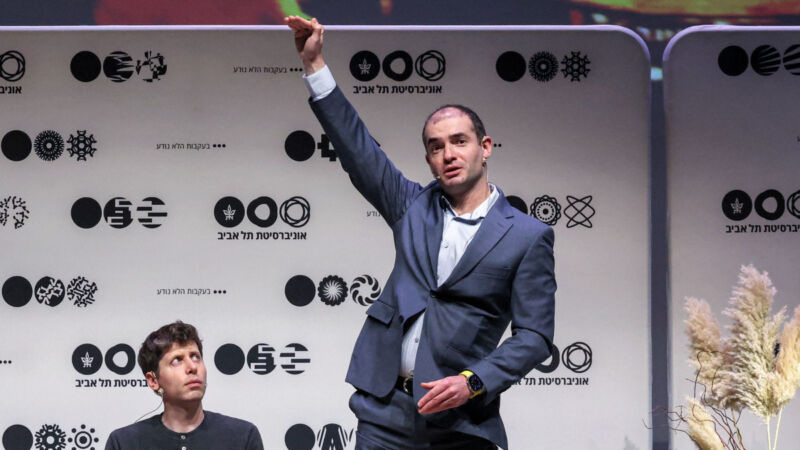
Illya Sutskever physically gestures as OpenAI CEO Sam Altman looks on at Tel Aviv University on June 5, 2023.

Enlarge / Ilya Sutskever physically gestures as OpenAI CEO Sam Altman looks on at Tel Aviv University on June 5, 2023. (credit: Getty Images)

On Wednesday, former OpenAI Chief Scientist Ilya Sutskever announced he is forming a new company called Safe Superintelligence, Inc. (SSI) with the goal of safely building "superintelligence," which is a hypothetical form of artificial intelligence that surpasses human intelligence, possibly in the extreme.

"We will pursue safe superintelligence in a straight shot, with one focus, one goal, and one product," wrote Sutskever on X. "We will do it through revolutionary breakthroughs produced by a small cracked team."

Sutskever was a founding member of OpenAI and formerly served as the company's chief scientist. Two others are joining Sutskever at SSI initially: Daniel Levy, who formerly headed the Optimization Team at OpenAI, and Daniel Gross, an AI investor who worked on machine learning projects at Apple between 2013 and 2017. The trio posted a statement on the company's new website.

Read 8 remaining paragraphs | Comments

Reference : https://ift.tt/qjz5y8N

Meet the Anthropic Engineer Keeping Its AI Agent Trustworthy

<img src="https://spectrum.ieee.org/media-library/an-indian-man-in-a-dress-shirt-smiling-in-front-of-the-entrance-to-an-office-buil...