Sunday, July 7, 2024

The Energy Transition Requires a Holistic Approach


Unless U.S. energy policy and industry practice is systemically shaped to intercept and exploit the exponential improvements in clean-energy technology and cost reductions now occurring, the United States could end up with the worst of all situations by 2040: a dystopian grid where energy costs are high and reliability is poor, decarbonization progress is stalled, and the economic gains that have been made over the last century are at risk.

That’s a central premise of Energy 2040: Aligning Innovation, Economics and Decarbonization by Deepak Divan, professor and the founding director of the Center for Distributed Energy at the Georgia Institute of Technology, and recipient of the 2024 IEEE Medal in Power Engineering, and his coauthor Suresh Sharma, a former General Electric executive and the entrepreneur in residence at Georgia Tech. The book explores how new sources of energy are disrupting long-held beliefs and assumptions on how energy should be generated, transmitted and distributed. In the following interview IEEE Spectrum contributing editor Robert N. Charette talks with Divan about how to align economic imperatives and climate goals for sustainability and affordability.

One of the fundamental themes of your book is that the technological learning curve that has resulted in the rapid reduction in the costs of renewable energy has been sustained for 50 to 70 years and shows no signs of slowing down. You also write that these declines were not predicted by experts in the field just two decades ago. What do you mean by the technological learning curve? What did you find in terms of cost reductions in different types of renewable energy as a result? And why were the experts so wrong in their predictions of renewable energy costs?

Deepak Divan: The technological learning curve is at the heart of our book. We spent a lot of time in the beginning of the book going through the history of why we are where we are because it is important to understand the process and nuances of how we got here. It is quite complicated, but I’ll try to simplify it.

man smiling for a portrait in a suit jacket and white shirt against a gray background Deepak Divan

We start at a place where science lagged technology and the market by a significant amount in the early years of the power industry. In other words, the processes of taking technology to market through innovation, through tinkering, through entrepreneurs who were willing to invest, helped create the underlying structure of today’s utility industry.

When the electricity grid was established, it was the Wild West, with every entrepreneur trying to get ahead of the others with their own proprietary solutions. However, it soon became clear that the grid, which was not just a single device but a physically coupled network of a large number of devices, needed to be coordinated and controlled as a whole—very different from most previous technological innovations. Everybody’s appliances needed to work with the same voltage and the same frequency, for instance. So, electricity providers were forced to make everything work seamlessly—challenging in a world before microprocessors and power electronics.

Yet at the same time, the early electricity providers also focused on where the money was, so they ended up targeting those pieces of the market that had best return on their investments. As a result, big, broad swaths of the country, typically rural, were being left in the dark. This helped create the Public Utility Holding Company Act of 1934 that forced more regulation on the electricity industry. It also promised utilities better and more stable economic returns, but in exchange for providing universal access, and so we end up getting the grid that we have right now.

I keep thinking that Elon Musk should not be worrying so much about autonomous cars today. Give me an autonomous inverter first.—Deepak Divan

However, industry regulations also strongly influenced the way electricity providers thought. With the utility industry now regulated, it was not possible to bring innovation to market very easily. Reliability was the most important objective and any new technological innovations that might reduce reliability were frowned upon. As a result, it took 10 to 20 years to bring new technologies to market.

So, the electricity industry went from a fast-moving, risk-taking one to an industry that was very, very slow moving, very risk averse. That was fine as long as technological innovation was also moving slowly.

Over the past two decades, however, something radically changed. Traditional learning curves, where one gained experience over time and the product or service cost went down a modest amount until the next S-shaped learning curve began, started to disappear. Instead, the learning curve across many energy-related technologies and their resultant cost reductions started to happen without much notice over decades seemingly without limit, with few indications when they will ever saturate.

We’ve seen this in microelectronics ad nauseam, for example. We have also seen it reflected in the photovoltaics space, where the learning curves began in the early 1970s. Since that time, there have been hundreds of technologies that have intersected and interconnected to create a 23 percent reduction in price for each doubling in sales volume with no signs that it’s going to slow down.

The same kind of curve is occurring in the battery space because, again, it is micromaterial-based and multiple new smart materials all coming together to give you both more kilowatts and kilowatt-hours. The battery market is now tasting success; it is attracting huge investments, again, with no signs of slowing down.

Why did no one in the energy industry see this coming?

Divan: If we go back to around the year 2000, at that point, solar LCOE (levelized cost of energy) was $850 per kilowatt-hour, and batteries were $1,200/KWh. There was nobody in their right mind who thought that that would ever become competitive with gas and coal sitting at around $35/KWh and $50/KWh.

No one believed that the learning rates in solar or batteries, for example, could be sustained. Everyone in the industry thought that the technology was gimmicky and was not really going to be able to scale. After all, solar panels are small little things. How could you compete with a 500-megawatt gas plant?

Additionally, the utilities all used similar 20-year integrated resource planning cycles. So, they were already making investments in terms of what needed to be done and there was not a consultancy in the world who was willing to advise them to say stop everything you’re doing and let’s start moving towards solar. There was no rational basis for that.

The energy industry also believed they had so much economic and policy clout, they could hold off any threat from renewable energy forever.

I do not think the transition to renewables and EVs can be stopped, but I think it can be made extremely messy. —Deepak Divan

A former CEO for PJM, the biggest grid operator in the United States, told me that even in 2010 there was not a single CEO of a grid operator, electric utility, automotive or oil company who thought that electric vehicles, solar power or batteries were going to be cost competitive any time soon.

But by 2015, new energy companies were disrupting energy incumbents’ long-held assumptions. This was reflected by an astounding 97.5 percent reduction in the cost of solar from 2000 to 2022, and this is installed cost! And similarly with batteries, there has been a 92 percent cost reduction over the same period that is just continuing because there are so many new technologies being brought into play.

As to why the biggest companies in the world that are responsible for a huge part of global GDP, have the smartest people in the world and are advised by the smartest consultants in the world, could not see this coming is a fundamental question that we have asked in the book.

One of the implications you discuss is that the distributed energy resources, or DERs, like solar power, windmills and large-scale energy-storage systems are going to change the electric grid from a synchronous generator and inertia-driven system to an inverter-based resource (IBR) rich grid where grid voltage and frequency are not regulated by inertial sources. Can you explain the difference, why and what needs to happen both from a technology perspective to move to a decarbonized IBR grid?

Divan: Getting to an inverter-based grid is one of the things that the industry is struggling with on the technology side. Fundamentally, the existing grid is electromechanical in nature.

There are these big, rotating, energy-generating turbine-driven synchronous machines, and over 100 years we have figured out how to make them work to make the grid reliable. All the simplifications and efficiencies, all the standardizations and designs and synchronous generators that were needed have been figured out and now there is a system that works reasonably well. The grid that has been built in the United States has been called the largest machine ever built, with all these rotating machines possessing huge amounts of rotational inertia, all rotating together in lockstep because of the way synchronous machines operate.

an aeriel view of numerous wind turbines in a line on a green rolling hills RyanJLane/Getty Images

When even a small disturbance occurs anywhere on the grid, all of them continue to operate locked together and to share the power delivered, with the ability to clear any faults as they occur on the system. The entire system is structured around this model. While it is often called a smart grid, there’s nothing smart about it. It’s an extremely good grid but it’s really a passive grid. All the smarts are sitting 15 minutes away at the operator level. So, for 15 minutes, the system has to keep operating until the next command is received.

This enormous machine has several interesting characteristics that make it work well. One is that the grid has a lot of damping built into it. Anytime there is a deviation because of a disturbance on the system, there’s a restorative torque that automatically occurs on it.

Another characteristic is that it is usually thought that frequency is the universal parameter on the system, since all the generators essentially use a power-frequency droop principle to share power equally. However, the problem is that in the synchronous generator world, frequency command is a DC quantity, while the three-phase AC voltages are generated and locked in by the machines’ action itself, not by control action.

Now, as synchronous generators are replaced with inverters, you don’t have any intrinsic rotation or inertia in the system. We don’t have any of the attributes of damping that are automatically built into it. Further, there are now inverters with DSPs [digital signal processors] and FPGAs [field-programmable gate arrays] which allow the measurement of the grid voltage and to act very, very quickly.

For the first time in our history, decarbonized climate-friendly solutions are also lower cost than traditional fossil-energy-based solutions. For the first time ever, what is good for our wallet is also good for the planet! —Deepak Divan

In the early years and all the way until very recently, we only built what we call grid-following inverters. Essentially, the voltage of the grid was taken as given and power was pushed against it. The inverter followed the grid and power could be dispatched per utility command, which worked fine. This has allowed us to scale IBRs in many locations around the world.

The difficulty is as one gets to high penetration of inverter-based resources, the grid is no longer being formed nicely, and so the system can become unstable.

Now there is a need to start thinking about how the grid is going to be formed when we have an inverter-dominant grid. The issue is that one does not have that rotating machine, one doesn’t have that restorative torque, and one doesn’t have the system damping. None of those things are there.

Each inverter thinks it is very smart and it’s going to try to form the voltage based on local information. However, it is also going to have to interact with what another inverter is trying to do to form voltage and what another inverter is doing, and so on. This becomes a problem.

So as these inverters interact with each other, it’s often hard to keep them stable. While we have been able to demonstrate grid-forming inverters and every manufacturer now claims to have one, we do not exactly know what a grid-forming inverter should do, especially when done at scale, to ensure that they do not interact with each other, particularly when millions of inverters are deployed. This creates a challenge.

There is also the concern that each of these inverters is made by a different manufacturer. Some of them were made 20 years back, some were made 10 years back some and these now need to be compatible with what will be made in the next 10 years. They are no agreed standards. Standards are lagging by 10 years or more.

The question is what does one do, if it takes you 10 years to get a new standard out, and given that the rate of solar deployment is so high that in that time some 1,000 gigawatts of PV solar will be deployed, but none of it will be compliant with the future, as yet unknown, standard?

How do you also stabilize the grid in this environment?

Divan: The utilities today have grown up without having to worry about any of these issues. They just focused on how to restore power, how to connect this to that, how to manage the workforce, and so on. Not this dynamic beast which they have few skills in dealing with. In fact, most big electric utilities have few people in their workforce who are skilled in power electronics, because the old system did not need it.

These are very complex issues and part of the challenge is that it is a different operational paradigm than today. We do not have these fundamental issues resolved. The important question, I think, and part of the problem is that nobody can stand in public and say, “Hey, there’s a problem here!”

I keep thinking that Elon Musk should not be worrying so much about autonomous cars today. Give me an autonomous inverter first. That is a much, much more important priority in the near term.

In the book, you were careful to also lay out factors that could derail your energy vision for 2040. Could you discuss a few of them, and what might be done to avoid or minimize them?

Divan: I do not think the transition to renewables and EVs can be stopped, but I think it can be made extremely messy.

Major energy transformations have taken 50 to 70 years, and they have been very messy from a regulatory standpoint. People are pushing back against going to renewables, but I do not think they can win because at the end of the day, everybody is going to respond to the economics and functionality of inexpensive renewables and new holistic solutions.

Even if we in the United States do not do it because of the politics and incumbent resistance, the Chinese and others are going to continue to move the technology along and to drive the prices down. And so you know, you’re going to at some point say, oh, ****, I think we have to adopt this new stuff, because it’s going to seep into widespread use. By then, I am concerned that we will have been left behind.

Nobody can argue with economics of renewables in the future; it is going to drive everything. However, if you do not think about the economics and government policies properly together, they will drive bad outcomes. —Deepak Divan

Another issue that could make things messy is that the utilities do not have the ability to change easily. They must meet their reliability requirements in the near term, which becomes problematic when all these new technologies are coming in. They are not going to absorb these technologies easily.

In addition, the energy load is moving in. Data centers, especially those for AI, are coming online, as well as electric-vehicle charging, heat pumps and green hydrogen. How do you meet those requirements?

It is tempting to say, “Let’s go back to the old days and fire up the gas and coal plants.” While that is not the answer, that is something that easily could happen.

The point I am trying to make is that I do not believe this energy transition can be stopped, but it can be made extremely expensive. It can be made extremely messy and then we will have lost the climate battle at the same time. But it does not have to be so! For the first time in our history, decarbonized climate-friendly solutions are also lower cost than traditional fossil-energy-based solutions. For the first time ever, what is good for our wallet is also good for the planet!

Nobody is laying the difficulties out. Nobody. The hope with writing this book was to start this conversation because we are not seeing anybody addressing these issues holistically.

Unfortunately, most people are unable to act on something that has a long-term benefit but is more expensive in the near to midterm. They will only act in the short term. So, you have to give them a short-term reason for doing something by making it the attractive thing to do financially.

aerial view of trees and road in the shape of a electric plug Viaframe/Getty Images

This is very important in my mind. Nobody can argue with economics of renewables in the future; it is going to drive everything. However, if you do not think about the economics and government policies properly together, they will drive bad outcomes.

Who do you hope will read your book, and what are the two or three fundamental messages they should take away and, more importantly, act on and when?

Divan: I think the audience is everybody who is interested in energy in general, including researchers, engineers, policymakers, investors, entrepreneurs and students. People are interested in the topics we raise. Every time I go into a room, I have six people approach me and want to talk about it. They are reading something in the news, and they have only a narrow sliver of information. They are not able to connect all the dots together.

I think part of the problem is that this field is very complex and very nuanced, and when you try to simplify it, you can get to the wrong conclusions. My objective for writing the book was that we really do not hear this line of conversation in the industry. In other words, a holistic view of the problems confronting the industry is required because everything you do intersects with something else.

The utility industry does not fully understand this. When I go to the IEEE Power and Energy Society general meeting, I go to every conference room and I ask a question about the dynamics and scaling of IBRs and distributed systems. Nobody has an answer. This is scary. I mean, this whole industry is there, and they’re absorbing gigawatts after gigawatts of renewable energy and don’t have any idea what the hell is going happen as we move to a distributed energy resources dominant zero-carbon grid (which EPRI has also set as the target for 2050).

Again, oversimplifying is going to lead us to the wrong place, not looking holistically is going to lead us to the wrong place. We have an opportunity where we have alignment between economics and decarbonization for the first time. Let’s not blow it.

Reference: https://ift.tt/6J83x4V

Saturday, July 6, 2024

How Good Is ChatGPT at Coding, Really?


This article is part of our exclusive IEEE Journal Watch series in partnership with IEEE Xplore.

Programmers have spent decades writing code for AI models, and now, in a full circle moment, AI is being used to write code. But how does an AI code generator compare to a human programmer?

A study published in the June issue of IEEE Transactions on Software Engineering evaluated the code produced by OpenAI’s ChatGPT in terms of functionality, complexity and security. The results show that ChatGPT has an extremely broad range of success when it comes to producing functional code—with a success rate ranging from anywhere as poor as 0.66 percent and as good as 89 percent—depending on the difficulty of the task, the programming language, and a number of other factors.

While in some cases the AI generator could produce better code than humans, the analysis also reveals some security concerns with AI-generated code.

Yutian Tang is a lecturer at the University of Glasgow who was involved in the study. He notes that AI-based code generation could provide some advantages in terms of enhancing productivity and automating software development tasks—but it’s important to understand the strengths and limitations of these models.

“By conducting a comprehensive analysis, we can uncover potential issues and limitations that arise in the ChatGPT-based code generation... [and] improve generation techniques,” Tang explains.

To explore these limitations in more detail, his team sought to test GPT-3.5’s ability to address 728 coding problems from the LeetCode testing platform in five programming languages: C, C++, Java, JavaScript, and Python.

“A reasonable hypothesis for why ChatGPT can do better with algorithm problems before 2021 is that these problems are frequently seen in the training dataset.” —Yutian Tang, University of Glasgow

Overall, ChatGPT was fairly good at solving problems in the different coding languages—but especially when attempting to solve coding problems that existed on LeetCode before 2021. For instance, it was able to produce functional code for easy, medium, and hard problems with success rates of about 89, 71, and 40 percent, respectively.

“However, when it comes to the algorithm problems after 2021, ChatGPT’s ability to generate functionally correct code is affected. It sometimes fails to understand the meaning of questions, even for easy level problems,” Tang notes.

For example, ChatGPT’s ability to produce functional code for “easy” coding problems dropped from 89 percent to 52 percent after 2021. And its ability to generate functional code for “hard” problems dropped from 40 percent to 0.66 percent after this time as well.

“A reasonable hypothesis for why ChatGPT can do better with algorithm problems before 2021 is that these problems are frequently seen in the training dataset,” Tang says.

Essentially, as coding evolves, ChatGPT has not been exposed yet to new problems and solutions. It lacks the critical thinking skills of a human and can only address problems it has previously encountered. This could explain why it is so much better at addressing older coding problems than newer ones.

“ChatGPT may generate incorrect code because it does not understand the meaning of algorithm problems.” —Yutian Tang, University of Glasgow

Interestingly, ChatGPT is able to generate code with smaller runtime and memory overheads than at least 50 percent of human solutions to the same LeetCode problems.

The researchers also explored the ability of ChatGPT to fix its own coding errors after receiving feedback from LeetCode. They randomly selected 50 coding scenarios where ChatGPT initially generated incorrect coding, either because it didn’t understand the content or problem at hand.

While ChatGPT was good at fixing compiling errors, it generally was not good at correcting its own mistakes.

“ChatGPT may generate incorrect code because it does not understand the meaning of algorithm problems, thus, this simple error feedback information is not enough,” Tang explains.

The researchers also found that ChatGPT-generated code did have a fair amount of vulnerabilities, such as a missing null test, but many of these were easily fixable. Their results also show that generated code in C was the most complex, followed by C++ and Python, which has a similar complexity to the human-written code.

Tangs says, based on these results, it’s important that developers using ChatGPT provide additional information to help ChatGPT better understand problems or avoid vulnerabilities.

“For example, when encountering more complex programming problems, developers can provide relevant knowledge as much as possible, and tell ChatGPT in the prompt which potential vulnerabilities to be aware of,” Tang says.

Reference: https://ift.tt/1FWOuh0

Friday, July 5, 2024

Video Friday: Humanoids Building BMWs


Video Friday is your weekly selection of awesome robotics videos, collected by your friends at IEEE Spectrum robotics. We also post a weekly calendar of upcoming robotics events for the next few months. Please send us your events for inclusion.

RoboCup 2024: 17–22 July 2024, EINDHOVEN, NETHERLANDS
ICRA@40: 23–26 September 2024, ROTTERDAM, NETHERLANDS
IROS 2024: 14–18 October 2024, ABU DHABI, UAE
ICSR 2024: 23–26 October 2024, ODENSE, DENMARK
Cybathlon 2024: 25–27 October 2024, ZURICH

Enjoy today’s videos!

Figure is making progress toward a humanoid robot that can do something useful, but keep in mind that the “full use case” here is not one continuous shot.

[ Figure ]

Can this robot survive a 1 meter drop? Spoiler alert: it cannot.

[ WVUIRL ]

One of those things that’s a lot harder for robots than it probably looks.

This is a demo of hammering a nail. The instantaneous rebound force from the hammer is absorbed through a combination of the elasticity of the rubber material securing the hammer, the deflection in torque sensors and harmonic gears, backdrivability, and impedance control. This allows the nail to be driven with a certain amount of force.

[ Tokyo Robotics ]

Although bin packing has been a key benchmark task for robotic manipulation, the community has mainly focused on the placement of rigid rectilinear objects within the container. We address this by presenting a soft robotic hand that combines vision, motor-based proprioception, and soft tactile sensors to identify, sort, and pack a stream of unknown objects.

[ MIT CSAIL ]

Status Update: Extending traditional visual servo and compliant control by integrating the latest reinforcement and imitation learning control methodologies, UBTECH gradually trains the embodied intelligence-based “cerebellum” of its humanoid robot Walker S for diverse industrial manipulation tasks.

[ UBTECH ]

If you’re gonna ask a robot to stack bread, better make it flat.

[ FANUC ]

Cassie has to be one of the most distinctive sounding legged robots there is.

[ Paper ]

Twice the robots are by definition twice as capable, right...?

[ Pollen Robotics ]

The Robotic Systems Lab participated in the Advanced Industrial Robotic Applications (AIRA) Challenge at the ACHEMA 2024 process industry trade show, where teams demonstrated their teleoperated robotic solutions for industrial inspection tasks. We competed with the ALMA legged manipulator robot, teleoperated using a second robot arm in a leader-follower configuration, placing us in third place for the competition.

[ ETHZ RSL ]

This is apparently “peak demand” in a single market for Wing delivery drones.

[ Wing ]

Using a new type of surgical intervention and neuroprosthetic interface, MIT researchers, in collaboration with colleagues from Brigham and Women’s Hospital, have shown that a natural walking gait is achievable using a prosthetic leg fully driven by the body’s own nervous system. The surgical amputation procedure reconnects muscles in the residual limb, which allows patients to receive “proprioceptive” feedback about where their prosthetic limb is in space.

[ MIT ]

Coal mining in Forest of Dean (UK) is such a difficult and challenging job. Going into the mine as human is sometimes almost impossible. We did it with our robot while inspecting the mine with our partners (Forestry England) and the local miners!

[ UCL RPL ]

Chill.

[ ABB ]

Would you tango with a robot? Inviting us into the fascinating world of dancing machines, robot choreographer Catie Cuan highlights why teaching robots to move with grace, intention and emotion is essential to creating AI-powered machines we will want to welcome into our daily lives.

[ TED ]

Reference: https://ift.tt/RjzvQw0

IEEE Team Training Programs Elevate Wireless Communication Skills


The field of wireless communication is constantly evolving, and engineers need to be aware of the latest improvements and requirements. To address their needs, the IEEE Communications Society is offering two exclusive training programs for individuals and technical teams.

The online Intensive Wireless Communications and Advanced Topics in Wireless course series are taught by experts in real time. Through lectures that include practical use cases and case studies, participants acquire knowledge that can be applied in the workplace. During the interactive, live courses, learners have the opportunity to engage directly with industry expert instructors and get answers to their questions in real time.

Recordings of the courses are available to facilitate group discussions of the materials and deepen understanding of concepts. Copies of the instructors’ slides are shared with participants, providing an ongoing resource for future reference.

The benefits of training as a team

“A team taking the courses together can benefit from discussing examples from the lectures and the practice questions,” instructor Alan Bensky says. “Attendees can also help each other better understand more difficult topics.” Bensky, who has more than 30 years of industry experience, teaches the Intensive Wireless Communications series.


Panteleimon Balis, an Advanced Topics in Wireless instructor, says taking the courses together as a team “fosters an aligned development of knowledge that enhances communication and collaboration within the team, leading to more effective problem-solving and decision-making.” Balis is a radio access network specialist who provides training on mobile and wireless communications technologies.

“The collective development of skill sets enables the team to apply the assimilated knowledge to real-world projects, driving innovation and efficiency within the organization,” he says. “Ultimately, attending these courses as a team not only strengthens individual competencies but also reinforces team cohesion and performance, benefiting the organization as a whole.”

Practical use cases to apply on the job

The following topics are covered in the Intensive Wireless Communications course, which is scheduled to be held in September and October:

  • Fundamentals of wireless communication.
  • Network and service architecture.
  • Cellular networks.
  • Noncellular wireless systems.

Several practical use cases are shared in the courses. Bensky notes, for example, that those working on Wi-Fi devices or network deployment likely will find the section on IEEE 802.11 especially useful because it covers the capabilities of the different amendments, particularly regarding data rate calculation and presentation of achievable rates.

“Attending these courses as a team not only strengthens individual competencies but also reinforces team cohesion and performance, benefiting the organization as a whole.” —Panteleimon Balis

The Advanced Topics in Wireless series, taught in October and November, includes these classes:

  • 5G RAN and Core Network: Architecture, Technology Enablers, and Implementation Aspects.
  • O-RAN: Disrupting the Radio Access Network through Openness and Innovation.
  • Machine Type Communications in 5G and Beyond.

The inclusion of use cases, Balis says, brings significant value to the learning experience and helps with bridging the gap between theory and practice. In the O-RAN (open radio access network) module, for example, case studies analyze the pros and cons of early deployments in Japan and the United States.

As noted by the IEEE Standards Association, the key concept of O-RAN is opening the protocols and interfaces among the various building blocks—radios, hardware, and software—in the RAN.

The Advanced Topics in Wireless courses are scheduled to begin after the Intensive Wireless Communications series concludes.

More details about courses are available online, where you can learn how to offer the series to your team.

Reference: https://ift.tt/YqQTyoF

Thursday, July 4, 2024

Detect Migrating Birds With a Plastic Dish and a Cheap Microphone


Birding is booming. You may realize your local nature spots are especially busy during seasonal migrations, when birds move between their summer and winter grounds. Species that you had been noticing disappear may have been replaced by ones that hadn’t been there before. Or you may have seen migrating birds on the wing—say, a flock of geese flying in their famous V-formation. Even if you’re not a dedicated birder, you’ve probably made such observations throughout your life. So it might come as a surprise to learn that you’ve been missing out on most of this action, which takes place at night. But, as I discovered, with some simple electronics and the right software, you can identify nocturnal migrators with ease!

Birds migrate at night for a few reasons. One is that it helps them to avoid predators. Also, it allows them to use the stars for navigation. A less obvious reason is that traveling at night helps these birds avoid heat stress. And the night air tends to be less turbulent, making flying easier.

These nighttime flights are largely invisible. If you’re lucky, you might view telltale silhouettes by training a telescope on the moon. But during the Second World War, scientists realized that they could readily detect migrating birds using radar. Since then, ornithologists’ radar studies, particularly those that use modern weather radar, have proved immensely successful in showing where and when birds migrate at night.

Radar echoes cannot, however, identify species. But there is another technique that can: recording the calls that birds make during their nocturnal travels.

An illustration of acoustic detection components. Incoming sounds are amplified using a parabolic dish made from a plastic bird-feeder cover [top]. A microphone attached at the focal point of the dish is connected to a preamplifier [middle left], which in turns feeds an external sound card [middle right], which connects to a host computer via USB. A large gel-acid battery [bottom] provides plenty of power for long-term monitoring. James Provost

When ornithologist Richard Graber and electrical engineer William Cochrane made the first systematic recordings of nocturnally migrating birds in 1957, they used a microphone attached to a 2-meter-wide upward-facing parabolic dish. But you can get by today with a far more modest setup.

You could, for example, reproduce the gear designed by Bill Evans. On his website he sells a microphone and preamp for this purpose along with guidance on how to package the equipment so that it will hold up to the elements. I explored a different approach, though, one that seemed easier and cheaper.

Evans’s preamp is designed to be insensitive to low frequencies, as these aren’t of interest when you’re recording bird calls. I figured that this feature wasn’t that important, so after testing a few inexpensive options for the microphone and preamplifier, I chose one on Amazon for just US $9.

This circuit uses the venerable NE5532, a low-noise, low-distortion dual op-amp design that’s been used in professional recording equipment since 1979. To make it directional, I unsoldered the condenser microphone from the board, attached a short length of audio cable to it, and mounted it at the focal point of an 8-inch-diameter parabolic dish—or, well, a reasonable approximation of a parabolic dish, as it’s actually a rain guard for bird feeders. You could also purchase a 16-inch-diameter one, but the 8-inch dish served me admirably.

I found the focal point of this dish through trial and error and ran the output of the preamp into an old Creative Labs Sound Blaster external sound card, which had been collecting dust on my shelf. I suspect that just about any external sound card would work fine for this application, including the $34 StarTac model that I use to good effect to monitor solar flares.

To power the preamp, I used a 7-ampere-hour, 12-volt gel-cell battery, which is overkill. But the big battery would allow me to leave the thing running for weeks at a time. Following Evans’s advice, I housed everything in a 2-gallon paint bucket, stretching some plastic wrap over the top to keep rain out.

I placed my bucket o’ electronics on the roof of my porch, running a USB cable from the sound card, out the side of the bucket, and into my office through a window. Then I plugged it into a Windows laptop onto which I had installed Raven Lite, acoustic-spectrogram software made available for free by the Cornell Lab of Ornithology.

Using Raven Lite to compute spectrograms showed just how sensitive this arrangement is. I could easily view, for example, the effect of completely inaudible sounds created by rubbing my thumb and forefinger together a couple of meters away from the microphone.

With the gear in place outside, I started recording at night, beginning in early March, arranging the Raven Lite software to record a series of 1-hour sound files. The great thing about Raven Lite is that you can review hours of recordings just by scanning through spectrograms visually. Checking out a 1-hour-long sound file takes just a few minutes.

A chart plotting frequency against time, showing a 10-second-long surge of acoustic activity. This audiogram reveals the presence of bird calls. I uploaded the data to a server maintained by Cornell University that then uses AI to quickly identify the species. James Provost


These files, of course, picked up a lot of sounds: rumbling traffic, screeching cats, wailing sirens, and who knows what else. But once you’ve looked at spectrograms for a while, it becomes easy to pick out bird chirps. There is no shortage of local birds chirping during the day, but after sunset their ornithological cacophony abates, returning again some time before dawn.

The interval in between is where I went hunting for the sound of migrating birds. And after 10 days or so, I found my quarry: chirping that started shortly after midnight, rising in volume for a few minutes before fading away.

Using Audacity, a free audio editor, I extracted a few seconds of the loudest chirping and uploaded the file to Birdnet, where the good folks at the Cornell Lab of Ornithology provide a tool for identifying bird calls. It indicated that the species I had recorded was the killdeer, a type of bird found throughout the continental United States, some populations of which are migratory.

Additional nights of recording and scanning spectrograms turned up other sounds that appeared to be from other kinds of birds on the move, including such migratory species as the dark-eyed junco and Kentucky warbler.

I’ve never been an accomplished bird watcher: I’d be hard pressed to distinguish a sparrow from a wren. So it’s rather satisfying to discover that, with some simple electronics and the right software, I am able to pick out different species of migratory birds flying high overhead through the inky darkness of the night.

Reference: https://ift.tt/9U0sIBQ

Wednesday, July 3, 2024

384,000 sites pull code from sketchy code library recently bought by Chinese firm


384,000 sites pull code from sketchy code library recently bought by Chinese firm

Enlarge (credit: Getty Images)

More than 384,000 websites are linking to a site that was caught last week performing a supply-chain attack that redirected visitors to malicious sites, researchers said.

For years, the JavaScript code, hosted at polyfill[.]com, was a legitimate open source project that allowed older browsers to handle advanced functions that weren’t natively supported. By linking to cdn.polyfill[.]io, websites could ensure that devices using legacy browsers could render content in newer formats. The free service was popular among websites because all they had to do was embed the link in their sites. The code hosted on the polyfill site did the rest.

The power of supply-chain attacks

In February, China-based company Funnull acquired the domain and the GitHub account that hosted the JavaScript code. On June 25, researchers from security firm Sansec reported that code hosted on the polyfill domain had been changed to redirect users to adult- and gambling-themed websites. The code was deliberately designed to mask the redirections by performing them only at certain times of the day and only against visitors who met specific criteria.

Read 10 remaining paragraphs | Comments

Reference : https://ift.tt/SnbQRDG

Autonomous Vehicles Can Make All Cars More Efficient


Autonomous vehicles have been highly anticipated because of the possibility that they will greatly reduce or perhaps eliminate the collisions that cause more than one million deaths each year. But safety isn’t the only potential benefit self-driving cars can offer: Teams of researchers around the world are showing that autonomous vehicles can also drive more efficiently than humans can. A U.S. Department of Energy program called NEXTCAR (Next-Generation Energy Technologies for Connected and Automated On-Road Vehicles), for example, is betting that a mix of new smart vehicle technologies can boost fuel efficiency by as much as 30 percent.

As part of the NEXTCAR program, San Antonio, Texas-based Southwest Research Institute (SwRI) showcased advances in autonomous vehicle technology that will improve vehicles’ fuel economy—including the fuel efficiency of non-autonomous automobiles that just so happen to be in traffic with autonomous ones. The demonstration was held at the ARPA-E Energy Inovation Summit in Dallas in late May.

Making an Efficient Autonomous Vehicle

The SwRI team retrofitted a 2021 Honda Clarity hybrid with basic autonomous features such as perception and localization. On the day of the summit, they drove the vehicle along a route encircling the parking lot of the convention center where the summit was held. SWRI’s Ranger localization system, which the researchers installed on the Honda, has a downward-facing camera that captures images of the ground. By initially mapping the driving surface, Ranger can later localize the vehicle with centimeter-level accuracy, using the ground’s unique “fingerprint” combined with GPS data. This precision ensures the vehicle drives with exceptional control.

“It’s almost like riding on rails,” says Stas Gankov, a researcher in SwRI’s powertrain engineering group. For this project, his group collaborated with other divisions at the institute, such as the intelligence systems division, which developed the autonomy software stack added to the Honda Clarity.

Just as important, however, was the addition of an eco-driving module, a key innovation by SwRI. The eco-mode determines the most economical driving speed by considering various factors such as traffic lights and surrounding vehicles. This system employs predictive control algorithms to help solve a tricky optimization problem: How can cars minimize energy consumption while maintaining efficient traffic flow? SwRI’s eco-mode aims to reduce unnecessary acceleration and deceleration in order to optimize energy usage without impeding other vehicles.

“Autonomous vehicles operating in eco-mode influence the driving behavior of all the cars behind them.” —Stas Gankov, Southwest Research Institute

To illustrate how the technology works, the team installed a traffic signal along the demonstration pathway. Gankov says an actual traffic light timer from a traffic signal cabinet was connected to a TV screen, providing a visual for attendees. A dedicated short range communications (DRSC) radio was also attached, broadcasting the signal’s phase and timing information to the vehicle. This setup enabled the vehicle to anticipate the traffic light’s actions far more accurately than a human driver could.

For instance, Gankov says, if the Honda Clarity was approaching a red light that was about to turn green, it would know the light was due to change and so avoid wasting energy by braking and then accelerating again. Conversely, if the car was approaching the signal as it was about to turn from green to yellow to red, the vehicle would release the accelerator and let friction slow it to a crawl, avoiding unnecessary acceleration in an attempt to beat the light.

These autonomous driving strategies can lead to significant energy savings, benefiting not just the autonomous vehicles themselves, but also the entire traffic ecosystem.

“In a regular traffic situation, autonomous vehicles operating in eco-mode influence the driving behavior of all the cars behind them,” says Gankov. “The result is that even vehicles with Level 0 autonomy use fuel more sparingly.”

The Grand Vehicle Energy Plan

SwRI has been a participant in the NEXTCAR initiative since 2017. The program’s initial phase involved 11 teams, including SwRI, Michigan Technological University, Ohio State University, and the University of California Berkeley. SwRI, in collaboration with the University of Michigan, focused on optimizing a Toyota Prius Prime, already known for its fuel efficiency, to achieve a 20 percent improvement in energy usage through optimization algorithms and wireless communicating with its surroundings. This was accomplished without modifying the Toyota’s powertrain or compromising its emissions. The team utilized power split optimization, balancing the use of the gas engine and battery propulsion system for maximum efficiency.

Building on the success of NEXTCAR’s first phase, the program entered its second phase in 2021, with just SwRI, UC Berkeley, Michigan Tech and Ohio State remaining. The focus of NEXTCAR 2 has been determining how much automation could further enhance energy efficiency. Gankov explains that while the first phase demonstrated a 20 percent energy efficiency improvement over a baseline 2016 or 2017 model year vehicle with no autonomous driving capabilities, through the addition of vehicle-to-everything connectivity alone, the second phase is exploring the potential for an additional 10 percent improvement by incorporating autonomous features.

Gankov says SwRI initially intended to partner with Honda for NEXTCAR’s second phase, but when contracting issues arose, the nonprofit proceeded independently. Utilizing an autonomy platform developed by SwRI’s intelligence systems division, the NEXTCAR team equipped the Honda Clarity with what amounted to Level 4 autonomy in a box. This autonomy system features a drive-by-wire system, allowing the vehicle to automatically adjust its speed and steering based on inputs from the autonomy software stack and the eco-driving module. This ensures the vehicle prioritizes safety while optimizing for energy efficiency.

Employing techniques like efficient highway merging were key strategies in their approach to making the most of each tank of fuel or battery charge. “For example, in heavy traffic on the highway, calculating the most optimal way to merge onto the highway without negatively affecting the energy efficiency of the vehicles already on the highway is crucial,” Gankov noted.

As NEXTCAR 2 enters its final year, the demonstration at the ARPA-E Summit served as a testament to the progress made in autonomous vehicle technology and its potential to dramatically improve energy efficiency in transportation.

Reference: https://ift.tt/ic4LC5G

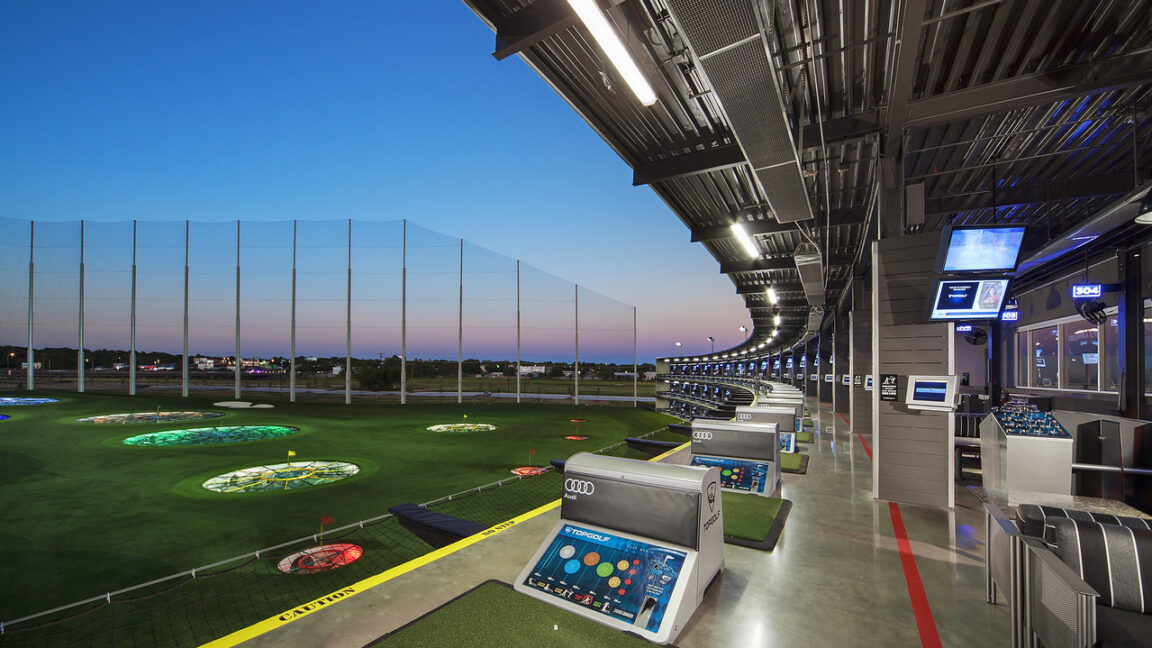
Topgolf saved over $11.3 million after leaving VMware

<p>Topgolf’s VMware costs were going to increase by 400 percent under Broadcom. To avoid that cost, the s...