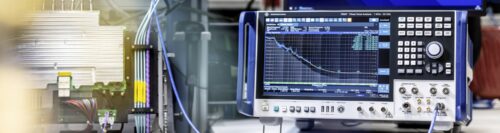
<img src="https://spectrum.ieee.org/media-library/rohde-schwarz-logo-with-slogan-make-ideas-real-and-rs-monogram-in-a-diamond.png?id=66784536&width=980"/><br/><br/><p>A practical introduction to phase noise concepts, explaining how oscillator instability affects RF systems and how phase noise is measured, analyzed, and reported.</p><p>What Attendees will Learn</p><ol><li>What phase noise is and why it matters — Learn how real-world oscillators differ from ideal ones, why short-term frequency instability arises, and why phase variations typically have a much greater impact than amplitude variations on system performance.</li><li>How phase noise degrades system performance — Understand the most common effects of excessive phase noise: spectral regrowth, reciprocal mixing, and constellation rotation in digital communications.</li><li>How phase noise is measured and reported — Explore the spectrum analyzer method and the cross-correlation technique, understand single sideband (SSB) phase noise plots and spot noise tables.</li><li>What advanced phase noise measurements look like in practice — Discover additional measurement types including integrated phase noise, additive (residual) phase noise, pulsed signal phase noise, and amplitude noise.</li></ol><div><span><a href="https://content.knowledgehub.wiley.com/understanding-phase-noise-fundamentals/" target="_blank">Download this free whitepaper now!</a></span></div>
Reference: https://ift.tt/CugySkl



No comments:
Post a Comment