Wednesday, October 25, 2023

Adapting the Electrical Grid for Green Energy


In the past two decades, the renewable energy industry has matured substantially, providing more than 20% of the United States’ overall electricity generation, with plans to triple that amount over the next decade. Wind and solar are the primary sources of renewable energy, and because these are intermittent in nature, storing this significant energy becomes a critical aspect of modernizing the electricity grid.

Register now to join this webinar!


Battery storage is also growing at record rates, so to meet the demand for this energy storage, companies must commercialize the next-generation energy storage technologies. Multiple physics are currently used to store electrical energy (e.g., fluid, thermal, electrical, magnetic, chemical), which makes multiphysics simulation software especially suited for modeling the different aspects of the physical storage system.

A live demonstration of the COMSOL Multiphysics® software will show you how:

  • Multiphysics simulation captures the physical behavior of energy storage more accurately than single-physics simulations
  • Engineers can reduce the need for physical prototyping and testing
  • Engineers can improve their understanding of their technologies
  • Companies can reduce the time and cost required to develop new energy storage technologies
Reference: https://ift.tt/a4iv2Yt

Tuesday, October 24, 2023

US surprises Nvidia by speeding up new AI chip export ban


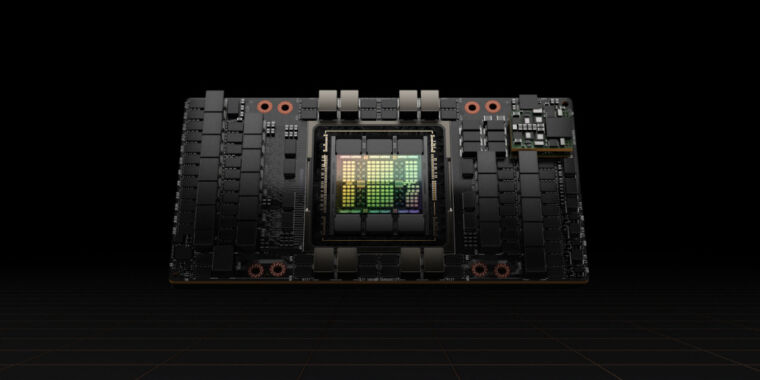
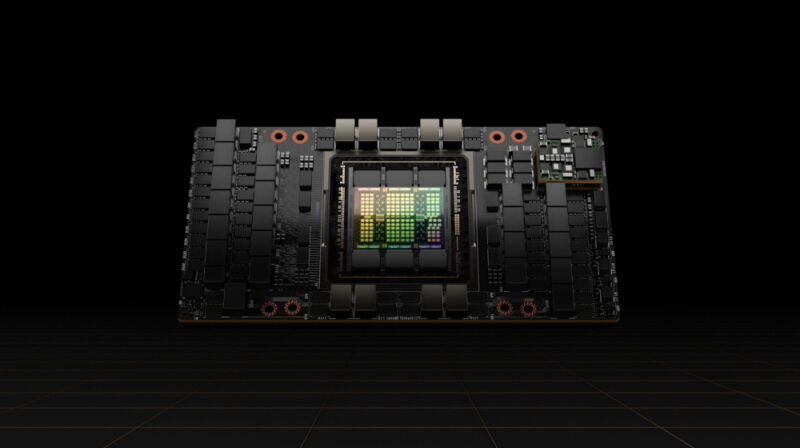
The Nvidia H100 Tensor Core GPU

Enlarge / A press photo of the Nvidia H100 Tensor Core GPU. (credit: Nvidia)

On Tuesday, chip designer Nvidia announced in an SEC filing that new US export restrictions on its high-end AI GPU chips to China are now in effect sooner than expected, according to a report from Reuters. The curbs were initially scheduled to take effect 30 days after their announcement on October 17 and are designed to prevent China, Iran, and Russia from acquiring advanced AI chips.

The banned chips are advanced graphics processing units (GPUs) that are commonly used for training and running deep learning AI applications similar to ChatGPT and AI image generators, among other uses. GPUs are well-suited for neural networks because their massively parallel architecture performs the necessary matrix multiplications involved in running neural networks faster than conventional processors.

The Biden administration initially announced an advanced AI chip export ban in September 2022, and in reaction, Nvidia designed and released new chips, the A800 and H800, to comply with those export rules for the Chinese market. In November 2022, Nvidia told The Verge that the A800 "meets the US Government’s clear test for reduced export control and cannot be programmed to exceed it." However, the new curbs enacted Monday specifically halt the exports of these modified Nvidia AI chips. The Nvidia A100, H100, and L40S chips are also included in the export restrictions.

Read 3 remaining paragraphs | Comments

Reference : https://ift.tt/cLZzX5G

The Space-Based Drug Factory That Can’t Come Home


Five hundred kilometers above the Earth, a small spacecraft is waiting patiently for permission to return home. The autonomous return capsule, made by startup Varda Space Industries, of Torrance, CA, was meant to have landed in the remote Utah desert early in September.

It would have been the first commercial space company to return a drug made in space to Earth, in this case a few grams of the HIV and hepatitis C antiviral ritonavir. Instead, the satellite, about the size of a large trash can and code-named Winnebago 1, continues to orbit the planet at nearly 30,000 kilometers per hour.

The FAA may still regulate re-entry operations of US space missions, even in Australia.

The delay has nothing to do with the satellite itself, which appears to be operating perfectly, and everything to do with an ongoing struggle between Varda and U.S. government agencies back on the ground.

According to a Varda public filing with the U.S. Federal Communications Commission (FCC), Winnebago 1 will now re-enter the atmosphere no sooner than January next year—at least a four-month delay in discovering whether Varda’s proof of concept space factory has delivered the goods.

This stand-off highlights the tension between regulators and commercial space companies in the U.S., which are becoming increasingly vocal in their criticisms of agencies responsible for overseeing private space missions.

Years in the planning

Varda’s mission is to design and build the infrastructure needed to make low Earth orbit accessible to industry, beginning with pharmaceuticals that should be easier to make in microgravity conditions. Planning for Winnebago 1 began two and a half years ago, says Delian Asparouhov, Varda’s co-founder and president. It is the first of four planned missions that will use identical satellites, launched into space by rideshare partners such as Rocket Lab or SpaceX.

But while many thousands of private satellites have been launched on such commercial rockets, none have yet made it back to Earth in one piece. Virtually all satellites are designed to burn up completely on re-entry once their useful life is over, to avoid collisions with active satellites on orbit or risk damaging property or people on Earth. Varda was the first company to apply for a re-entry license for space-made medicines.
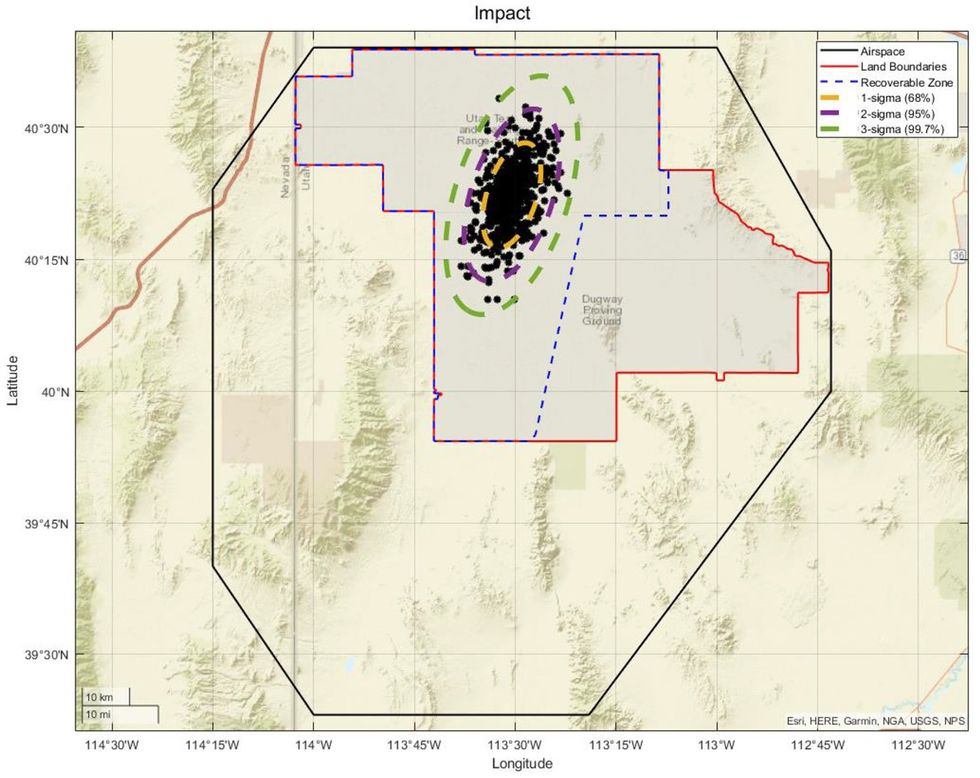
A map marked Impact shows longitude and latitude with sections marked in different colored circles. Documentation shows possible landing locations for Varda’s space factory, at a military range in Utah.Varda Space Industries

“We are absolutely trailblazers here,” Asparouhov tells Spectrum. “And you can imagine how difficult the coordination has been.” The first step was to select a landing site for the 90kg capsule, which would plunge through the atmosphere at hypersonic speeds before releasing a parachute to slow for landing. The company settled on the Utah Test and Training Range (UTTR), two millions acres of desert controlled by the Pentagon, about 80 miles west of Salt Lake City.

As well as getting the military’s buy-in, Varda had to work with two offices at the U.S. Federal Aviation Administration (FAA); one that deals with air traffic control to avoid the capsule approaching aircraft during re-entry, and another that deals with the safety of the re-entry process itself. The FAA would only issue a re-entry license when it decided that the company had met all the legal and safety requirements.

Flight safety

These include making a Flight Safety Analysis document that imagines all the things that could wrong during re-entry, and the subsequent risks posed to people in aircraft, on the ground, and even on boats. The Flight Safety Analysis for Winnebago 1 is not publicly available, but Spectrum did obtain the safety analysis for the Winnebago 2 mission, planned for next year with an identical spacecraft and originally also intended to land at UTTR.
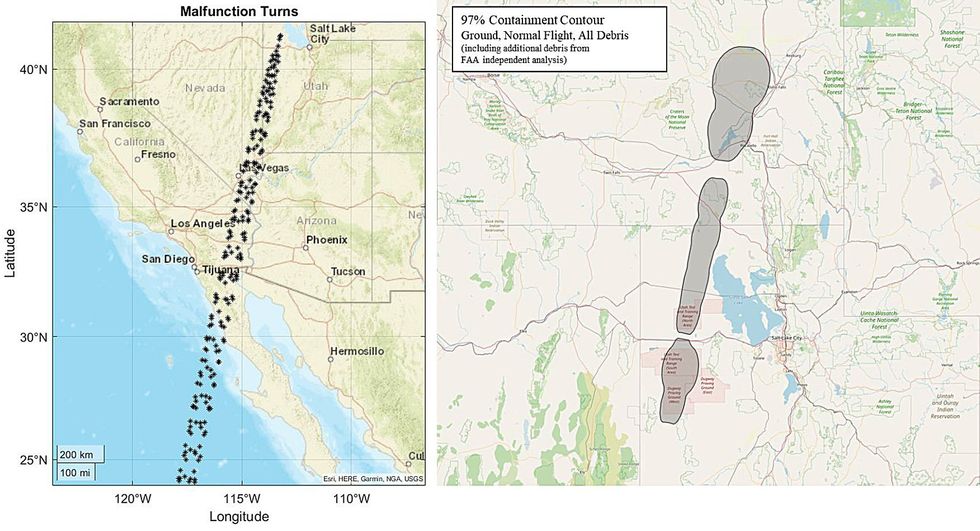
Two maps, the left showing the western United States, and the right a close-up, with overlayed impact areas. Safety analyses show possible impact locations if Varda’s upcoming Winnebago 2 spacecraft were to malfunction on re-entry [left], and where people in aircraft might be affected [right].Varda Space Industries

The document shows that the most dangerous events are those that might happen early in the re-entry process, if the re-entry rocket accidentally shoots the small capsule in the wrong direction. One map shows a range of possible impact locations stretching from northern Mexico, through California, to near Las Vegas. Other risky scenarios include the capsule breaking up during the intense heat of re-entry, or its parachute opening too early.

But the casualty expectations from all the mishaps combined remains extremely small. For Winnebago 1, the risk of a human casualty was calculated to be 1 in 14,600–less than the 1 in 10,000 risk that NASA requires.

“I think it is unquestionable that we meet the regulatory requirements that have been laid out for re-entry,” says Asparouhov. “Ultimately, the challenge we face today has nothing to do with safety and regulatory departments. It comes down to the coordination between military ranges that haven’t done this type of commercial activity.”

No room for error

When Winnebago 1 launched in June on a Rocket Lab Photon mission, Varda had still not received its license for re-entry at UTTR. The company continued to communicate with the FAA and the Department of Defense while its space factory went to work, but the days quickly ticked down to its planned 7 September re-entry. And that date had little wiggle room, says Asparouhov: “If you think about a launch delay, you can get ready for a delay of an hour or a day. But with the orbital mechanics of re-entry, you really have to all be aligned on a narrow operational window.”
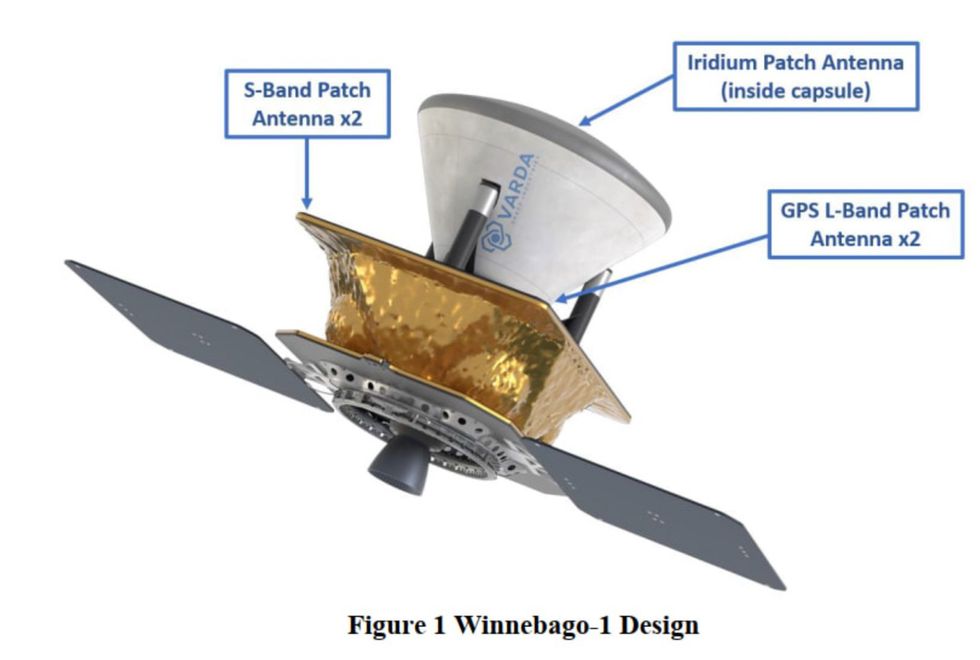
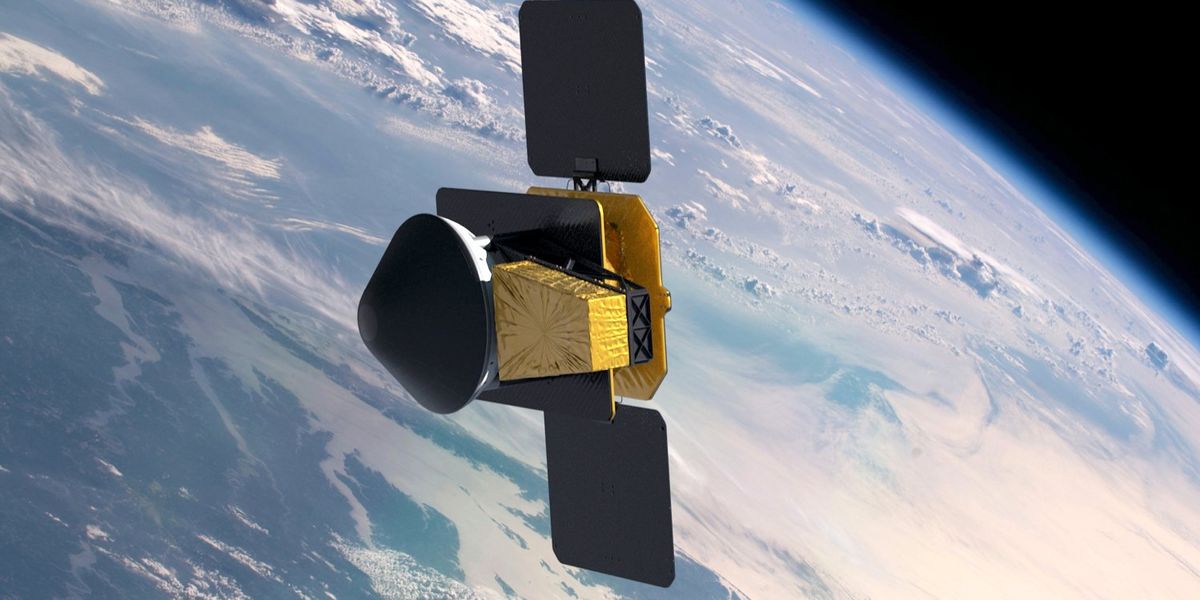
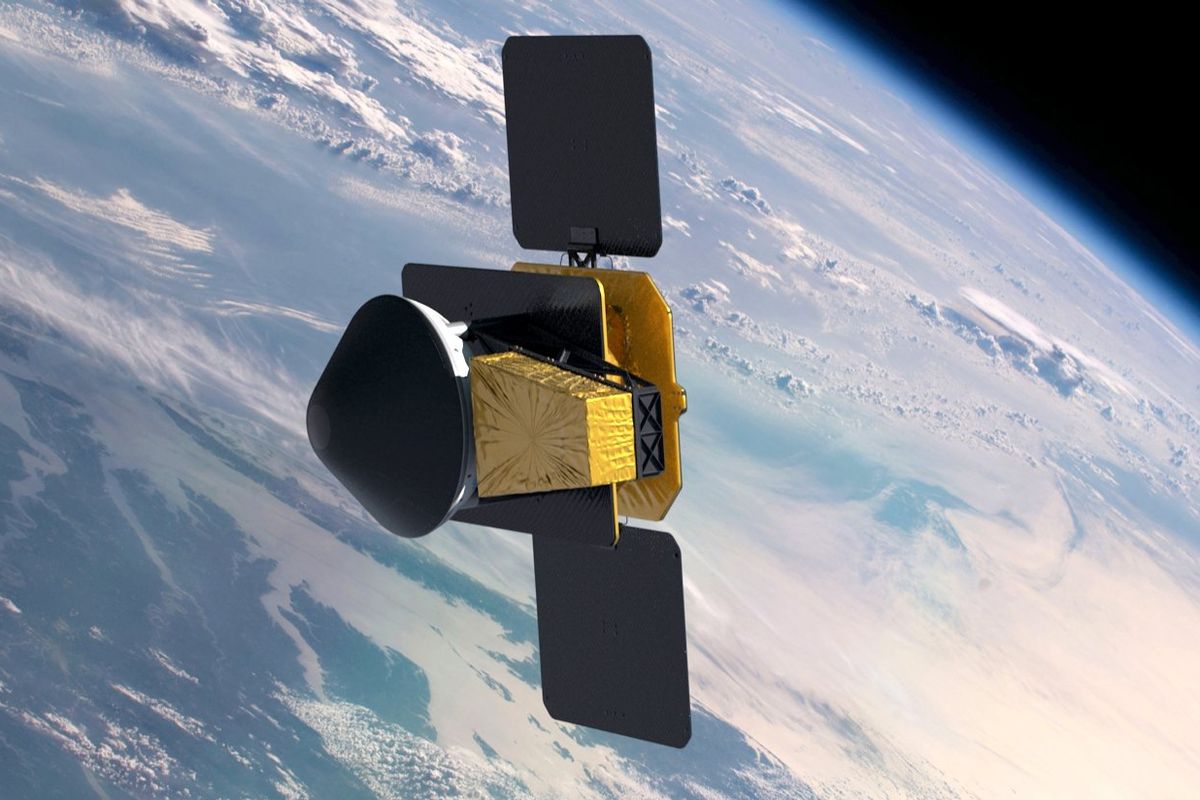
A rendering of a satellite with callouts for the antennas. Varda’s on-orbit space factory satellite is codenamed Winnebago.Varda Space Industries

On 6 September, the FAA denied Varda its re-entry license “because the company did not demonstrate compliance with the regulatory requirements, including not having an authorized landing location,” the FAA told Spectrum.

“There was no one thing that made it not work,” says Asparouhov. “It was everything from the military range’s schedule to FAA’s AST office which handles licensing, to FAA’s ATO, the air traffic office. This was ultimately a question of coordination.”

On September 8, Varda requested that the FAA reconsider its decision. But nothing happened immediately. In mid-September, Varda asked the FCC for a six-month extension on being able to communicate with the Winnebago 1 via radio. “We do not expect to need that much time,” it wrote. “We will deorbit as soon as conditions permit.”

On 12 October, Varda sent another hopeful message to the FCC: “We are actively engaged with the FAA to keep them up to date. This week UTTR has suggested January for reentry, and our discussions with UTTR to schedule specific landing date(s) will continue through October and November, in coordination with the FAA.”

Moving operations to Australia

But even as it struggled to get Winnebago 1 back down to Earth, Varda was shifting its plans for future missions. On 19 October, Varda announced a partnership to use the Koonibba Test Range in southern Australia for some future re-entry operations, possibly even as soon as Winnebago 2 in 2024. Asparouhov told Spectrum that using Koonibba, which has fewer nearby population centers and fewer commercial flights overhead, might mean fewer constraints on operations.

The FAA, however, would still regulate re-entry operations of US space missions, even in Australia. “We just need a more responsive agency from the FAA,” says Asparouhov. “And obviously that has to do with funding and staffing levels not lining up to the huge increase in activity in commercial space.”

That refrain was echoed this week by SpaceX, Blue Origin and Virgin Galactic at a Senate hearing, where SpaceX vice president Bill Gerstenmaier testified that the FAA’s commercial space office “needs at least twice the resources that they have today” for licensing rocket launches.

Any shift to overseas operations would come too late for Winnebago 1, says Asparouhov, as the mission was designed to land in Utah.

For now, while the capsule circles the Earth at thousands of kilometers per hour, the licensing process on the surface seems to be proceeding at a snail’s pace. Varda continues to negotiates with UTTR, and the FAA has not even started to review its decision to deny the space factory a license to land.

On 20 October, the FAA told Spectrum: “Varda still has not submitted the required revised license application that is necessary for the reconsideration process to begin.”

Reference: https://ift.tt/EcFUYGK

Monday, October 23, 2023

1Password detects “suspicious activity” in its internal Okta account


1Password detects “suspicious activity” in its internal Okta account

Enlarge (credit: 1Password)

1Password, a password manager used by millions of people and more than 100,000 businesses, said it detected suspicious activity on a company account provided by Okta, the identity and authentication service that disclosed a breach on Friday.

“On September 29, we detected suspicious activity on our Okta instance that we use to manage our employee-facing apps,” 1Password CTO Pedro Canahuati wrote in an email. “We immediately terminated the activity, investigated, and found no compromise of user data or other sensitive systems, either employee-facing or user-facing.”

Since then, Canahuati said, his company had been working with Okta to determine the means that the unknown attacker used to access the account. On Friday, investigators confirmed it resulted from a breach Okta reported hitting its customer support management system.

Read 9 remaining paragraphs | Comments

Reference : https://ift.tt/ZeIGlo4

Top AI Shops Fail Transparency Test


In July and September, 15 of the biggest AI companies signed on to the White House’s voluntary commitments to manage the risks posed by AI. Among those commitments was a promise to be more transparent: to share information “across the industry and with governments, civil society, and academia,” and to publicly report their AI systems’ capabilities and limitations. Which all sounds great in theory, but what does it mean in practice? What exactly is transparency when it comes to these AI companies’ massive and powerful models?

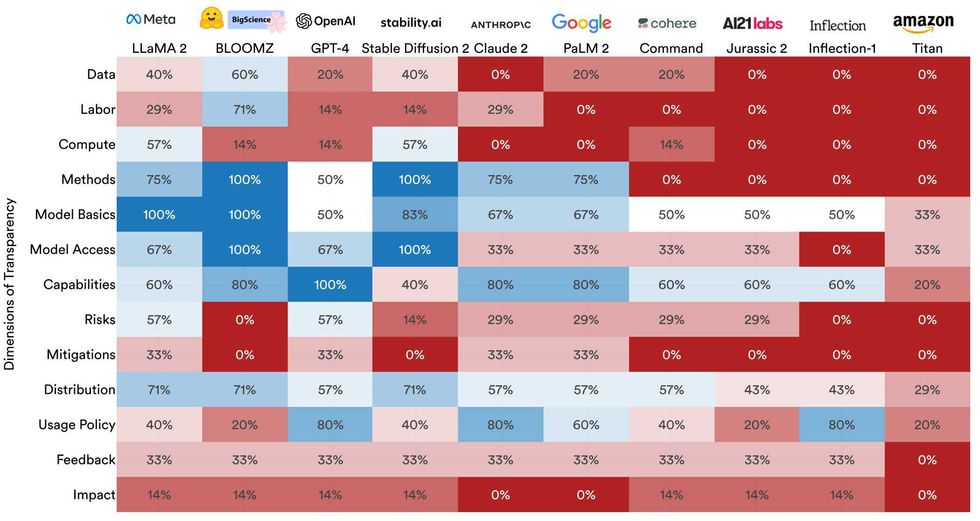
Thanks to a report spearheaded by Stanford’s Center for Research on Foundation Models (CRFM), we now have answers to those questions. The foundation models they’re interested in are general-purpose creations like OpenAI’s GPT-4 and Google’s PaLM 2, which are trained on a huge amount of data and can be adapted for many different applications. The Foundation Model Transparency Index graded 10 of the biggest such models on 100 different metrics of transparency.

The highest total score goes to Meta’s Llama 2, with 54 out of 100.

They didn’t do so well. The highest total score goes to Meta’s Llama 2, with 54 out of 100. In school, that’d be considered a failing grade. “No major foundation model developer is close to providing adequate transparency,” the researchers wrote in a blog post, “revealing a fundamental lack of transparency in the AI industry.”

Rishi Bommasani, a PhD candidate at Stanford’s CRFM and one of the project leads, says the index is an effort to combat a troubling trend of the past few years. “As the impact goes up, the transparency of these models and companies goes down,” he says. Most notably, when OpenAI versioned-up from GPT-3 to GPT-4, the company wrote that it had made the decision to withhold all information about “architecture (including model size), hardware, training compute, dataset construction, [and] training method.”

The 100 metrics of transparency (listed in full in the blog post) include upstream factors relating to training, information about the model’s properties and function, and downstream factors regarding the model’s distribution and use. “It is not sufficient, as many governments have asked, for an organization to be transparent when it releases the model,” says Kevin Klyman, a research assistant at Stanford’s CRFM and a coauthor of the report. “It also has to be transparent about the resources that go into that model, and the evaluations of the capabilities of that model, and what happens after the release.”

To grade the models on the 100 indicators, the researchers searched the publicly available data, giving the models a 1 or 0 on each indicator according to predetermined thresholds. Then they followed up with the 10 companies to see if they wanted to contest any of the scores. “In a few cases, there was some info we had missed,” says Bommasani.

Spectrum contacted representatives from a range of companies featured in this index; none of them had replied to requests for comment as of our deadline.

“Labor in AI is a habitually opaque topic. And here it’s very opaque, even beyond the norms we’ve seen in other areas.”
—Rishi Bommasani, Stanford

The provenance of training data for foundation models has become a hot topic, with several lawsuits alleging that AI companies illegally included authors’ copyrighted material in their training data sets. And perhaps unsurprisingly, the transparency index showed that most companies have not been forthcoming about their data. The model Bloomz from the developer Hugging Face got the highest score in this particular category, with 60 percent; none of the other models scored above 40 percent, and several got a zero.

A heatmap chart shows how the 10 models were scored on 13 categories of indicators. A heatmap shows how the 10 models did on categories ranging from data to impact. Stanford Center for Research on Foundation Models

Companies were also mostly mum on the topic of labor, which is relevant because models require human workers to refine their models. For example, OpenAI uses a process called reinforcement learning with human feedback to teach models like GPT-4 which responses are most appropriate and acceptable to humans. But most developers don’t make public the information about who those human workers are and what wages they’re paid, and there’s concern that this labor is being outsourced to low-wage workers in places like Kenya. “Labor in AI is a habitually opaque topic,” says Bommasani, “and here it’s very opaque, even beyond the norms we’ve seen in other areas.”

Hugging Face is one of three developers in the index that the Stanford researchers considered “open,” meaning that the models’ weights are broadly downloadable. The three open models (Llama 2 from Meta, Hugging Face’s Bloomz, and Stable Diffusion from Stability AI) are currently leading the way in transparency, scoring greater or equal to the best closed model.

While those open models scored transparency points, not everyone believes they’re the most responsible actors in the arena. There’s a great deal of controversy right now about whether or not such powerful models should be open sourced and thus potentially available to bad actors; just a few weeks ago, protesters descended on Meta’s San Francisco office to decry the “irreversible proliferation” of potentially unsafe technology.

Bommasani and Klyman say the Stanford group is committed to keeping up with the index, and are planning to update it at least once a year. The team hopes that policymakers around the world will turn to the index as they craft legislation regarding AI, as there are regulatory efforts ongoing in many countries. If companies do better at transparency in the 100 different areas highlighted by the index, they say, lawmakers will have better insights into which areas require intervention. “If there’s pervasive opacity on labor and downstream impacts,” says Bommasani, “this gives legislators some clarity that maybe they should consider these things.”

It’s important to remember that even if a model had gotten a high transparency score in the current index, that wouldn’t necessarily mean it was a paragon of AI virtue. If a company disclosed that a model was trained on copyrighted material and refined by workers paid less than minimum wage, it would still earn points for transparency about data and labor.

“We’re trying to surface the facts” as a first step, says Bommasani. “Once you have transparency, there’s much more work to be done.”

Reference: https://ift.tt/JjBCYdv

Eureka: With GPT-4 overseeing training, robots can learn much faster


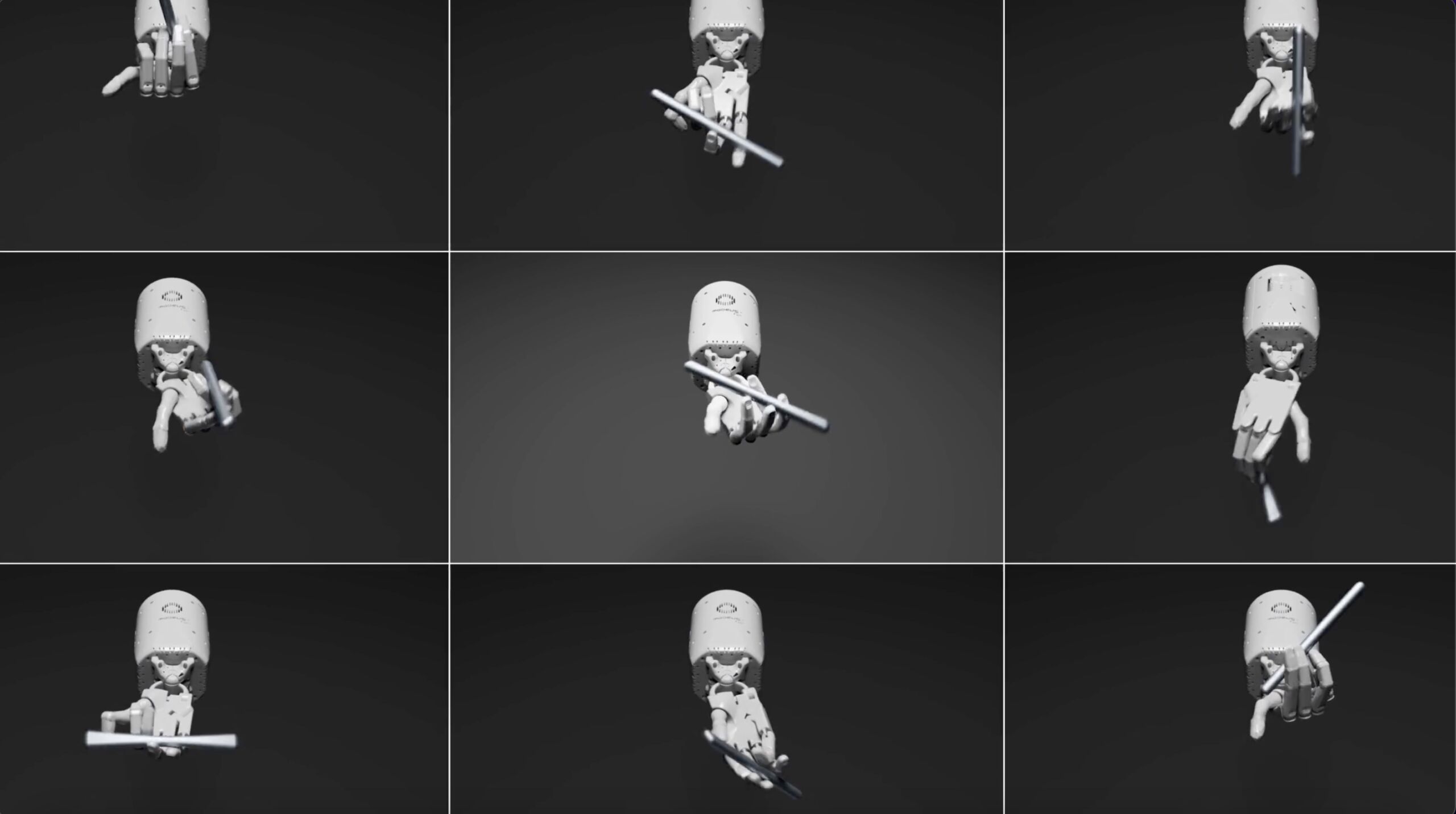
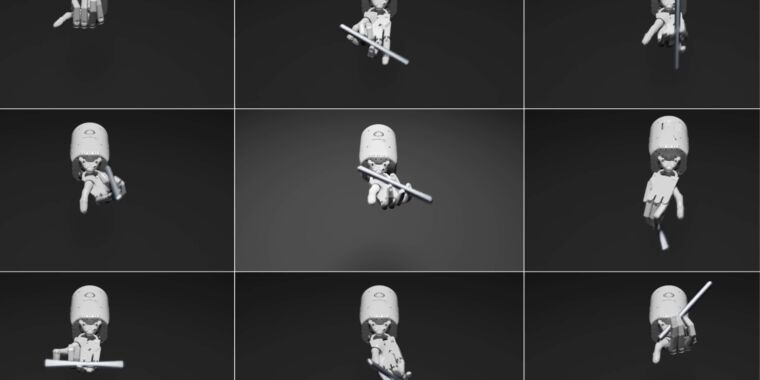
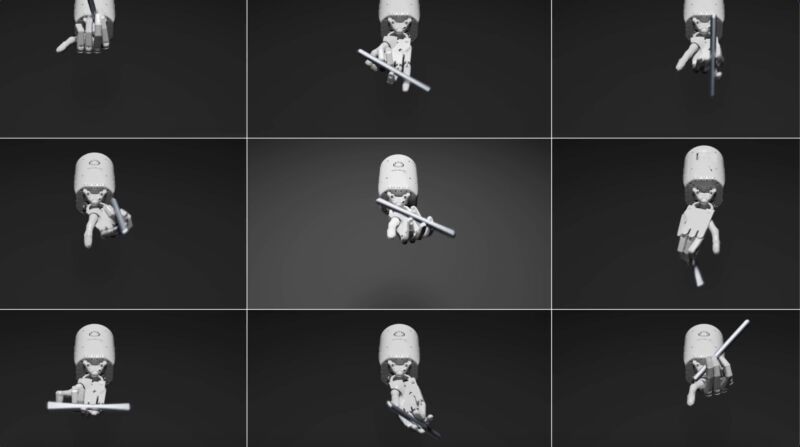
In this still captured from a video provided by Nvidia, a simulated robot hand learns pen tricks, trained by Eureka, using simultaneous trials.

Enlarge / In this still captured from a video provided by Nvidia, a simulated robot hand learns pen tricks, trained by Eureka, using simultaneous trials. (credit: Nvidia)

On Friday, researchers from Nvidia, UPenn, Caltech, and the University of Texas at Austin announced Eureka, an algorithm that uses OpenAI's GPT-4 language model for designing training goals (called "reward functions") to enhance robot dexterity. The work aims to bridge the gap between high-level reasoning and low-level motor control, allowing robots to learn complex tasks rapidly using massively parallel simulations that run through trials simultaneously. According to the team, Eureka outperforms human-written reward functions by a substantial margin.

Before robots can interact with the real world successfully, they need to learn how to move their robot bodies to achieve goals—like picking up objects or moving. Instead of making a physical robot try and fail one task at a time to learn in a lab, researchers at Nvidia have been experimenting with using video game-like computer worlds (thanks to platforms called Isaac Sim and Isaac Gym) that simulate three-dimensional physics. These allow for massively parallel training sessions to take place in many virtual worlds at once, dramatically speeding up training time.

"Leveraging state-of-the-art GPU-accelerated simulation in Nvidia Isaac Gym," writes Nvidia on its demonstration page, "Eureka is able to quickly evaluate the quality of a large batch of reward candidates, enabling scalable search in the reward function space." They call it "rapid reward evaluation via massively parallel reinforcement learning."

Read 6 remaining paragraphs | Comments

Reference : https://ift.tt/mwT9SzE

Friday, October 20, 2023

Okta says hackers breached its support system and viewed customer files


A cartoon man runs across a white field of ones and zeroes.

Enlarge (credit: Getty Images)

Identity and authentication management provider Okta said hackers managed to view private customer information after gaining access to credentials to its customer support management system.

“The threat actor was able to view files uploaded by certain Okta customers as part of recent support cases,” Okta Chief Security Officer David Bradbury said Friday. He suggested those files comprised HTTP archive, or HAR, files, which company support personnel use to replicate customer browser activity during troubleshooting sessions.

“HAR files can also contain sensitive data, including cookies and session tokens, that malicious actors can use to impersonate valid users,” Bradbury wrote. “Okta has worked with impacted customers to investigate, and has taken measures to protect our customers, including the revocation of embedded session tokens. In general, Okta recommends sanitizing all credentials and cookies/session tokens within a HAR file before sharing it.”

Read 7 remaining paragraphs | Comments

Reference : https://ift.tt/dEkfshu

VMware migration reduces Tottenham Hotspur's licensing fees by 85 percent

<p>Tottenham Hotspur, a professional soccer team that’s part of the Premier League, has saved over 85 per...