Thursday, July 31, 2025

Microsoft catches Russian hackers targeting foreign embassies


Russian-state hackers are targeting foreign embassies in Moscow with custom malware that gets installed using adversary-in-the-middle attacks that operate at the ISP level, Microsoft warned Thursday.

The campaign has been ongoing since last year. It leverages ISPs in that country, which are obligated to work on behalf of the Russian government. With the ability to control the ISP network, the threat group—which Microsoft tracks under the name Secret Blizzard—positions itself between a targeted embassy and the end points they connect to, a form of attack known as an adversary in the middle, or AitM. The position allows Secret Blizzard to send targets to malicious websites that appear to be known and trusted.

Objective: Install ApolloShadow

“While we previously assessed with low confidence that the actor conducts cyberespionage activities within Russian borders against foreign and domestic entities, this is the first time we can confirm that they have the capability to do so at the Internet Service Provider (ISP) level,” members of the Microsoft Threat Intelligence team wrote. “This means that diplomatic personnel using local ISP or telecommunications services in Russia are highly likely targets of Secret Blizzard’s AiTM position within those services.”

Read full article

Comments

Reference : https://ift.tt/XEhOJqU

Growing Through IEEE: Leadership and Learning in Action


It’s often said that a single moment can spark a lifelong journey. For me the moment happened in 2011, when I was a graduate student—not in a lab or a classroom but rather in a conference hall in Rome. I was presenting my graduate research on a helix antenna for wideband terrestrial and GPS L2 communications at the European Conference on Antennas and Propagation. EUCAP, organized by the European Association on Antennas and Propagation, is supported by IEEE.

Although I attended the conference to receive feedback on my research, I left with something far greater: an introduction to IEEE.

At the time, I didn’t know that the organization would redefine my career, expand my worldview, and plant the seeds of a purpose-driven life in engineering.

I returned home energized, not only to grow in my field but also within IEEE, so I joined as a graduate student member.

Fourteen years later, I now serve as chair of the IEEE Islamabad Section, having walked a journey built on learning, leadership, and the belief that engineering must serve humanity.

Turning a spark into fuel

Upon returning to Pakistan after EUCAP 2011, I realized the immense potential for creating meaningful local impact on the country’s engineers if IEEE’s global energy and resources were effectively harnessed. My background in RF and microwave engineering played a central role in shaping my contributions to IEEE.

While working at the National University of Sciences and Technology (NUST) in Islamabad, I identified a pressing local need that could be addressed using IEEE’s support and resources: The country lacked a centralized platform for microwave and RF-related research, collaboration, and training.

To fill that gap, in 2016 I formed Pakistan’s first joint chapter of the IEEE Antennas and Propagation, Circuits and Systems, Electromagnetic Compatibility, and Microwave Theory and Techniques societies.

The joint chapter offers workshops and technical sessions for academics, students, and young professionals. It also provides opportunities for international collaboration and networking among IEEE members.

More than 200 events have been organized, bringing distinguished professors and researchers to Pakistan as speakers. The visits catalyzed IEEE memorandums of understanding that included student exchange programs and cross-border research.

More importantly, they exposed hundreds of young Pakistani engineers to world-class knowledge. Faculty and students from all over Pakistan are participating and working at facilities they couldn’t previously access, such as anechoic chambers and electromagnetic compatibility labs that are used in antenna and microwave device testing.

Our efforts were recognized in 2019 and 2020 with Best Chapter Awards from the societies that formed the joint chapter.

During the early part of the COVID-19 pandemic, the chapter launched a webinar series on YouTube that showed how to use instruments for the characterization of antenna and microwave circuits.

Nosherwan Shoaib, Hammad M. Cheema and Muhammad Umar Khan holding an award plaque outside the Research Institute for Microwave & Millimeter-Wave Studies (RIMMS) in Islamabad, Pakistan.Nosherwan Shoaib [middle], Hammad M. Cheema [left], and Muhammad Umar Khan accepted the Best Chapter Award on behalf of the joint chapter of the IEEE Antennas and Propagation, Circuits and Systems, Electromagnetic Compatibility, and Microwave Theory and Techniques societies. Cheema is its vice chair and Khan is its treasurer.Ghulam Rasool

Supporting IEEE’s mission

I have led several IEEE humanitarian projects that have improved lives in some of Pakistan’s most underserved communities.

One project that left a lasting impact on me was building homes for families displaced from the 2022 floods in the Sindh province. Pakistan that year experienced the deadliest floods the country had ever seen. An estimated 33 million people were affected, and 20 million are still living in dire conditions. The floods damaged houses, hospitals, and electricity and road infrastructure.

With support from the IEEE Humanitarian Technology Board, the IEEE Special Interest Group on Humanitarian Technology, and NUST, IEEE volunteers built 17 homes. They were equipped with solar-powered energy systems that provided electricity for lights, fans, and other basic equipment, ensuring long-term sustainability.

IEEE volunteers also provided vocational training to survivors, equipping them with practical skills in basic electronics and solar installation. Their efforts aimed to restore livelihoods, promote self-reliance, and empower people to launch home-based businesses.

In 2023 I worked with EPICS in IEEE to develop a virtual reality–based therapy platform aimed at supporting behavioral development in children with autism. A team of undergraduate students developed the platform, which uses a VR headset to simulate behavioral and communication therapy scenarios within the metaverse. The platform is still being tested and validated.

Another EPICS in IEEE initiative I led involved designing and deploying a smart fall-detection system for elderly people in assisted-living facilities. The system uses 60-gigahertz radar sensors to monitor posture and alert caregivers in the event of a fall.

Diversity and inclusion in engineering

Promoting diversity and inclusion has been a vital part of my IEEE journey. Thanks to support from the IEEE Women in Circuits and Systems group and the IEEE MTT-S diversity and inclusion ad hoc committee, I have organized initiatives aimed at inspiring women and other underrepresented groups to pursue engineering as a career.

I was chosen as a STEM champion this year in the IEEE TryEngineering program. Champions work to do more STEM outreach and connect future engineers with IEEE resources.

IEEE has been more than a professional network; it has been my launchpad for leadership, my platform for humanitarian impact, and my community of mentors.

I promote STEM education by engaging with preuniversity schools and organizing hands-on activities to spark curiosity and learning. Being a champion has been an enriching experience.

My belief in equitable access to education has been the cornerstone of my STEM outreach efforts. I have led more than 30 workshops in collaboration with 20 local nonprofits, benefiting more than 500 orphans and homeless children. The hands-on sessions covered radar, robotics, wireless communication, and other topics. Together with a team of IEEE student volunteers, we also trained teachers to replicate the activities in schools.

Through my work, I have had the opportunity to instill core ethical values in students living in underserved communities. This role has allowed me to advocate for both technical excellence and moral responsibility—two pillars I believe are essential for building a better future through engineering.

Collaboration is key

A major turning point in my volunteer journey came in 2022 through the IEEE Member and Geographic Activities Volunteer Leadership Training program. The VoLT program is designed to deepen volunteers’ understanding of IEEE’s structure, products, services, and available resources. It also helps participants appreciate their role within local units and the broader organization while preparing them for leadership roles. VoLT participants complete a team project, in which they identify a problem, a need, an opportunity, or an area of improvement within their local organizational unit or the global IEEE. Then they develop a business plan to address the concern.

For me, the program provided clarity, confidence, and community. My team project—an AI-based vestibule for IEEE—was ranked second among the submissions. The program was more than just a training exercise; it was a catalyst for my growth as a structured, strategic, and succession-focused leader.

One of my most recent leadership opportunities was chairing the Towards IEEE Pakistan Council mini-conference in May. The event brought together executive committee members from IEEE sections and subsections across Pakistan to explore the formation of a national IEEE council to unify efforts with global IEEE practices.

I also spearheaded the establishment of the IEEE Islamabad Section life member affinity group and the IEEE Communications Society professional chapter.

I believe the active involvement of senior members is essential—not only for their mentorship and wisdom but also to help the section reach new heights of excellence.

I strongly believe in cross-institutional collaboration—which is why the IEEE Islamabad Section is actively partnering with organizations including the Pakistan Aerospace Council, the Institution of Engineering and Technology, and the Institution of Mechanical Engineers to amplify our impact on the engineering and scientific community. The partnerships will enable joint technical seminars and training workshops that broaden our outreach and strengthen our contributions.

Through international conferences, seminars, joint workshops, and collaborative projects, the IEEE Islamabad Section has engaged with leading electronics companies Rohde and Schwarz of Munich and Keysight Technologies of Everett, Wash., to promote innovation, skills development, and applied research. The collaborations enhance students’ professional readiness and enable industry partners to connect with emerging academic talent and cutting-edge ideas.

A leadership launchpad

What started as a student membership has grown into a purpose-filled career-long journey. IEEE has been more than a professional network; it has been my launchpad for leadership, my platform for humanitarian impact, and my community of mentors. Every conference I organized, every child I taught, every family I supported, and every volunteer I mentored are chapters of my story, which IEEE helped write.

To all young engineers, students, and professionals reading this: IEEE is what you make of it. It can be merely a line on your CV, or it can be a compass that guides your career and character. When you align technical skill with empathy and pair leadership with service, you not only grow, you uplift others as well.

I invite you to join, volunteer, and lead. Somewhere, someone is waiting for a solution only you can create—and IEEE can help you deliver it.

My journey has never been mine alone. It has been a collective effort powered by an extraordinary community. I look forward to continuing the mission together, as we strive to make IEEE not just a professional home but also a platform for lasting impact.

Reference: https://ift.tt/1rI047R

Moves Too Fast, Risk Systemic Blowback


One of the most sobering insights from Contributing Editor Robert N. Charette’s feature story in this issue is that the 20-year rollout of electronic health records (EHRs) in the United States happened with an intentional disregard for interoperability. As a result, thousands of health care providers are “burdened with costly, poorly designed, and insecure EHR systems that have exacerbated clinician burnout, led to hundreds of millions of records lost in data breaches, and created new sources of medical errors,” Charette writes.

The U.S. government made this myopic decision in order to speed up EHR adoption, ignoring the longer-term costs. The operating mantra, says Charette, was that EHR systems “needed to become operational before they could become interoperable.”

You could call what happened next “unintended consequences,” but that would absolve decision-makers in government and industry for making choices they knew could compromise user experience, security, and patient outcomes. The results were entirely foreseeable. A more appropriate term might be “systemic blowback”—large-scale negative outcomes that result from decisions to accelerate the adoption of new technology without consideration for the broader potential impacts.

Once you see systemic blowback in one technological context, you start to see it in others. Case in point: the global deployment of artificial intelligence.

AI’s Impact on White-Collar Jobs

In May, Dario Amodei, CEO of Anthropic, maker of Claude AI, told Axios that AI could wipe out half of all entry-level white-collar jobs—and spike unemployment to 10 to 20 percent in the next one to five years. (U.S. unemployment was about 4 percent in June.) “We, as the producers of this technology, have a duty and an obligation to be honest about what is coming,” Amodei said. “I don’t think this is on people’s radar.”

But Amodei’s acknowledgment of the potential harms of mass AI adoption comes off as just virtue signaling. Big AI, Amodei surmises, will continue to develop this technology so we can cure cancer, grow the economy 10 percent annually, and even balance the federal budget. And by the way, up to one in five people will soon be unemployed. That last part—the harm—is someone else’s problem to solve.

Computer programmers are feeling the harm right now. According to The Washington Post, more than a quarter of all coding jobs have vanished in the last two years, with much of that loss attributable to AI usage. As Spectrum reported last month, LLMs are improving at an exponential rate, which doesn’t augur well for the rest of the human workforce.

“Systemic blowback”—large-scale negative outcomes that result from decisions to accelerate the adoption of new technology without consideration for the broader potential impacts.

That includes people working in media. Ever since Google emerged as the home page of the Web in the early 2000s, media outlets operated under the assumption that Google would reliably crawl their sites and send audience their way.

Google blew up that deal when it introduced AI answers to its entire user base earlier this year. Since then, Spectrum has had about double the impressions—the times Spectrum content shows up on the search results page or, increasingly, in an AI answer—and about 40 percent fewer click-throughs from people coming to our website to read the cited article. As Web traffic dies, so do the business models predicated on that traffic. Oh well, says Big AI, someone else’s problem.

But killing off the current information ecosystem means that AIs will increasingly ingest new content written by other AIs, because the humans who produced the content are gone or will be soon. Garbage in, garbage out. This time next year, don’t be surprised when your shiny, new AI agent gives you a morning briefing that’s just off. Then Big AI’s problem will be your problem. Sooner or later you too will feel the systemic blowback.

Reference: https://ift.tt/nwHoPtS

The Stratosphere Will Be Telecom’s Next Frontier


With more than 8,000 Starlink satellites in the sky today, low-Earth orbit may seem like the place to be to connect the next-generation of Internet and cellphone customers. However, some players are placing their bets slightly closer to the ground.

Starting next year, Tokyo’s SoftBank Corp will be beaming a prototype 4G and 5G phone and broadband service from the stratosphere to Japanese end-users. Floating 20 kilometers above the Earth, the company’s airship-based mast will be using energy regeneration tech and newly allocated spectrum. And the tech could ultimately pose a real, competitive threat to satellite-based platforms like Starlink.

The Japanese telecom giant announced last month it’d secured exclusive rights to deploy stratospheric, lighter-than-air craft over Japan. SoftBank’s pre-commercial airship “tower” delivering 4G and 5G cellphone service, the company said, will be coming in 2026. The solar-powered airship, developed by the Moriarty, N.M.-based Sceye, has already completed more than 20 successful test flights. In the same press announcement, SoftBank also described their plans to also use heavier-than-air, fixed-wing uncrewed aerial vehicles that the Japanese company has developed.

A Technical Blueprint for the Stratosphere

Unlike the SoftBank system’s fixed-wing signal repeaters, Sceye’s airship will be an autonomously-piloted cell tower operating below outer space but still above the weather. The airship will carry the same type of base station used in terrestrial cell towers (called 4G eNodeB/5G gNodeB), which will comply with global broadband standards, as overseen by the Third Generation Partnership Project, or 3GPP.

“The mobile phone doesn’t know the difference between our platform and a tower,” says Mikkel Vestergaard Frandsen, Sceye’s CEO. “We just plug into existing infrastructure and operate under the same 3GPP protocol.”

Sceye’s airship uses advanced antenna systems that enable precision steering of the signal. Also known as beamforming, this 5G tech helps a network cover wide areas or, conversely, focus bandwidth down to a tighter cone, depending on demand. The company reports that their system’s latency is below 20 milliseconds. Which would put them ahead of Starlink, which delivers today a network latency of 45 ms, according to a recent survey.

“This is not a relay system, we are the base station, able to respond to network demand from the stratosphere,” says Frandsen.

With a payload capacity of 250 kilograms and 10 kilowatts of onboard solar power capacity, the airship can power its telecom suite but also station-keep—something that neither balloons (that drift with the wind) nor fixed wing UAVs (constrained by limited payload and power) can achieve.

Which is why Sceye’s advances in materials have been crucial for high-altitude endurance flights. According to the company, the fabric comprising the airship’s hull is five times stronger per unit mass than conventional high-altitude platform system (a.k.a. HAPS) materials. Sceye’s material is also 1,500 times more gas-tight, as well as being more resistant to both UV and ozone damage.

“There’s a lot of overlap between extreme sports like the America’s Cup or Formula One and our work on HAPS,” said Frandsen, who recruited engineers from both sectors. “It’s all about pushing materials to the limit, safely.”

But even using such a super-material for the airship’s skin, staying aloft at 20 kilometers altitude demands further innovations toward greater efficiency. “On this kind of machine, about 30 percent of the weight goes to the structure, and another 30 percent to the energy system,” says Vincenzo Rosario Baraniello, Head of the Earth Observation Systems Unit at the Italian Aerospace Research Centre (CIRA). “Improving those technologies gives a competitive advantage”.

Sceye’s silvery dirigibles are built for endurance, capable of pointing into the wind, and remaining in their area of operation for months at a time. Ultra-lightweight and flexible solar skins and high-density battery packs keep the equipment running overnight. While the system’s temperature- and UV-shielded payload compartment can withstand extreme stratospheric conditions. The airship can reach altitude in less than 30 minutes, with a single craft able to replace up to 25 ground towers.

Building On New Spectrum

The time has come, says Nikolai Vassiliev, chief of the Terrestrial Services Department at the International Telecommunication Union, for stratospheric systems like Sceye’s and SoftBank’s prototype network.

“We have established power limits, coordination rules, and harmonized bands,” Vassiliev says. “Now it’s up to operators to deploy.”

Until recently, high-altitude platforms like Sceye’s and SoftBank’s airship relied primarily on millimeter-wave spectrum, including bandwidth between 47 and 48 gigahertz frequencies. Millimeter waves, though, have limited range and are notoriously vulnerable to rain and other inclement weather. Which is why, in part, the World Radiocommunication Conference in 2023 opened up a number of microwave bands between 700 megahertz and 2.6 GHz for HAPS.

These lower-frequency bands effectively opened the way for direct-to-device connections from stratospheric airships and other high-altitude platforms. “The availability of harmonized, low-band spectrum for direct-to-device HAPS has fundamentally changed the business case,” said Toshiharu Sumiyoshi of SoftBank’s Ubiquitous Network Planning Division. “We can now deliver service with commercially available handsets.”

Unlike earlier high-altitude platforms that acted like signal relays, Sceye’s high-altitude towers will ultimately allow users to cross coverage zones without losing service, thanks to handovers between ground and aerial nodes. And that could look and feel to the end user much like everyday terrestrial 4G and 5G coverage.

SoftBank is still weighing how best to deploy Sceye’s stratospheric platforms, whether as always-on infrastructure or as on-demand responders during emergencies and other periods of anticipated high-demand. “Our current plan aims for one aircraft to stay in the air for one year,” says Sumiyoshi. “But both scenarios, continuous flight or launch in response to a disaster, are conceivable. And operational details will be finalized after pre-commercial testing in 2026, taking cost-effectiveness and multi-use options like remote sensing into account.”

Baraniello says whatever form the deployment ultimately takes, it marks an important step forward. “The partnership between Sceye and SoftBank is significant,” he says. “It shows that these platforms have reached a level of technological maturity that allows them to be deployed operationally. From an aerospace engineering standpoint, that’s a big deal, and the market’s interest will further push research, industry, and development forward.”

Reference: https://ift.tt/KbxCAmY

Wednesday, July 30, 2025

In search of riches, hackers plant 4G-enabled Raspberry Pi in bank network


Hackers planted a Raspberry Pi equipped with a 4G modem in the network of an unnamed bank in an attempt to siphon money out of the financial institution's ATM system, researchers reported Wednesday.

The researchers with security firm Group-IB said the “unprecedented tactic allowed the attackers to bypass perimeter defenses entirely.” The hackers combined the physical intrusion with remote access malware that used another novel technique to conceal itself, even from sophisticated forensic tools. The technique, known as a Linux bind mount, is used in IT administration but had never been seen used by threat actors. The trick allowed the malware to operate similarly to a rootkit, which uses advanced techniques to hide itself from the operating system it runs on.

End goal: Backdooring the ATM switching network

The Raspberry Pi was connected to the same network switch used by the bank’s ATM system, a position that effectively put it inside the bank’s internal network. The goal was to compromise the ATM switching server and use that control to manipulate the bank’s hardware security module, a tamper-resistant physical device used to store secrets such as credentials and digital signatures and run encryption and decryption functions.

Read full article

Comments

Reference : https://ift.tt/Kk7aTL2

So far, only one-third of Americans have ever used AI for work


On Tuesday, The Associated Press released results from a new AP-NORC poll showing that 60 percent of US adults have used AI to search for information, while only 37 percent of all Americans have used AI for work tasks. Meanwhile, younger Americans are adopting AI tools at much higher rates across multiple categories, including brainstorming, work tasks, and companionship.

The poll found AI companionship remains the least popular application overall, with just 16 percent of adults overall trying it—but the number jumps to a notable 25 percent among the under-30 crowd. AI companionship can have drawbacks that weren't reflected in the poll, such as excessive agreeability (called sycophancy) and mental health risks, like encouraging delusional thinking.

The poll of 1,437 adults conducted July 10–14 reveals telling generational divides in AI adoption. While 74 percent of adults under 30 use AI for information searches at least some of the time, only the aforementioned 60 percent of all adults have done so. For brainstorming applications, 62 percent of adults under 30 have used AI to come up with ideas, compared with just 20 percent of those 60 or older.

Read full article

Comments

Reference : https://ift.tt/vPuzNrt

Learning Analog System Design With the MOSbius


When it comes to learning digital system design, hobbyists and students have a lot of options, whether it’s tinkering with field-programmable gate arrays or working up chip submission for a Tiny Tapeout run. But similar tools for analog design have been harder to come by. Certainly you can create analog circuits in a simulator like LTspice and test them against theory. But nothing beats building real analog circuits and measuring their actual, not theoretical, behavior. Measurement is complicated for analog designs because the test equipment can affect the very measurement being made.

To address this educational gap, a team led by me at Columbia University’s department of electrical engineering created MOSbius, a breadboard-friendly chip that you can think of as a field-programmable transistor array for analog designs.

As its name suggests, MOSbius is built around metal-oxide-semiconductor transistors, divided between n-type and p-type transistors. As these are the building blocks of most analog integrated circuits today, designing with the MOSbius provides experience that’s directly relevant to creating real chips.

The MOSbius has 68 pins, of which 63 connect to either individual transistors or common analog subcircuits such as current mirrors and op-amp stages. Two other pins are used for positive and negative supply voltages.

An illustration of key components. The MOSbius chip [top left] contains all the transistors required for many analog systems. Mounted on a breadboard via a printed circuit board [middle], discrete resistors and capacitors [bottom] are wired up to provide other needed components. A Raspberry Pi Pico [bottom right] is used to program the MOSbius.James Provost

The remaining three pins are used for programming a built-in switch matrix. You can create circuits with the MOSbius by connecting the pins with external wires. But it’s easier to use the switch matrix. This can connect any of the 65 transistor, subcircuit, and voltage pins to one or more of 10 internal buses. The matrix is programmed by clocking in a simple stream of 650 bits—one bit for each possible connection between a bus and a pin.

We program the MOSbius’s matrix using a Raspberry Pi Pico running a Python script that turns a simple JSON text file into the desired bitstream. If you want, though, you can use pretty much any 3.3-volt microcontroller that supports Python.


The MOSbius runs at 2.5 V. The printed circuit board used to connect the pins to a solderless 830-contact breadboard shifts the Pico’s 3.3 V down when programming the matrix. The PCB also includes bias and over-voltage-protection circuits.

How are integrated circuit components different from discrete components?

As the MOSbius contains only transistors, circuit elements like resistors and capacitors are wired up externally as through-hole components inserted into the breadboard. You might think that using these external components would create an imprecise approximation of the behavior of a real analog IC, which has on-chip resistors and capacitors built out of silicon rather than, say, a metal film or ceramic material.

But at signal speeds below about a megahertz, the actual issue is that these external components are overly precise. (Above 1 MHz, things like the stray capacitance of the breadboard begin to become an issue.) Even a cheap through-hole resistor will have an actual resistance that’s within 5 to 10 percent of the value it claims to be, and through-hole resistors with 1 percent accuracy are common. By contrast, integrated components can easily vary by 30 percent from their nominal value.

Consequently, real analog circuits have to be built with a considerable amount of internal margin. Developing the skill to do this relies on understanding what’s going on at different points within the circuit, as input signals and component values vary. And that requires making real-world measurements.

The “aha” moment of seeing your circuit come to life will stay long after the equations are forgotten.

In a simulated circuit, you can click on any node and read out any parameter without affecting the circuit’s behavior in any way. With the MOSbius, you can similarly access nearly every node in a circuit, but now you face the reality that wiring up test probes to make a measurement can change the circuit’s behavior. Figuring out the most elegant way to make measurements is key for anyone hoping to see their ideas committed to silicon. The “aha” moment of seeing your circuit come to life will stay long after the equations and analysis are forgotten

MOSbius’s ability to let folks poke around inside the guts of an integrated circuit design takes inspiration from the Three Fives Discrete Timer Kit, which uses discrete components to re-create the workings of one of the most popular integrated circuits of all time, the 555. You can of course use the MOSbius to re-create a 555, as well as many other demonstration circuits, starting with the “Hello world!” of hardware, a blinking LED.

An illustration showing MOSFET transistors connect to the pins of a square chip. Inside the chip is a schematic of a 65x10 programmable matrix. Metal-oxide transistors and commonly used subcircuits are connected to most of the pins of the MOSbius chip. They can also be wired together internally using a set of buses programmed using a 650-bit stream from a microcontroller. James Provost

The origin of the MOSbius was serendipitous: While preparing a set of students’ IC projects to be fabricated, we realized we had room to squeeze one more chip into the batch if we could meet the shipping deadline. Six weeks later, the MOSbius was off to production!

From this limited run—150 chips in total—we are making MOSbius kits available at a nominal price of US $150 (subject to change and just to recover our costs) to other educators interested in bringing it to their labs. We are also working on a revised version. The MOSbius can be used to make circuits that range in complexity from those suitable for undergraduates to graduate-level projects. The Web site has a complete set of tutorials and a lab experiments manual ready to go. If you’re interested in obtaining a kit, you can contact me through the site.

I realize we have only a small number of kits available—we are after all a university department, not a semiconductor manufacturer—but we want to make the MOSbius more broadly available to both educators and enthusiasts in the future. The best way to make that happen is to contact me, because strong demand is something we can present to a commercial partner!

Reference: https://ift.tt/dsQ2ngv

Flaw in Gemini CLI coding tool could allow hackers to run nasty commands


Researchers needed less than 48 hours with Google’s new Gemini CLI coding agent to devise an exploit that made a default configuration of the tool surreptitiously exfiltrate sensitive data to an attacker-controlled server.

Gemini CLI is a free, open-source AI tool that works in the terminal environment to help developers write code. It plugs into Gemini 2.5 Pro, Google’s most advanced model for coding and simulated reasoning. Gemini CLI is similar to Gemini Code Assist except that it creates or modifies code inside a terminal window instead of a text editor. As Ars Senior Technology Reporter Ryan Whitwam put it last month, “It's essentially vibe coding from the command line.”

Gemini, silently nuke my hard drive

Our report was published on June 25, the day Google debuted the tool. By June 27, researchers at security firm Tracebit had devised an attack that overrode built-in security controls that are designed to prevent the execution of harmful commands. The exploit required only that the user (1) instruct Gemini CLI to describe a package of code created by the attacker and (2) add a benign command to an allow list.

Read full article

Comments

Reference : https://ift.tt/Uji3SWT

Tuesday, July 29, 2025

AI in Wyoming may soon use more electricity than state’s human residents


On Monday, Mayor Patrick Collins of Cheyenne, Wyoming, announced plans for an AI data center that would consume more electricity than all homes in the state combined, according to the Associated Press. The facility, a joint venture between energy infrastructure company Tallgrass and AI data center developer Crusoe, would start at 1.8 gigawatts and scale up to 10 gigawatts of power use.

The project's energy demands are difficult to overstate for Wyoming, the least populous US state. The initial 1.8-gigawatt phase, consuming 15.8 terawatt-hours (TWh) annually, is more than five times the electricity used by every household in the state combined. That figure represents 91 percent of the 17.3 TWh currently consumed by all of Wyoming's residential, commercial, and industrial sectors combined. At its full 10-gigawatt capacity, the proposed data center would consume 87.6 TWh of electricity annually—double the 43.2 TWh the entire state currently generates.

Because drawing this much power from the public grid is untenable, the project will rely on its own dedicated gas generation and renewable energy sources, according to Collins and company officials. However, this massive local demand for electricity—even if self-generated—represents a fundamental shift for a state that currently sends nearly 60 percent of its generated power to other states.

Read full article

Comments

Reference : https://ift.tt/2xjkzn6

How to Accelerate Large Antenna Array Simulations


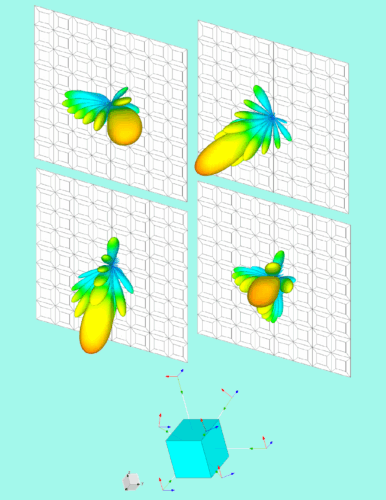
In advanced electromagnetic (EM) design, speed and accuracy are critical – especially for large antenna arrays and complex scattering problems. But traditional simulation methods often require costly, repetitive computations just to evaluate radiation patterns across different scenarios.

Our latest whitepaper, Efficient Simulation of Radiation Pattern Diagrams for Complex Electromagnetic Problems, introduces two breakthrough techniques that slash simulation time without sacrificing precision:

  • “One Element at a Time” – Simulate once, generate any beam pattern instantly.
  • Matrix-Based Acceleration – Faster far-field calculations for large datasets.
Reference: https://ift.tt/s52rJig

Over-the-Air Lasers Aim to Solve the Internet’s “Middle Mile”


Twenty years ago, web-savvy folks were focused on solving the Internet’s “last-mile” problem. Today, by contrast, one of the biggest bottlenecks to expanding Internet access is rather around a “middle-mile” problem—crossing cities and tough terrain, not just driveways and country roads.

The Google X spinoff Taara is promoting a simple alternative to fiber-optic cables: Free-space optical lasers. Using over-the-air infrared C-band lasers, Taara is rolling out tech that the company says reliably delivers 20 gigabit-per-second bandwidth across distances up to 20 kilometers.

However, what happens to open-air laser signals on a rainy or foggy day? What about a flock of birds or stray tree branch blocking a tower’s signal? Plus, C-band communications tech is decades old. So why haven’t other innovators tried Taara’s approach before?

IEEE Spectrum spoke with Taara’s CEO Mahesh Krishnaswamy about the company’s Google X pedigree (and its Google Fiber and Google Project Loon alumni) as well as upcoming new technologies, set to roll out in 2026, that’ll expand Taara towers’ bandwidth and range. Plus, the fledgling company’s wagering, their industry footprint might get a tiny boost too.

What does Taara do, and what problem or problems is the company working to solve?

A smiling dark haired man in glasses wearing a blue button up and gray vest Mahesh Krishnaswamy, CEO of Taara, says the Internet’s “middle-mile” problem presents an outsized opportunity. Taara

Mahesh Krishnaswamy: Taara is a project that incubated over the last 7 years at [Google/Alphabet] X Development, and we recently graduated. We’re now an independent company. It is a technology that uses eye-safe lasers to connect between two line-of-sight points, using beams of light, without having to dig trench fiber.

The problem we are really solving is that of global connectivity. Today, as we speak, close to 3 billion people are still not on the Internet. And even the five billion that are connected are running into challenges associated with speed, affordability, or reliability. It’s really a global problem that affects not just millions but billions of people.

So Taara is addressing the digital divide problem?

Krishnaswamy: Some of the ways our customers and partners have deployed [Taara's tech] is they use it for redundancy or to cross difficult terrain. A river, a railroad crossing, a mountain, anywhere the land is difficult to dig and traverse through, we are able to reach. One example is the Congo River, which is the world’s deepest river and one of the fastest flowing rivers. It separates Brazzaville [in the Republic of the Congo] and Kinshasa [in the Democratic Republic of the Congo]. Two separate countries on either side. But they’ve not been able to run fiber optic cables underneath the river. Because the Congo River is very fast-flowing. And so the only alternative is to go about 400 km, to where they’re able to safely navigate it. But we were able to connect these two countries very easily, and as a result bring bandwidth parity. One side had five times higher bandwidth cost than the other side.

The Road to New Free Space Optical Internet Tech

What is Taara doing today that couldn’t have been done five or 10 years ago?

Krishnaswamy: We’ve been slowly but steadily building up the improvements to this technology. This started with improvements in the optics, electronics, software algorithms, as well as pointing and tracking. We have enough margin to tackle most of the challenges that typically were limiting this technology up until recently, and we are one of the world’s largest manufacturers of terrestrial, free-space optics. We are live right now in more than 12 countries around the world—and growing every day.

What is your company’s main technological product?

Krishnaswamy: Today the technology that we have is called Taara Lightbridge. This is our first-generation product, which is capable of doing 20 Gbps, bi-directionally, at up to 20 km distance. It’s roughly the size of a traffic light and weighs about 13 kilograms.

Closeup of Taara's Lightbridge technology, a pear shaped piece of equipment with a circular area that reflects back the sunset of the environment. Taara’s traffic light–sized Lightbridge terminal serves as the hub for the company’s free space Internet tech—with thumbnail-sized components being promised for 2026. Taara


But we are now about to embark on a significant sea change in our technology. We are going to take some of the core photonics and electronics components and shrink it down to the size of my fingernail. And it will be able to point, track, send, and receive light at tens of gigabits per second. We have this Taara chip in a prototype form, which is already communicating indoors at 60 meters as well as outdoors at 1 km. That is a big reveal, and this is going to be the platform by which we’re going to be building future generations of products.

When will you be launching that?

Krishnaswamy: It’ll be the end of 2026.

The Internet’s Middle-Mile and Last-Mile Problems

How does all of this relate to the tech being “middle mile” rather than what used to be called “last mile”? How much distinction is there between the two?

Krishnaswamy: If you were to follow the path of data all the way from a subsea fiber, where you have Internet landing points, there’s this very vast capacity fiber that’s bringing it all the way from the edge of the coast into some main city. That’s a longhaul fiber. These are the national backbones, usually laid by the countries. But once you bring it to the town, then the operators, the data centers, start to take it and distribute the bandwidth from there. They start down what we call the middle mile.

That’s anywhere from a few kilometers to 20 kilometers of fiber. Now in some cases they will be passing very close to a home. In some cases, they’re a little bit further out. That’s the last mile. Which is not necessarily a mile. In some cases, it’s as short as 50 meters.

Does Taara cover the whole length of the middle mile?

Krishnaswamy: Today Taara operates where we are able to bridge connections from a few kilometers to up to 20 km. That’s the middle mile that we operate in. And almost 50 percent of the world today is within 25 km of a fiber point of presence. So it’s very much accessible for us to reach most of those communities.

Now the next generation technology that I’m talking about, the photonics chip, will allow us to go even shorter distances and will allow us to close the gap on the last mile as well. So today we are mostly operating in the middle mile, and in some cases we can connect the last mile. But with the next generation chip, we’ll be operating both in the middle mile as well as the last mile.

What about the Google X background? Do you have people from Project Loon or from Google Fiber now working at Taara?

Krishnaswamy: Yes. I was personally working on Project Loon, and I was leading up the manufacturing, the supply chain, and some of the operational aspects of it. But my passion was always to solve the connectivity problem. And at X we always say, fall in love with the problem, not the solution per se.

So you started using Project Loon’s open-air signaling tech that connects one Internet balloon to another, but you just did it between fixed stations on the ground?

Krishnaswamy: Yes, the idea was very simple. What if we were to bring the technology connecting balloons in the stratosphere down to the ground, and start connecting people quickly?

It was a quick and dirty way of getting started on connecting and closing out the digital gap. And little did I know that across the street, Google Access was also working on similar technology to cross freeways. So I pulled together a team from Google Access and then from Project Loon. And today the Taara team includes people from various parts of Google who worked on this technology and other connectivity projects. So it’s a team that is really passionate about connectivity globally.

The Challenges Ahead for Free Space Optical Tech

OK, so what about foggy days? What about rain and snow? How does Taara technology send over-the-air infrared data traffic through inclement weather?

Krishnaswamy: Our biggest challenge is weather, particularly particulates in weather that disperse light. Fog is our biggest nemesis. And we try to avoid deploying in foggy areas. So we built a planning tool that allows us to actually predict the anticipated availability. As long as it’s light rain, and it doesn’t disperse [optical signals], then it’s fine.

A simple rule of thumb is if you can see the other side, then you should be able to close the link. We’re also exploring some smart rerouting algorithms, using mesh. Ultimately, we are subject to some environmental degradations. And it’s really how you overcome that is what we’ve been focusing on.

Why 20 km? Is Taara trying to extend that to greater distances today?

Krishnaswamy: The honest truth is it started out with one of our first customers in rural India who said, “I have many of these access points which are up to 20 km away.” And as we started to dig deeper, we realized we can connect a vast majority of the unconnected places within 20 km of a fiber point of presence. So that ended up becoming our initial specification.

How about pointing? If you’re beaming a laser out over 20 km, that’s a tiny target to aim at.

Krishnaswamy: When we deployed first in India, we ran into a lot of monkeys that we had to deal with who are territorial. There would be like 20 or 30 of these monkeys jumping and shaking the tower, and our link would always oscillate. So we can’t physically drive them away. But we could actually improve our pointing and tracking, which is exactly what we did. So we have gyroscopes and accelerometers built in. We are constantly monitoring the other side. There’s also a camera inside the terminal. So if you are really out of alignment, we can always repoint it again. But basically we have made a significant amount of improvements in our pointing and tracking. That’s one of our secret sauces.

What are the near-term hurdles for the company? Near-term ambitions?

Krishnaswamy: I used to work at Apple, so I brought some of the best practices from there as well to make this technology manufacturable. We want physics to be the upper bound of what is capable, and we don’t want any compromises.

And the last thing I’ll say is we are really pioneering the light generation. This is a complete relook at how light can be used for communication purposes, which is where we’re starting out. When you have something this small, that could deliver such high speeds at such low latencies, you could put it into robots and into self-driving cars. And it could change the landscape of communications. But if you were to not just use it for communication, it could go into LIDAR or biomedical devices that scan and sense. You could do a lot more using the underlying technology of phased arrays in a silicon photonics chip. There’s so much more to be done.

Reference: https://ift.tt/gVpICSL

Monday, July 28, 2025

OpenAI’s ChatGPT Agent casually clicks through “I am not a robot” verification test


Maybe they should change the button to say, "I am a robot"?

On Friday, OpenAI's new ChatGPT Agent, which can perform multistep tasks for users, proved it can pass through one of the Internet's most common security checkpoints by clicking Cloudflare's anti-bot verification—the same checkbox that's supposed to keep automated programs like itself at bay.

ChatGPT Agent is a feature that allows OpenAI's AI assistant to control its own web browser, operating within a sandboxed environment with its own virtual operating system and browser that can access the real Internet. Users can watch the AI's actions through a window in the ChatGPT interface, maintaining oversight while the agent completes tasks. The system requires user permission before taking actions with real-world consequences, such as making purchases. Recently, Reddit users discovered the agent could do something particularly ironic.

Read full article

Comments

Reference : https://ift.tt/EgzF2rB

Pro-Ukrainian hackers take credit for attack that snarls Russian flight travel


Russia’s biggest airline cancelled dozens of flights on Monday following a failure of the state-owned company’s IT systems and, according to a Russian lawmaker and pro-Ukrainian hackers, was the result of a cyberattack, it was widely reported.

The airline, Aeroflot, said it cancelled about 40 flights following a “technical failure.” An online departure board for Sheremetyevo airport showed dozens of others were delayed. The cancellations and delays hobbled traffic throughout Russia and left travelers stranded at airports. The affected routes were mostly within Russia but also included routes to Belarusian capital Minsk and Yerevan, the capital of Armenia.

“The damage is strategic”

Russian prosecutors confirmed to Reuters that the disruption was caused by a hack and have opened a criminal investigation into it. Russian lawmakers also hinted a cyberattack was the cause of the outage, with one of them, Anton Gorelkin, saying Russia was under digital attack, possibly at the hands of hacktivists with help from unfriendly states.

Read full article

Comments

Reference : https://ift.tt/I8Qeyiz

IEEE President-Elect Candidates On Their No. 1 Strategic Goal


The annual IEEE election process begins in August, so be sure to check your mailbox for your ballot. To help you choose the 2026 IEEE president-elect, The Institute is publishing the candidates’ official biographies as well as a statement describing which IEEE Strategic Goal resonates with them the most and why it is particularly meaningful to them. The candidates are IEEE senior members Jill I. Gostin and David Alan Koehler.

On 27 June, IEEE President Kathleen Kramer moderated the Meet the 2026 IEEE President-Elect Candidates Forum, where the candidates answered pressing questions from IEEE members. The event is available to watch on demand.

A second forum will be held on 4 August at the IEEE Geoscience and Remote Sensing Society’s International Geoscience and Remote Sensing Symposium, in Brisbane, Australia. Registration to attend the livestream is open.

IEEE Senior Member Jill I. Gostin

Nominated by the IEEE Board of Directors

Jill Gostin smiling in a suit jacket. Steven Miller Photography

Gostin retired earlier this year as a principal research scientist at the Georgia Tech Research Institute, in Atlanta. Her work focused on sensor systems and software. She also served as the systems engineering, integration, and test lead in the software engineering and architecture division.

Gostin credits her career success to her publications; service and technical awards; large program management experience; and leadership of academic, industry, and government groups.

She has held several IEEE leadership positions including 2023 IEEE Member and Geographic Activities vice president and chair of its board, and 2020—2021 Region 3 director. She is a former chair of the IEEE Atlanta Section and the IEEE Computer Society’s Atlanta Chapter.

Gostin served on the IEEE Computer and IEEE Aerospace and Electronic Systems societies’ boards of governors and was the vice president of finance for the Senior Council’s Executive Committee. She has also led or been a member of several IEEE organizational units and committees, locally and globally.

Her leadership was recognized in 2016 when the Georgia Women in Technology named her as its Woman of the Year. Gostin also is the recipient of the 2025 IEEE Women in Technology Leadership Award.

Strategic goal statement

Chosen strategic goal: Empower technology professionals in their careers through ongoing education, mentoring, networking, and lifelong engagement.

The priorities listed in my position statement align with all six IEEE goals, but that is the one that most resonates with me. It both reflects what members consistently say they value most, and it aligns with my own desire to help others succeed.

This objective supports IEEE’s members throughout their careers by helping them connect, grow, and give back to their community. Providing that kind of holistic support has shaped both my professional and IEEE journeys. I have focused on helping people succeed—by connecting them with the right tools and resources, or by creating new ones when none existed.

Engagement is personal. What each member needs or values will vary and evolve over time. To stay interesting and relevant, IEEE must offer diverse, flexible ways to engage, and adapt as technologies and member needs change.

I will advance this goal by supporting:

● Customized learning pathways for emerging technologies

● Tailored resources based on experience level and geographic location

● Expanded professional development and mentorship programs that enhance careers at all stages

● Multidisciplinary initiatives with local engagement opportunities

● Innovation competitions that inspire creativity and collaboration

These efforts empower members as contributors to their organization, society, and the profession. They reignite curiosity, enable growth, and inspire new directions. When IEEE helps members learn and engage in new ways, it strengthens not only their careers, but also the future of technology itself.

IEEE Senior Member David Alan Koehler

Nominated by the IEEE Board of Directors

David Alan Koehler smiling in a suit jacket and tie. Steven Miller Photography

Koehler received his bachelor’s degree in chemistry from Indiana University in Bloomington, and a master’s degree in business from Indiana Wesleyan University, in Marion. He works in the power and energy industry and has almost 30 years of experience in testing insulating liquids and managing analytical laboratories. He has presented numerous technical presentations and published technical articles within the power industry.

An active volunteer, he has served in every geographical unit within IEEE. His first leadership position was treasurer of the Central Indiana Section. He served as 2022 vice president of IEEE Member and Geographic Activities (MGA), 2019—2020 director of IEEE Region 4, and 2024 chair of the IEEE Board of Directors Ad Hoc Committee on Leadership Continuity and Efficiency.

He served on the IEEE Board of Directors for three terms. He has been a board member of IEEE-USA, Member and Geographic Activities, and Publication Services and Products.

Koehler is the recipient of the 2024 IEEE MGA Larry K. Wilson Transnational Award. He is an active member of the IEEE Power & Energy and Dielectrics and Electrical Insulation societies, as well as Women in Engineering. In 2019 he was inducted into IEEE’s honor society, Eta Kappa Nu.

Strategic goal statement

Chosen strategic goal: Empower technology professionals in their careers through ongoing education, mentoring, networking, and lifelong engagement.

I chose this IEEE 2025-2030 strategic goal as it is at the core of our mission: Advancing Technology for Humanity. This goal has also proven to be valuable in my career growth.

We are living in an era where technology evolves quickly, and it is important that IEEE helps its members, volunteers, and customers stay current on the technology that is of interest to them.

In order to achieve career success, individuals need to focus on their professional development. IEEE has programs in place to help those who need to improve their soft and leadership skills. You can be the smartest person on a team, but if you are unable to effectively communicate your ideas, you most likely will not grow within your organization.

IEEE also holds incredible conferences and events globally that allow individuals to network and engage with those who have similar technical interests. This helps nurture new ideas and share best practices. When our members and customers develop a strong network, it can open the door to mentoring and job opportunities.

Lifelong learning opportunities help to build collaboration and engagement among technologists. Individuals from diverse backgrounds are able to share different ideas and create stronger technical communities.

I am a strong believer in preuniversity science, technology, engineering, and math outreach activities so that IEEE members can promote and help develop the next generation of technologists. I plan to devote additional resources to make sure that this happens more on a global scale.

Reference: https://ift.tt/BkiqoIu

What the CHIPS Act Looks Like Now


The U.S. CHIPS and Science Act of 2022 aimed to reestablish advanced manufacturing for logic and memory in the United States, as well as boost or establish other chipmaking activities. The job is far from complete, but a look at where the money is expected to go points to a potentially broad geographic boost for the domestic chip industry. That’s assuming it continues.

Not long after the law took effect, the federal government began careful negotiations and had in hand proposed deals for more than 30 projects by the end of October 2024.

After Donald Trump won the 2024 election, the CHIPS Office went into high gear, converting those proposed deals into awards. It agreed to more than $30 billion in the roughly two months before Trump took office.

But things have gotten deathly quiet since then.

Proponents of the CHIPS Act shouldn’t panic…yet, says Russell Harrison, managing director of IEEE-USA and an expert on the workings of Washington. New administrations often press pause to examine what they want to keep and change—and to find ways to take credit for successes.

In the meantime, Harrison’s team is focused on getting Congress to fund the parts of the act meant to solidify any manufacturing gains—such as the R&D and workforce-development programs.

Reference: https://ift.tt/1OTAUlI

Ferroelectric Helps Break Transistor Limits


Integrating an electronic material that exhibits a strange property called negative capacitance can help high-power gallium nitride transistors break through a performance barrier, say scientists in California. Research published in Science suggests that negative capacitance helps sidestep a physical limit that typically enforces tradeoffs between how well a transistor performs in the “on” state versus how well it does in the “off” state. The researchers behind the project say this shows that negative capacitance, which has been extensively studied in silicon, may have broader applications than previously appreciated.

Electronics based on GaN power 5G base stations and compact power adapters for cell phones. When trying to push the technology to higher frequency and higher power operations, engineers face tradeoffs. In GaN devices used to amplify radio signals, called high-electron-mobility transistors (HEMTs), adding an insulating layer called a dielectric prevents them from wasting energy when they’re turned off, but it also suppresses the current flowing through them when they are on, compromising their performance.

To maximize energy efficiency and switching speed, HEMTs use a metal component called a Schottky gate, which is set directly on top of a structure made up of layers of GaN and AlGaN. When a voltage is applied by the Schottky gate, a 2D electron cloud forms inside the transistor. These electrons are zippy and help the transistor switch rapidly, but they also tend to travel up towards the gate and leak out. To prevent them from escaping, the device can be capped with a dielectric. But this additional layer increases the distance between the gate and the electron cloud. And that distance decreases the ability of the gate to control the transistor, hampering performance. This inverse relationship between the degree of gate control and the thickness of the device is called the Schottky limit.

“Getting more current from the device by adding an insulator is extremely valuable. This cannot be achieved in other cases without negative capacitance”—Umesh Mishra, UC Santa Barbara

In place of a conventional dielectric, Sayeef Salahuddin, Asir Intisar Khan, and Urmita Sikderan, electrical engineers at University of California Berkeley, collaborated with researchers at Stanford University to test a special coating on GaN devices with Schottky gates. This coating is made up of a hafnium oxide layer frosted with a thin topping of zirconia oxide. The 1.8 nm thick bilayer material is called HZO for short, and it’s engineered to display negative capacitance.

HZO is a ferroelectric. That is, it has a crystal structure that allows it to maintain an internal electrical field even when no external voltage is applied. (Conventional dielectrics don’t have this inherent electrical field.) When a voltage is applied to the transistor, HZO’s inherent electric field opposes it. In a transistor, this leads to a counterintuitive effect: a decrease in voltage causes an increase in the charge stored in HZO. This negative capacitance response effectively amplifies the gate control, helping the transistor’s 2D electron cloud accumulate charge and boosting the on-state current. At the same time, the thickness of the HZO dielectric suppresses leakage current when the device is off, saving energy.

“When you put another material, the thickness should go up, and the gate control should go down,” Salahuddin says. However, the HZO dielectric seems to break the Schottky limit. “This is not conventionally achievable,” he says.

“Getting more current from the device by adding an insulator is extremely valuable,” says Umesh Mishra, a specialist in GaN high-electron-mobility transistors at the University of California, Santa Barbara who was not involved with the research. “This cannot be achieved in other cases without negative capacitance.”

Leakage current is a well known problem in these kinds of transistors, “so integrating an innovative ferroelectric layer into the gate stack to address this has clear promise,” says Aaron Franklin, an electrical engineer at Duke University. “It certainly is an exciting and creative advancement.”

Going further with negative capacitance

Salahuddin says the team is currently seeking industry collaborations to test the negative capacitance effect in more advanced GaN radio-frequency transistors. “What we see scientifically breaks a barrier,” he says. Now that they can break down the Schottky limit in GaN transistors under lab conditions, he says, they need to test whether it works in the real world.

Mishra agrees, noting that the devices described in the paper are relatively large. “It will be great to see this in a device that’s highly scaled,” says Mishra. “That’s where this will really shine.” He says the work is “a great first step.”

Salahuddin has been studying negative capacitance in silicon transistors since 2007. And for much of that time, says Mishra, Salahuddin has been subject to intense questioning after every conference presentation. Nearly 20 years later, Salahuddin’s team has made a strong case for the physics of negative capacitance, and the GaN work shows it may help push power electronics and telecom equipment to higher powers in the future, says Mishra. The Berkeley team also hopes to test the effect in transistors made from other kinds of semiconductors including diamond, silicon carbide, and other materials.

Reference: https://ift.tt/NiP430O

Friday, July 25, 2025

After BlackSuit is taken down, new ransomware group Chaos emerges


Hot on the heels of a major ransomware group being taken down through an international law enforcement operation comes a new development that highlights the whack-a-mole nature of such actions: A new group, likely comprised of some of the same members, has already taken its place.

The new group calls itself Chaos, in recognition of the .chaos name extension its ransomware stamps on files it has encrypted and the “readme.chaos[.]txt” name given to ransom notes sent to victims. Researchers at Cisco’s Talos Security Group said Thursday that since Chaos emerged in February, it has engaged in “big-game hunting”—meaning attacks designed to extract hefty payments—that have mainly targeted organizations in the US and, to a lesser extent, the UK, New Zealand, and India. Talos said it recently observed the group demanding a ransom of about $300,000.

Walking in your footsteps

In exchange for paying the demanded ransom, victims get a pinky swear that they’ll receive a decryptor and a detailed report of the vulnerabilities the group members found in the victim’s network and that the group will delete all the data in its possession. Victims who refuse to pay face the threat of never getting their data unlocked, having data publicly disclosed, and being subjected to distributed denial-of-service attacks.

Read full article

Comments

Reference : https://ift.tt/s5nr4IT

Rethinking Haptic Testing: The Microphone Solution


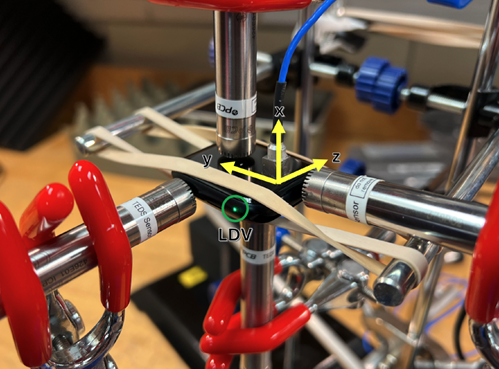
Ensuring consistent haptic feedback in smart devices is critical—but traditional testing methods like Laser Doppler Vibrometry (LDV) and accelerometers can be slow, expensive, and complex for high-volume production.

What if there was a better way?

This white paper explores how microphone-based haptic testing delivers accurate, non-contact measurements while streamlining production testing.

In This White Paper, You’ll Learn:

  • How microphone testing compares to LDVs and accelerometers – without sacrificing accuracy
  • Key benefits for production environments, including speed, cost savings, and simplified setups
  • Real-world test results across smartphones, smartwatches, and fitness trackers
  • Why manufacturers are adopting this method to ensure high-quality haptic performance
Reference: https://ift.tt/bxNg31C

Supply-chain attacks on open source software are getting out of hand


It has been a busy week for supply-chain attacks targeting open source software available in public repositories, with successful breaches of multiple developer accounts that resulted in malicious packages being pushed to unsuspecting users.

The latest target, according to security firm Socket, is JavaScript code available on repository npm. A total of 10 packages available from the npm page belonging to global talent agency Toptal contained malware and were downloaded by roughly 5,000 users before the supply-chain attack was detected. The packages have since been removed. This was the third supply-chain attack Socket has observed on npm in the past week.

Poisoning the well

The hackers behind the attack pulled it off by first compromising Toptal’s GitHub Organization and from there using that access to publish the malicious packages on npm.

Read full article

Comments

Reference : https://ift.tt/JHFOE1h

Thursday, July 24, 2025

Two major AI coding tools wiped out user data after making cascading mistakes


New types of AI coding assistants promise to let anyone build software by typing commands in plain English. But when these tools generate incorrect internal representations of what's happening on your computer, the results can be catastrophic.

Two recent incidents involving AI coding assistants put a spotlight on risks in the emerging field of "vibe coding"—using natural language to generate and execute code through AI models without paying close attention to how the code works under the hood. In one case, Google's Gemini CLI destroyed user files while attempting to reorganize them. In another, Replit's AI coding service deleted a production database despite explicit instructions not to modify code.

The Gemini CLI incident unfolded when a product manager experimenting with Google's command-line tool watched the AI model execute file operations that destroyed data while attempting to reorganize folders. The destruction occurred through a series of move commands targeting a directory that never existed.

Read full article

Comments

Reference : https://ift.tt/lvWnrBF

White House unveils sweeping plan to “win” global AI race through deregulation


On Wednesday, the White House released "Winning the Race: America's AI Action Plan," a 25-page document that outlines the Trump administration's strategy to "maintain unquestioned and unchallenged global technological dominance" in AI through deregulation, infrastructure investment, and international partnerships. But critics are already taking aim at the plan, saying it's doing Big Tech a big favor.

Assistant to the President for Science and Technology Michael J. Kratsios and Special Advisor for AI and Crypto David O. Sacks crafted the plan, which frames AI development as a race the US must win against global competitors, particularly China.

The document describes AI as the catalyst for "an industrial revolution, an information revolution, and a renaissance—all at once." It calls for removing regulatory barriers that the administration says hamper private sector innovation. The plan explicitly reverses several Biden-era policies, including Executive Order 14110 on AI model safety measures, which President Trump rescinded on his first day in office during his second term.

Read full article

Comments

Reference : https://ift.tt/dQ5cRJn

Video Friday: Biorobotics Turns Lobster Tails Into Gripper

Video Friday is your weekly selection of awesome robotics videos, collected by your friends at IEEE Spectrum robotics. We also post a w...